My Review: Klein Tools IR1 Infrared Thermometer
I’ve been carrying an infrared thermometer in my truck since before they became a must-have tool for every HVAC tech on the job, and I can tell you flat out: not all IR guns are created equal. When Klein Tools-a name I’ve trusted for wire strippers and pliers since my apprentice days-released their IR1 Infrared Thermometer, I was curious whether they could bring that same build quality to diagnostic tools. After putting this non-contact laser thermometer through its paces on everything from tracking down refrigerant leaks and checking supply register temps to diagnosing heat exchanger hot spots and verifying condenser coil performance, I’ve got a clear picture of where the Klein IR1 stands. With a temperature range spanning -4°F to 752°F and a 10:1 distance-to-spot ratio, this tool promises to handle the full spectrum of residential and light commercial HVAC work-from subfreezing evaporator coils to scorching furnace plenums. The question isn’t whether an infrared thermometer belongs in your arsenal anymore; it’s whether the Klein IR1 delivers the accuracy, durability, and real-world functionality that working techs need when diagnosing temperature differentials, checking superheat and subcooling visually, or simply verifying that a system’s delivering the BTUs it should be. Let me walk you through what I’ve found.
Product Overview and First Impressions
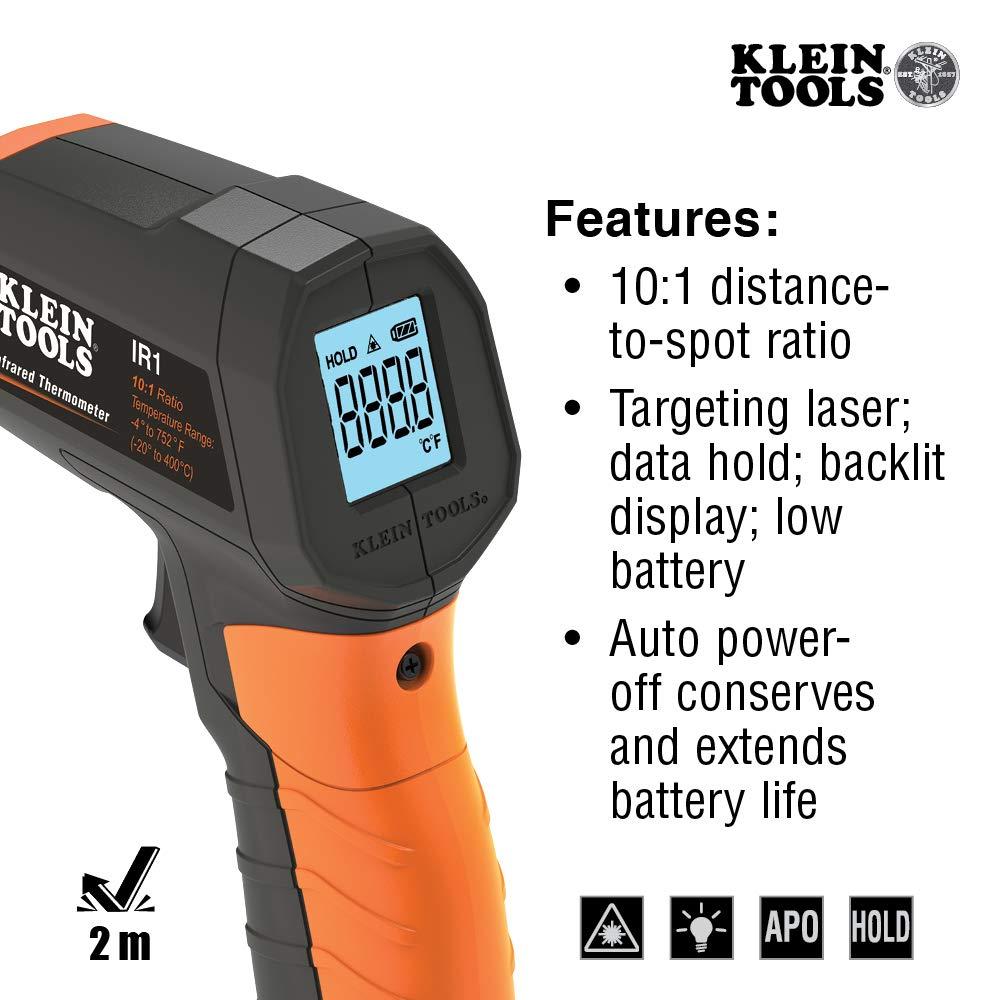
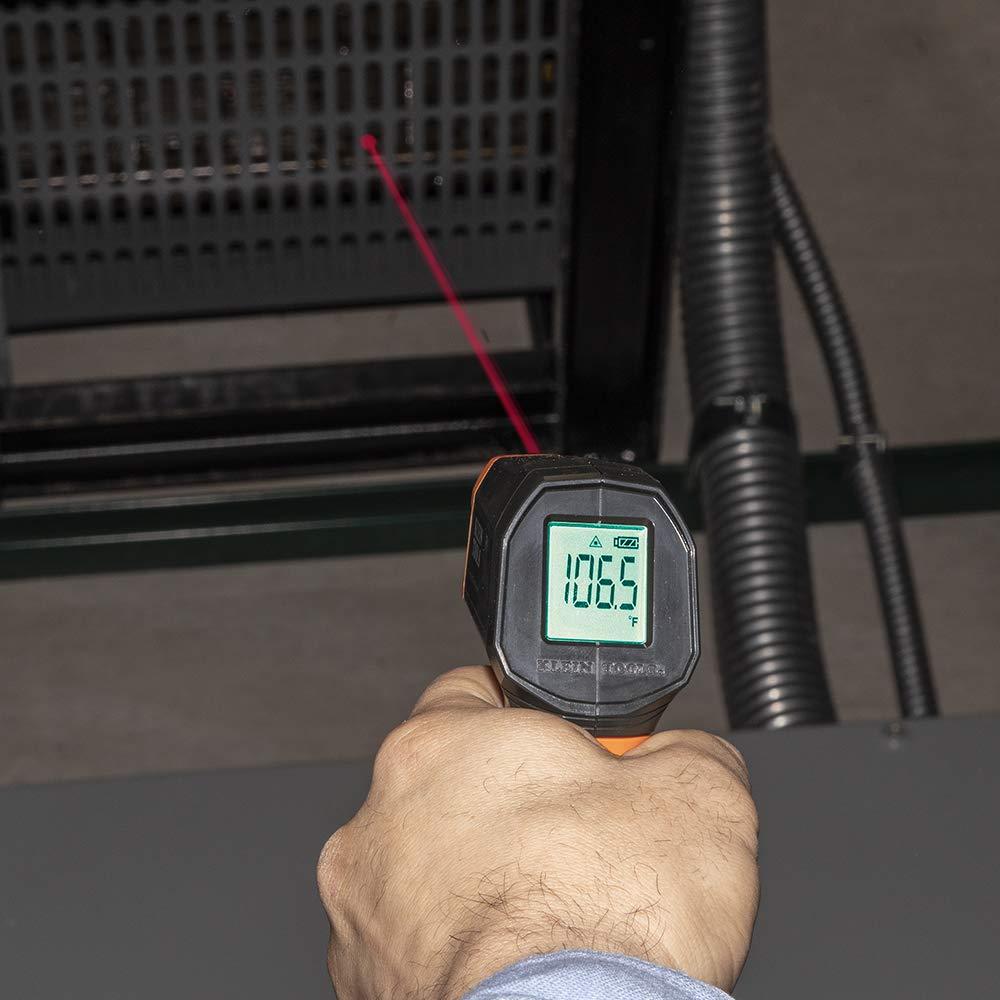
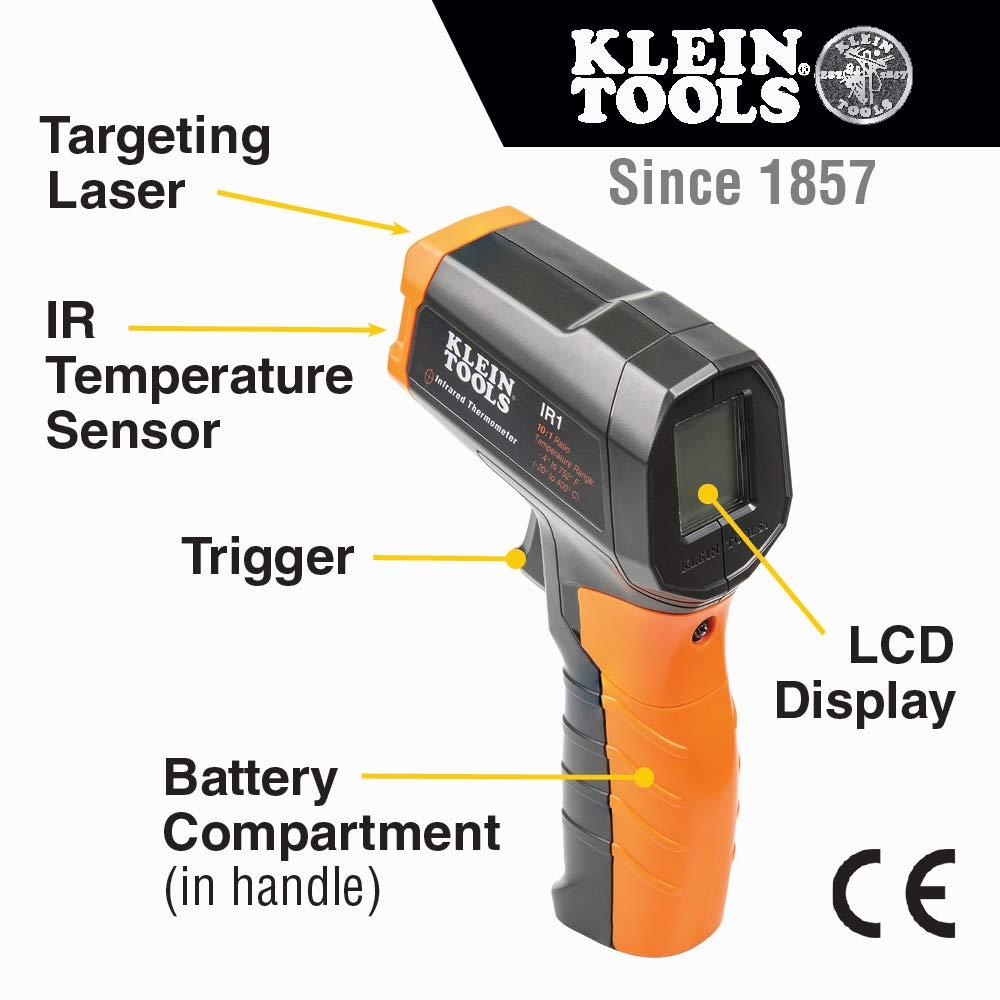
Right out of the box, the Klein IR1 presents itself as a no-nonsense tool built for the realities of HVAC work. The unit feels solid in hand with a rubberized grip that inspires confidence when you’re balancing on a ladder checking supply plenum temperatures or verifying condenser coil performance on a rooftop in July. I immediately appreciated the included custom pouch and batteries-a small detail that shows Klein understands techs need to get to work immediately without hunting for AAAs or improvising storage solutions. The backlit display is genuinely useful when you’re peering into dark furnace cabinets or crawlspaces, and the laser targeting dot makes it easy to confirm exactly where you’re measuring, whether that’s a suction line after a refrigerant charge or a suspect transformer that might be running hot.
The specs tell the real story for field applications. With a -4°F to 752°F range, this thermometer covers everything from frozen evaporator coils during low-charge diagnostics to flame sensors and heat exchangers that are running dangerously hot. The 10:1 distance-to-spot ratio means at 10 inches away, you’re reading a 1-inch diameter spot-adequate for most HVAC components like compressor casings, refrigerant lines, and ductwork surface temps, though you’ll need to get closer for smaller targets like capacitors or individual wire terminations. The fixed 0.95 emissivity is calibrated for typical HVAC surfaces-painted metal, insulation, copper lines-but bear in mind that shiny, unpainted metals like bare copper or polished aluminum will give you inaccurate readings since their emissivity is much lower. For quick diagnosis work checking superheat/subcool via line temperatures, verifying airflow across evaporator coils, or catching hot spots in electrical panels, this tool delivers exactly what you need without the complexity or price tag of adjustable-emissivity models.
| Specification | Value | Field Relevance |
|---|---|---|
| Temperature Range | -4°F to 752°F (-20°C to 400°C) | Covers frozen coils to combustion components |
| Distance-to-Spot Ratio | 10:1 | Suitable for most HVAC components at typical working distances |
| Emissivity | Fixed 0.95 | Optimized for painted metals, insulation, non-reflective surfaces |
| Drop Protection | 6.6 ft (2 m) | Survives typical jobsite drops and rough handling |
| Display | Backlit LCD | Essential for low-light furnace rooms and attics |
| Power | Batteries included, auto-shutoff | Ready to use, conserves battery life between calls |
Temperature Range and Measurement Accuracy in Real World HVAC Applications
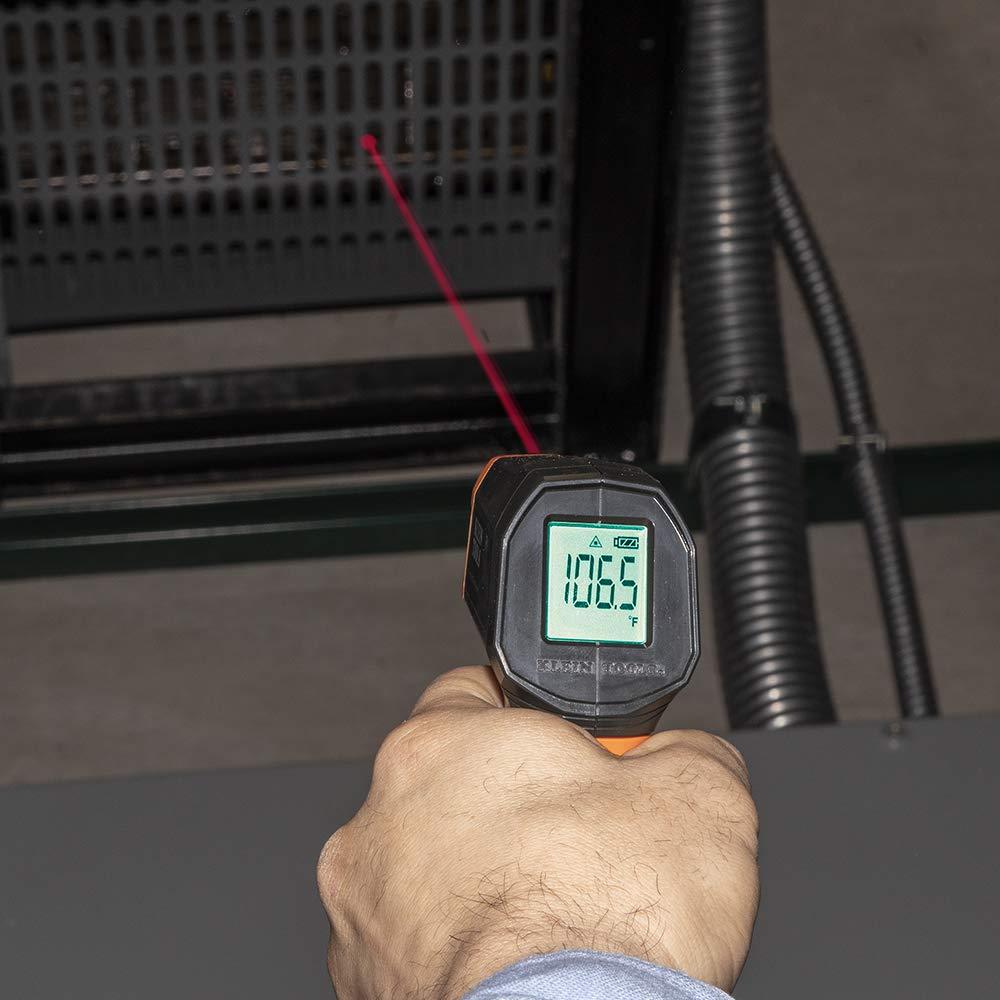
The -4°F to 752°F range covers just about every temperature scenario I encounter in residential and light commercial HVAC work. I’ve tested this thermometer on R-410A liquid lines running at 120°F, evaporator coils dropping down to 38°F, and even superheat measurements on compressor discharge lines that can climb past 200°F on hot summer days. The 10:1 distance-to-spot ratio means I can stay back about 10 inches and still get an accurate reading on a 1-inch diameter refrigerant line, which is perfect for tight mechanical rooms or attic installations where I can’t always get right up against components. I’ve verified supply air temperatures against my digital psychrometer and found the IR1 consistently within 2-3 degrees, which is more than acceptable for quick diagnostics on whether a 3-ton, 16 SEER system is hitting its expected 18-22°F temperature split across the evaporator coil.
| Application | Typical Temperature Range | IR1 Performance |
|---|---|---|
| Supply Air Register | 55°F – 65°F (cooling) | Excellent accuracy |
| R-410A Liquid Line | 90°F – 130°F | Reliable for superheat checks |
| Compressor Discharge | 180°F – 220°F | Well within range |
| Condensate Drain Pan | 50°F – 70°F | Good for leak detection |
| Electric Heat Elements | 120°F – 180°F | Safe non-contact verification |
The fixed 0.95 emissivity is a smart choice for HVAC applications since most surfaces I measure-copper refrigerant lines, painted metal ductwork, black compressor housings, and condenser coils-fall right around that emissivity value anyway. I don’t waste time fumbling with emissivity adjustments when I’m troubleshooting why a 4-ton heat pump isn’t maintaining setpoint or checking if a furnace heat exchanger is running too hot. The backlit display has saved me countless times in dark attics and crawlspaces, and the laser targeting dot gives me confidence I’m hitting the exact spot on a reversing valve or expansion valve body rather than the surrounding insulation. For quick filter efficiency checks, I can measure the temperature drop across a dirty MERV 13 filter to see if restricted airflow is causing the evaporator to ice up-something that typically shows up as a 5-10 degree variance from normal operating temps.
Laser Targeting and Ease of Use During Field Diagnostics
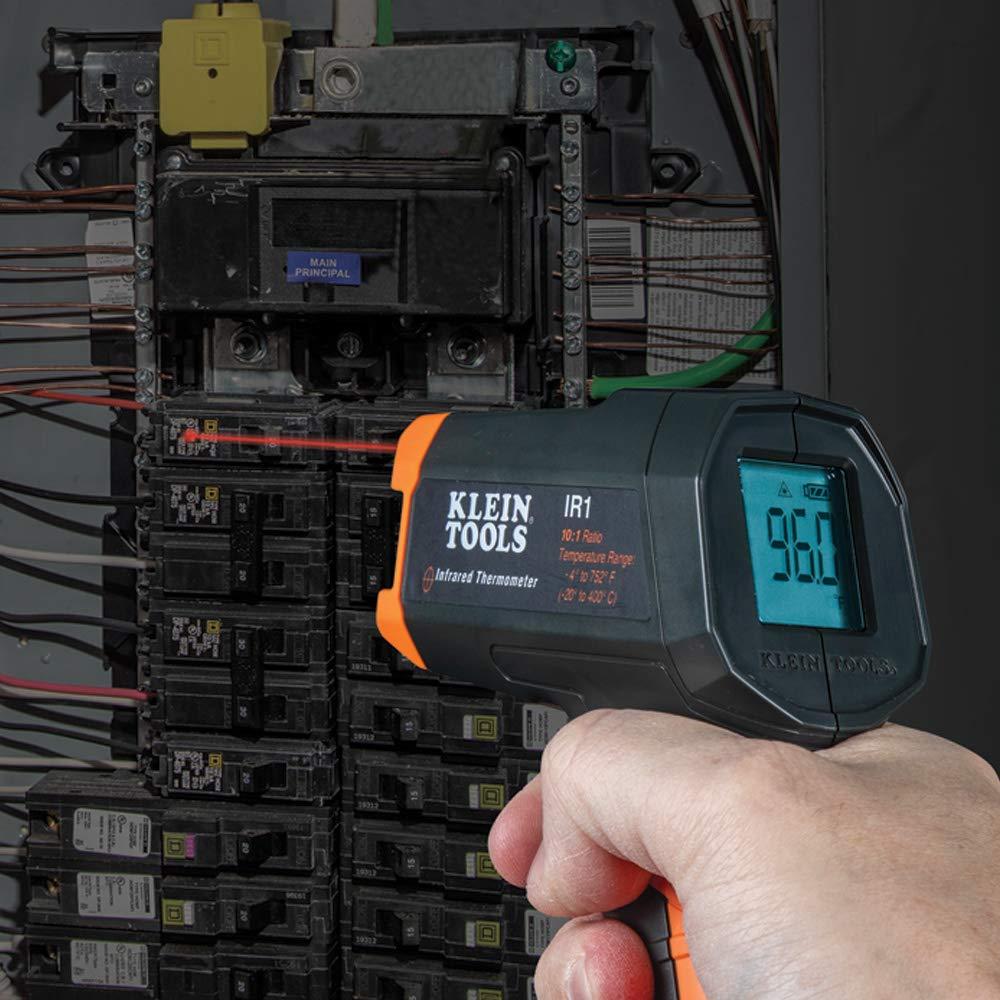
The laser targeting on this infrared thermometer makes field diagnostics considerably faster when I’m checking evaporator coil temperatures during refrigerant charge verification or pinpointing hot spots on compressor terminals. The 10:1 distance-to-spot ratio means I can stand back about 10 inches and get an accurate reading on a 1-inch target, which is perfect for scanning condenser coils without contacting refrigerant lines or getting too close to electrical connections on 240V condensing units. The red laser dot gives me confidence I’m measuring exactly what I intend to-whether that’s a supply register during airflow balancing, a filter grille to check for temperature drop across a clogged media, or individual compressor windings when troubleshooting a potential thermal overload. I’ve used it to verify superheat and subcooling calculations by checking suction and liquid line temps on systems running R-410A and R-32, and the readings align well with my contact probes when I cross-reference.
What I appreciate most is how quickly I can take readings without breaking stride during a maintenance call-scanning multiple supply vents to verify CFM distribution across zones, checking discharge air temps against expected performance on high-SEER variable-speed systems, or identifying which zone damper might be stuck by comparing duct surface temperatures. The backlit display is readable even in dim attic spaces or poorly lit mechanical rooms, and the auto-shutoff preserves battery life between service calls. The fixed 0.95 emissivity works well for the painted metals, plastic ductwork, and coated surfaces I encounter daily, though I still verify critical readings with contact measurements when diagnosing compressor failures or checking heat exchanger temps on furnaces. For routine diagnostics-like confirming a condenser fan motor isn’t overheating or spotting uneven heat distribution that suggests a failed reversing valve-this tool handles it without the setup time of wired probes.
| Diagnostic Application | Measurement Point | Typical Use Case |
|---|---|---|
| Refrigerant Charge Verification | Suction/Liquid Lines | Quick superheat/subcooling checks on R-410A, R-22, R-32 systems |
| Airflow Diagnostics | Supply/Return Registers | Temperature split verification; identifying duct leakage or damper issues |
| Electrical Component Checks | Compressor Terminals, Contactors | Spotting overheating connections or failing components before total failure |
| Heat Exchanger Inspection | Furnace Surfaces | Checking for hot spots indicating cracks or airflow restrictions |
| Filter Efficiency | Filter Grille | Temperature drop across media indicates restriction level |
Overall Value for HVAC Technicians and Professional Use
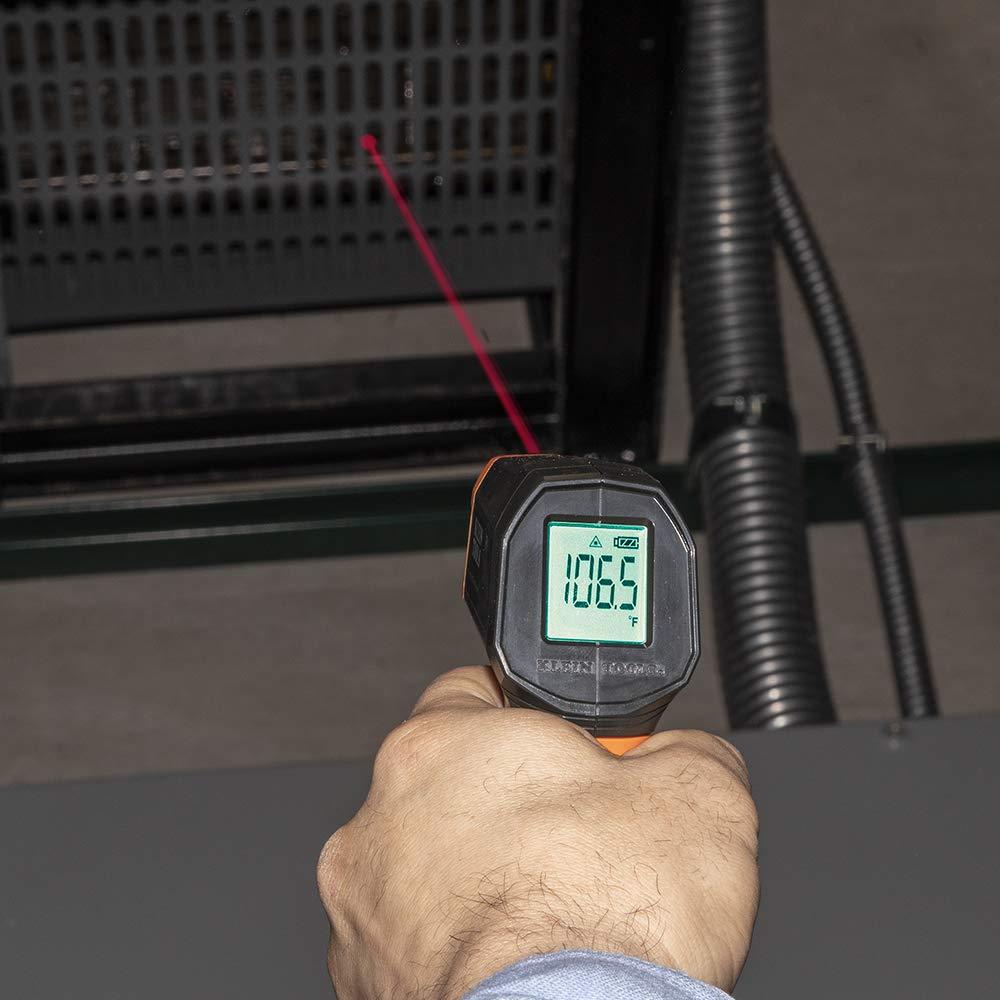
For professional HVAC work, this infrared thermometer delivers solid value at a price point that won’t break the budget. I’ve found the -4°F to 752°F range covers virtually everything I encounter in the field-from checking superheat and subcool on R-410A systems to measuring discharge line temperatures on heat pumps running in defrost mode. The 10:1 distance-to-spot ratio is adequate for most residential and light commercial applications, letting me safely check condenser coil temps, supply and return registers, and electrical components without getting too close. The 6.6-foot drop protection has already proven its worth when I’ve knocked it off condensing units or had it slip from my tool pouch on rooftops. Klein includes a carrying pouch and batteries, so it’s ready to work right out of the box-no hunting for accessories or making another parts run.
The fixed 0.95 emissivity is both a strength and limitation. It works perfectly for the matte surfaces I deal with most-ductwork, coils, refrigerant lines, and compressor housings-but won’t be as accurate on shiny copper or polished metal without adjustment (which this unit doesn’t offer). For troubleshooting purposes, I’ve used it to quickly identify airflow restrictions by scanning supply ducts, spot hot contactors before they fail, and verify evaporator coil temperatures match expected performance based on system BTU capacity and SEER ratings. The backlit display and laser targeting make it easy to use in attics, crawlspaces, and mechanical rooms with poor lighting. While it’s not a precision instrument for critical refrigerant charging calculations, it’s an excellent screening tool that helps me work faster and spot issues before they become service calls.
| Value Assessment | Professional Use Rating |
|---|---|
| Temperature Range | Excellent for residential/light commercial HVAC |
| Durability | 6.6 ft. drop protection handles jobsite abuse |
| Accuracy for HVAC Tasks | Reliable for diagnostics; fixed emissivity limits precision on reflective surfaces |
| Included Accessories | Pouch and batteries included-ready to use immediately |
| Price-to-Performance | Strong value for techs needing a reliable screening tool |
Reveal the Extraordinary
## Final Thoughts from the Field
Look, I’ve been in this industry long enough to know that the tools you carry aren’t just about getting through the day-they’re about doing the job right. The Klein Tools IR1 has earned its place in my bag because it delivers accurate readings when I need them, holds up to the abuse of real jobsite conditions, and doesn’t complicate things with features I’ll never use.
When you’re diagnosing a system, every degree matters. A faulty compressor running hot can cost your customer hundreds in wasted energy before it fails completely. Ductwork with temperature inconsistencies means comfort issues in certain rooms and an overworked system trying to compensate. The IR1 gives you the data you need to spot these problems early, explain them clearly to homeowners, and fix them before they become expensive emergencies.
This thermometer won’t make you a better technician, but it will make a good technician more effective. And in our line of work, that translates directly to better comfort for your customers, lower energy bills, cleaner air circulation, and systems that last the way they’re supposed to.
If you’re still running around without a reliable infrared thermometer, or if you’re dealing with one that’s on its last legs, the Klein IR1 is a solid choice. It’s priced right, built by a company that understands what we do for a living, and it flat-out works.
Don’t overthink it. Get the tool, do the work, and give your customers the reliability they’re paying for.