Klein 32561 Stubby: My Go-To 6-in-1 for Tight Spots
I’ve been turning wrenches and screws on HVAC equipment for over twenty years, and if thereS one thing I’ve learned, it’s that the right screwdriver in tight quarters can mean the difference between a fifteen-minute service call and an hour-long wrestling match with a condenser panel. That’s why when I got my hands on the Klein Tools 32561 Multi-Bit Screwdriver/Nut Driver, I paid attention—because Klein has built their reputation on tools that actually survive the daily grind of field work.
This stubby 6-in-1 caught my eye specifically as of how frequently enough I find myself cramped behind air handlers, wedged next to furnace cabinets, or reaching into condensate pump housings where a full-length screwdriver just won’t fit. The 32561 packs two Phillips bits (#1 and #2), two slotted bits (3/16-inch and 1/4-inch), and two nut driver sizes (1/4-inch and 5/16-inch) into a compact design with a 1-1/4-inch shaft. On paper,that’s exactly what you need for terminal blocks,contactor covers,blower motor access panels,and the hundred other fasteners we encounter on residential and light commercial units.But paper specs don’t tell you whether a tool will actually hold up when your torquing down a capacitor bracket in 95-degree attic heat or if those bits will strip out the first time you hit a seized screw on a rusted disconnect. I’ve tested the Klein 32561 in real-world HVAC applications to see if it earns a permanent spot in my tool bag—or if it’s just another gimmick destined for the bottom of the drawer.
Product overview: My First Impressions of the Klein Tools 32561 Stubby Screwdriver

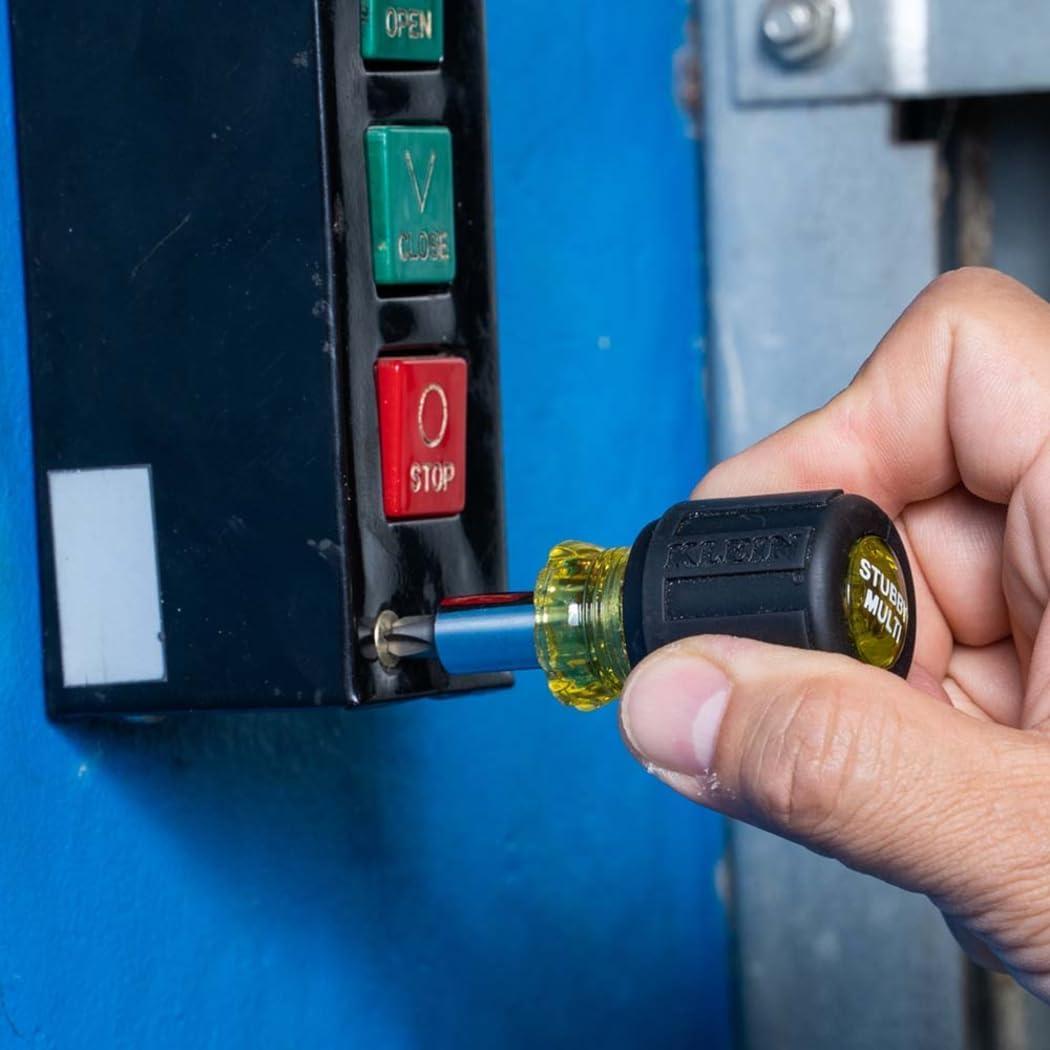
When I first pulled the Klein 32561 from my tool bag,I immediately appreciated what Klein was going for here. The compact 1-1/4-inch shaft is stubby enough to navigate those cramped spaces behind condensing units and inside air handler cabinets where full-length drivers just won’t fit. I’ve lost count of how many times I’ve needed to access terminal blocks on control boards or tighten down refrigerant line connections in tight quarters—this tool addresses that frustration head-on. The Cushion-Grip handle feels solid in hand, providing enough leverage for decent torque without requiring a death grip. What surprised me was the bit selection: two Phillips (#1 and #2),two slotted (3/16-inch and 1/4-inch),and two non-magnetic nut drivers (1/4-inch and 5/16-inch). It’s not an exhaustive kit, but it covers about 80% of the fasteners I encounter on residential and light commercial jobs—from blower motor screws to capacitor terminals.
One thing to note right away: these bits are non-insulated, so this isn’t the tool you reach for when working around live 240V circuits or testing capacitors with voltage present. I reserve this for mechanical assembly, panel cover removal, and general system prep work. The interchangeable shaft system is straightforward—bits swap out quickly without fumbling, which matters when you’re balancing on a ladder or wedged behind a furnace. Klein lists replacement bits (Cat. Nos. 32396, 32398, 32412), which is a relief sence I’ve stripped more than a few Phillips bits on rusted blower housing screws over the years. The non-magnetic nut drivers won’t attract metal shavings or debris, keeping things cleaner when working around evaporator coils or filter racks. For anyone tired of juggling multiple screwdrivers during routine maintenance calls or changeouts,this stubby multi-bit setup streamlines the process considerably.
| Feature | Specification |
|---|---|
| Shaft length | 1-1/4 inches (32 mm) |
| Phillips Bits | #1, #2 |
| Slotted Bits | 3/16-inch (5 mm), 1/4-inch (6 mm) |
| Nut Drivers | 1/4-inch (6 mm), 5/16-inch (8 mm) — Non-Magnetic |
| Handle Type | Cushion-Grip |
| Insulation | Non-insulated (not for live electrical work) |
| Replacement Bits | Cat. Nos. 32396, 32398, 32412 |
Why This Tool Earned a Permanent Spot in My HVAC Toolkit

After three decades turning wrenches on everything from residential split systems to commercial rooftop units, I’ve learned that the tools you reach for most are the ones that solve problems without creating new ones.This stubby multi-bit has become that go-to tool as it addresses the reality of HVAC work: tight spaces are the norm, not the exception. Whether I’m accessing terminal blocks inside a crowded electrical compartment on a 3-ton condenser, tightening flare fittings on a refrigerant line set in a cramped attic, or swapping out a contactor behind a blower assembly, that compact 1-1/4-inch shaft gets me where standard screwdrivers simply can’t reach. The cushion-grip handle isn’t just marketing fluff—when you’re torquing down a ground screw or securing a transformer mount, that extra grip translates to real control and less hand fatigue during all-day service calls.The bit selection covers exactly what I need most: #1 and #2 Phillips for control boards and panel covers,1/4-inch and 5/16-inch nut drivers for electrical terminals and refrigerant fittings,and slotted bits for those older thermostats and oddball fasteners you still encounter on legacy equipment.
| Included Bits | Primary HVAC Applications |
|---|---|
| #1 Phillips | Control boards, capacitor covers, small panel screws |
| #2 Phillips | access panels, blower assemblies, condenser top grilles |
| 1/4″ Nut Driver | Electrical terminals, transformer mounts, ground screws |
| 5/16″ Nut Driver | Contactor connections, larger terminal blocks, refrigerant line brackets |
| 3/16″ & 1/4″ Slotted | Thermostat wiring terminals, older equipment fasteners, adjustment screws |
What sealed the deal for me is the interchangeable bit system with available replacements—bits wear out, especially the nut drivers when you’re constantly working with brass flare nuts and copper fittings. Knowing I can order Cat.Nos. 32396, 32398, or 32412 means this tool isn’t disposable. One vital note: these are non-insulated bits, so I never use this tool for live electrical work on high-voltage components like run capacitors or compressor terminals on energized systems. for disconnecting power, checking voltages, or any work near live circuits, my insulated tools stay in hand. But for the 80% of fastening work that happens after lockout/tagout—securing ductwork, mounting thermostats, tightening refrigerant connections, reinstalling access panels—this stubby handles it all without the bulk. It’s not replacing my full-size driver set, but it’s solved the access problems that used to mean skinned knuckles and creative swearing in mechanical rooms.
How the compact Design Solves Real Problems in Tight Mechanical Spaces

When I’m wedged between a condensing unit and a wall trying to tighten terminal connections on a compressor contactor, or I’m reaching deep into a furnace cabinet to secure a blower motor mount, the last thing I need is a full-length screwdriver banging into ductwork or refrigerant lines. That’s where this stubby multi-bit design has saved me countless hours of frustration. The 1-1/4-inch shaft length gives me just enough reach to access recessed screws on control boards, gas valve terminals, and capacitor mounts without forcing me to remove entire panels or disconnect refrigerant lines.I’ve used it extensively on residential split systems ranging from 2-ton to 5-ton units, and it’s become my go-to tool when working inside air handlers where space is measured in inches, not feet. The compact profile means I can keep my knuckles away from sharp metal edges and live electrical connections—critical when you’re working on energized 240V circuits or navigating around charged capacitors.
The tool’s versatility shines during routine maintenance calls where I need to service everything from blower motor housing screws to refrigerant line set covers.The #1 and #2 Phillips bits handle most control board screws and thermostat terminals, while the 1/4-inch and 5/16-inch nut drivers are perfectly sized for the hex-head screws commonly found on condensate pump housings and reversing valve solenoids. I appreciate that Klein made the bits interchangeable—when I stripped a slotted bit trying to loosen a corroded drain pan screw on a 15-year-old air handler, I ordered replacement bits instead of buying an entirely new tool. the cushion-grip handle provides enough torque control to snug down electrical connections without over-tightening, which is essential when you’re working on sensitive components like flame sensors or pressure switch terminals.
| Configuration | Bit/Driver Size | Common HVAC Applications |
|---|---|---|
| Phillips | #1, #2 | Control boards, thermostat wiring, blower access panels |
| Slotted | 3/16″, 1/4″ | Terminal blocks, older gas valves, drain pan screws |
| Nut Driver | 1/4″, 5/16″ | Condensate pump mounts, refrigerant line covers, solenoid connections |
| Shaft Length | 1-1/4″ | Recessed furnace cabinets, tight air handler compartments |
Check Current Price on Amazon
What This Screwdriver is Actually Worth for Professional Technicians

After field-testing this Klein stubby across dozens of service calls—from tight condenser panel work to cramped air handler compartments—I can confidently say it delivers remarkable value for the money. The 1-1/4-inch shaft length is the sweet spot for accessing terminal blocks on condensing units, reaching control boards in cramped furnace cabinets, and tightening electrical connections behind thermostats without removing entire panels. I’ve used it on everything from securing low-voltage wiring on 16 SEER split systems to adjusting blower motor mounts in restricted plenum spaces. The Cushion-Grip handle provides genuine torque advantage when dealing with over-tightened panel screws or seized terminal connections that have been exposed to years of vibration and temperature cycling. The bit retention is solid—I haven’t lost a tip yet, even when working around high-velocity airflow from operational blowers or in challenging positions where drops would mean dismantling half the unit to retrieve them.
The included bit selection hits the most common fastener sizes I encounter daily: #1 and #2 phillips cover nearly all control board mounting screws and electrical panel fasteners, while the 3/16-inch and 1/4-inch slotted bits handle the majority of terminal connections and older equipment hardware. The 1/4-inch and 5/16-inch nut drivers are invaluable for condensing unit service valve caps and refrigerant line connections during leak checks or filter-drier replacements. One critical note: this tool is non-insulated, so it’s strictly for de-energized work—I keep an insulated set separate for any live electrical diagnostics on 208V or 230V circuits. At under $20,this Klein stubby has saved me countless trips back to the truck and eliminated the frustration of full-length screwdrivers bottoming out in recessed installations. It’s become a permanent fixture in my tool pouch alongside my multimeter and manifold gauges.
| Specification | Details |
|---|---|
| Shaft Length | 1-1/4 inches (32 mm) |
| Phillips Bits | #1, #2 |
| Slotted Bits | 3/16-inch (5 mm), 1/4-inch (6 mm) |
| Nut Drivers | 1/4-inch (6 mm), 5/16-inch (8 mm) |
| Handle Type | Cushion-Grip |
| Insulation | Non-insulated (de-energized work only) |
| Replacement Bits | Cat. Nos. 32396, 32398, 32412 |
Embody excellence

The Bottom Line from the Field
Look, I’ve been turning screws in cramped HVAC installations for more years than I care to count, and I can tell you this: the Klein 32561 Stubby earns its spot in my pouch every single day. When you’re wedged behind a furnace at 2 PM on a July scorcher or reaching into a condensate pan housing that some engineer clearly designed without ever holding a screwdriver,this tool pays for itself in saved time and preserved knuckles.
Here’s what I’ve learned over the years—the tools you choose directly impact the quality of work you deliver. A stripped screw because you were using the wrong bit? That’s a potential refrigerant leak down the road. A loose electrical connection as you couldn’t get proper torque in tight quarters? That’s a service call waiting to happen, higher energy bills for your customer, and possibly a safety hazard. Every connection you make, every panel you secure, every component you properly fasten affects system efficiency, indoor air quality, and long-term reliability.
The Klein 32561 gives you the versatility and access you need to do the job right the first time. It’s not fancy, it’s not expensive, but it’s exactly what you need when you need it. the compact shaft gets you into spaces where full-size drivers won’t fit, the bit selection covers probably 80% of what you’ll encounter in residential HVAC work, and the Cushion-Grip handle means you can actually apply proper torque without your hand cramping up.
Make the call. Add this to your toolkit and experience the difference that having the right tool for tight spots makes in your daily work. Your knuckles will thank you,your customers will get better installations,and you’ll spend less time wrestling with inadequate tools and more time doing quality work.