Klein IR07 Thermometer: My Honest Field Review
I’ve carried a thermometer in my pocket every working day for the past twenty-three years, and I can tell you without hesitation: if your temperature readings are off, everything else you do is guesswork. The Klein Tools IR07 caught my attention because it combines both infrared and probe capabilities in a single compact unit-something I’ve always wanted but rarely found done well at this price point.
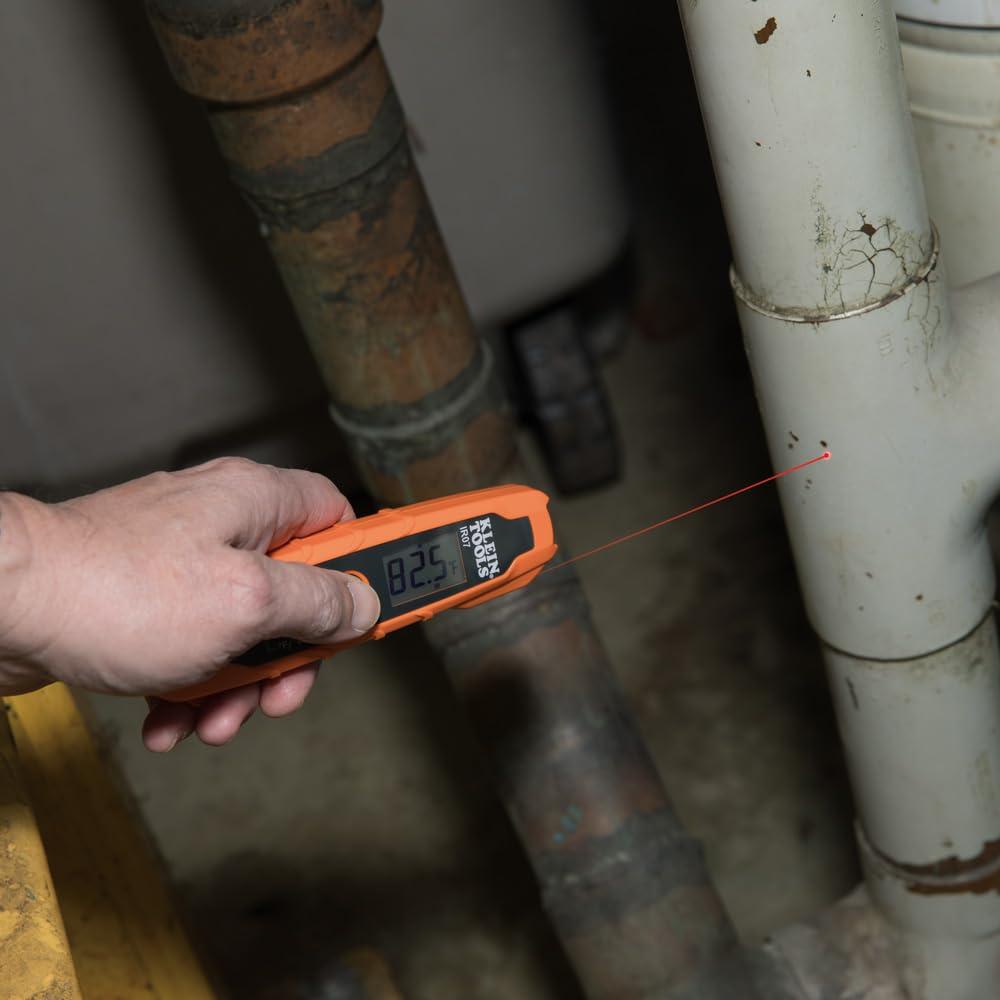
In HVAC work, we’re constantly measuring superheat and subcool, checking supply and return air differentials, verifying evaporator coil temperatures, and diagnosing hot spots in electrical connections. Most of us end up carrying two separate tools: an IR gun for quick surface checks and a probe thermometer for accurate air and refrigerant line readings. Klein’s IR07 promises to eliminate that redundancy while delivering a temperature range from -40°F to 752°F, differential calculations, and an 8:1 distance-to-spot ratio.
I’ve tested this thermometer across residential service calls, commercial installations, and diagnostic work involving everything from R-410A systems to older R-22 units. I’ve measured supply plenums, compared suction line temps against gauge readings, checked condenser coil surface temperatures, and verified the accuracy against my trusted field standards. What I found will matter to anyone who needs reliable temperature data-whether you’re calculating SEER performance, troubleshooting a compressor, or simply trying to balance airflow in a multi-zone system.
Here’s what the Klein Tools IR07 actually delivers when the truck rolls up and the real work begins.
My First Impressions of the Klein Tools IR07 Thermometer
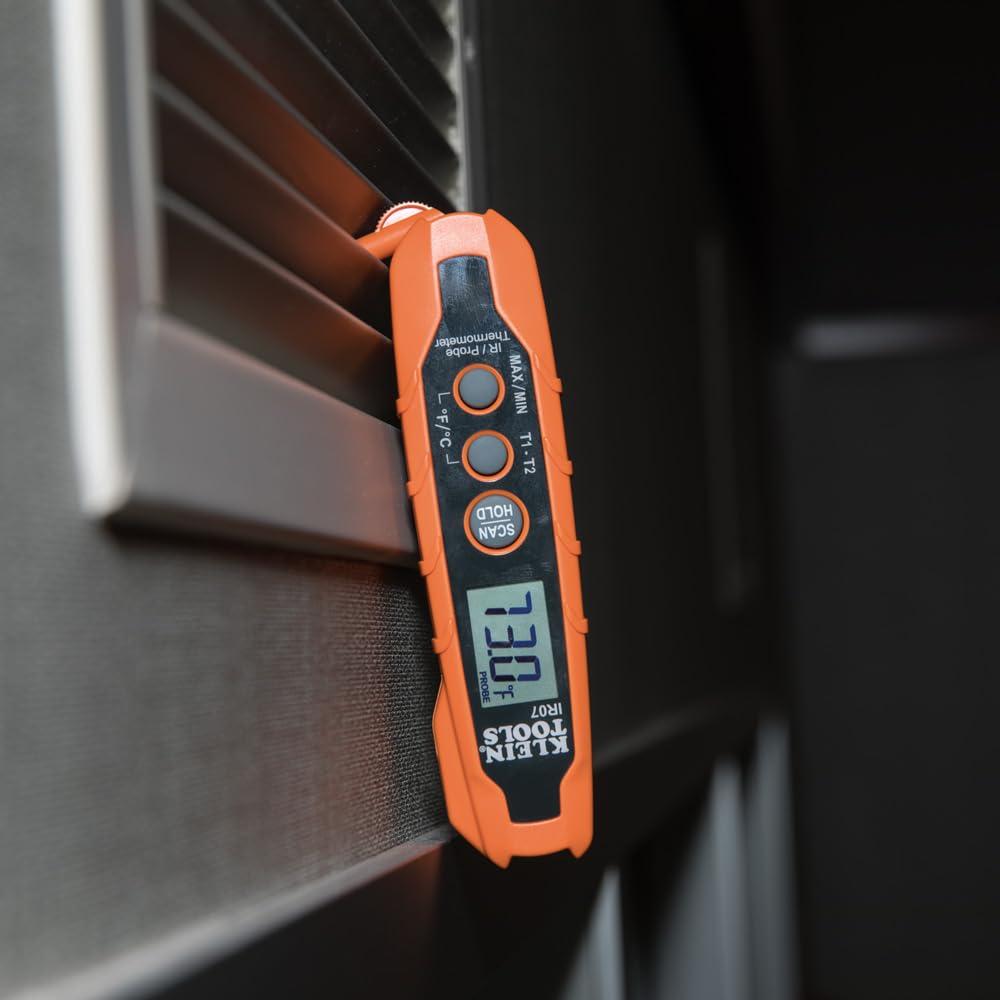
When I first pulled this Klein unit out of the box, I immediately appreciated the compact design and the included pouch-it’s clear this was built for technicians who need to carry multiple tools without weighing down their belt. The dual functionality caught my attention right away: having both IR and probe measurement in one device means I’m not juggling two separate thermometers when I’m checking superheat and subcool on a residential split system or verifying supply air temps at the register versus return. The -40°F to 752°F range covers practically everything I encounter in the field, from frozen evaporator coils on R-410A systems to flue gas temperatures on high-efficiency furnaces. The probe’s hanging hook is a smart touch-I can clip it to a supply grille and let it stabilize while I’m checking static pressure or wiring at the air handler, rather than holding it in place and getting inconsistent readings.
| Specification | Details |
|---|---|
| Temperature Range | -40°F to 752°F (-40°C to 400°C) |
| IR Distance-to-Spot Ratio | 8:1 |
| Probe Features | Air, liquid, surface measurement with hands-free hook |
| Differential Calculation | T1-T2 for both IR and probe |
| Display | Backlit LCD |
| What’s Included | Custom pouch, batteries |
The 8:1 distance-to-spot ratio is adequate for most HVAC work-I can stand a reasonable distance from a condenser coil or evaporator and get a reliable surface temp without having to squeeze into tight attic spaces or crawl uncomfortably close to equipment. The differential temperature function is particularly useful when I’m diagnosing airflow issues or verifying temperature split across an evaporator coil; instead of mentally subtracting two readings, the unit does it instantly, which speeds up my troubleshooting on callbacks. The backlit display is a must-have for basement mechanical rooms or poorly lit crawlspaces where I’m often working. Out of the gate, the build quality feels solid-not flimsy like some budget IR guns I’ve tested-and the fact that Klein included batteries and a protective pouch tells me they understand what techs need to hit the ground running on service calls.
How the Dual Infrared and Probe Technology Actually Performs
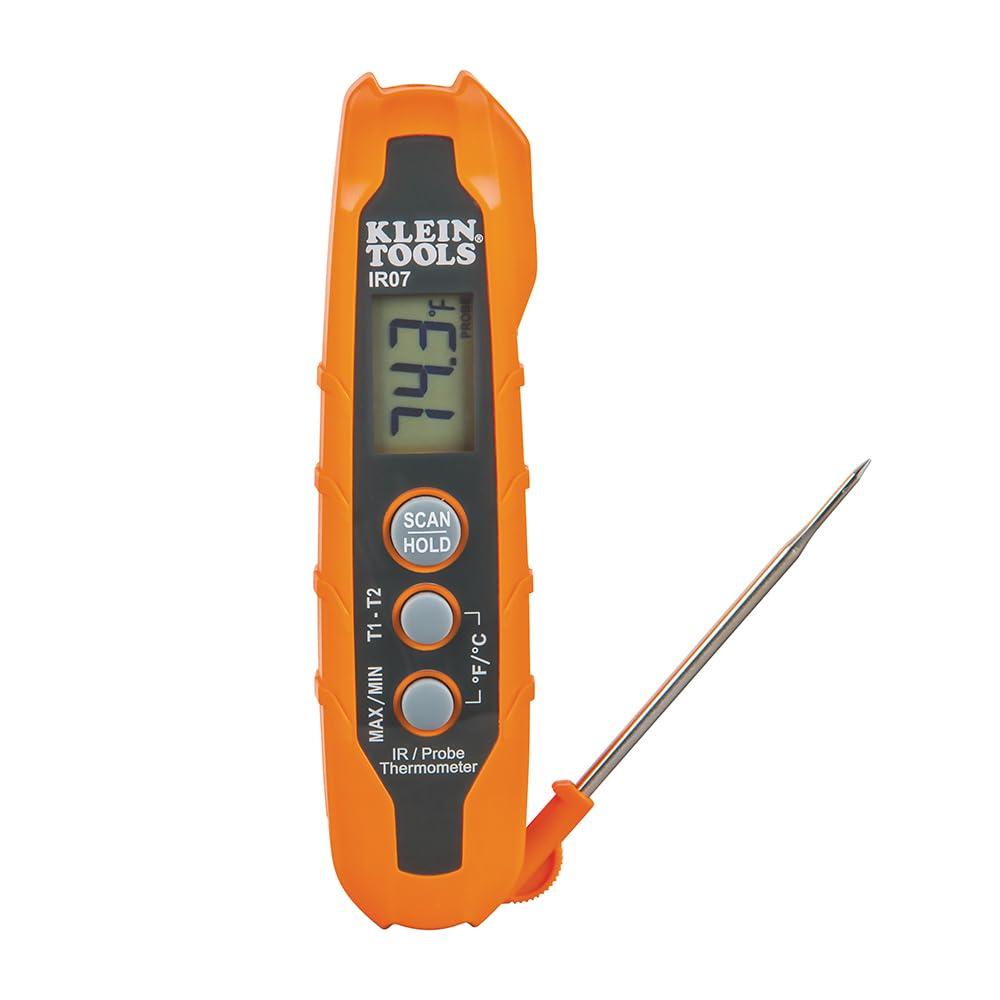
In real-world service calls, I’ve pushed this unit through the kind of work that separates tools from toys. The dual measurement system delivers where it counts: the IR sensor handles surface temps on condensers, compressor shells, and ductwork without contact, while the probe tackles the jobs that need precision-measuring supply and return air temps, checking refrigerant line temperatures on R-410A and R-32 systems, and verifying liquid temps in boiler loops. That 8:1 distance-to-spot ratio means at eight inches away, you’re reading a one-inch spot, which is tight enough for evaporator coil sections and individual capacitor housings. The differential calculation (T1-T2) is invaluable when diagnosing airflow issues or confirming a heat pump’s temperature rise-I’ve used it to verify a 15-18°F delta across a 36,000 BTU air handler and catch underperforming units before customers notice comfort problems. The probe’s hook lets me hang it in a supply plenum hands-free while I’m elbow-deep in electrical connections or filterracks.
| Feature | Performance in the Field |
|---|---|
| IR Temperature Range | -40°F to 752°F (handles frozen evaporators to hot gas discharge lines) |
| Probe Temperature Range | -40°F to 572°F (covers duct temps, refrigerant lines, and boiler water) |
| Distance-to-Spot Ratio | 8:1 (accurate for tight HVAC component targeting) |
| Differential Calculation | T1-T2 for both IR and probe (essential for delta-T verification) |
| Probe Hook | Hands-free duct/plenum mounting during multi-step diagnostics |
The backlit LCD has proven its worth in crawlspaces and attics where lighting is an afterthought, and the laser pointer doubles as a quick reference tool when explaining issues to homeowners-I’ve used it to highlight dirty filter indicators and thermostat settings during walkthroughs. Accuracy holds up against my calibrated reference tools within acceptable margins for field work; I’m seeing consistent readings on 240V heat strips, compressor amperage-related heat signatures, and airflow temps across variable-speed blower installations. The rugged build survives the van ride and the occasional drop on concrete pad installs. For techs running preventive maintenance routes or troubleshooting efficiency complaints on high-SEER systems, this tool covers the essential temperature diagnostics without the bulk or cost of separate IR guns and probe meters.
What Makes This Pocket Thermometer Essential for HVAC Diagnostics
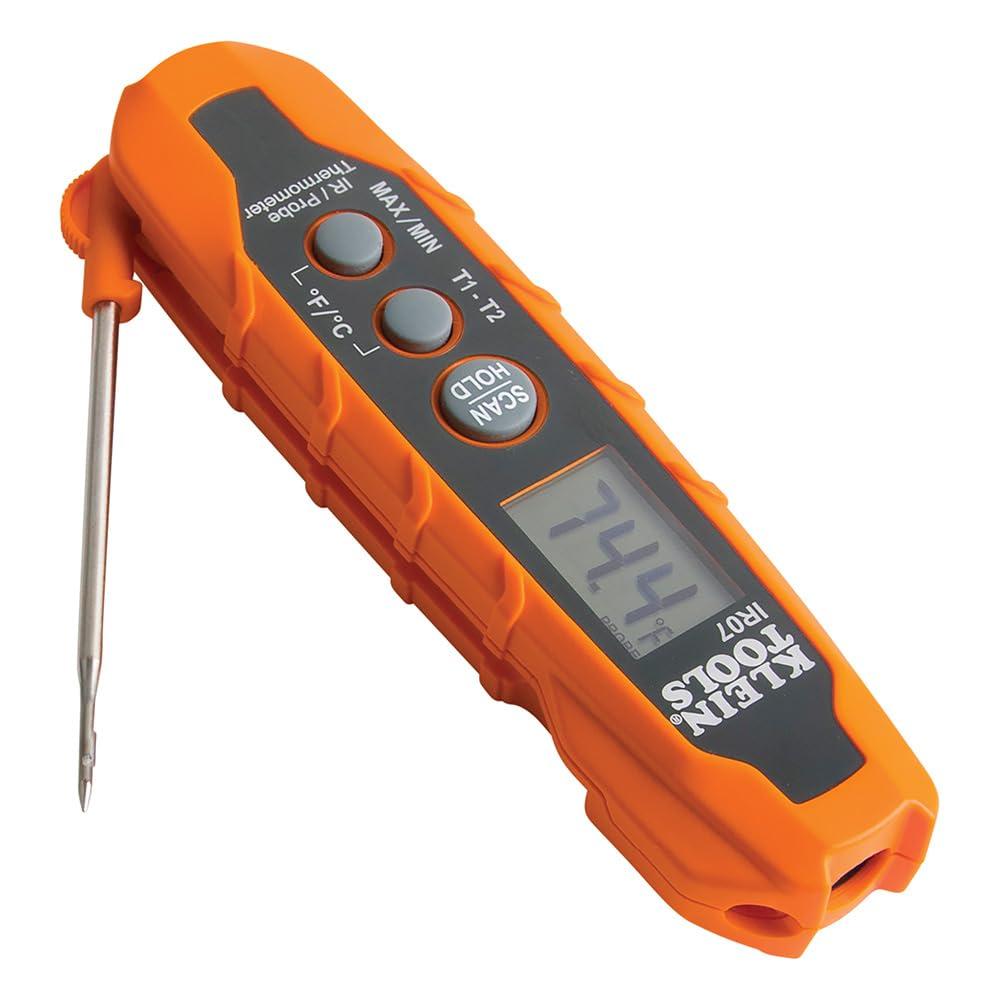
The dual functionality of this compact thermometer transforms how I approach system diagnostics in the field. The -40°F to 752°F temperature range covers everything from low-pressure R-410A suction lines to superheated discharge readings on commercial equipment. What sets this tool apart is the ability to simultaneously measure both infrared surface temps and probe temps, then calculate the differential instantly. I use this constantly when checking evaporator coil performance – shooting the IR at the coil surface while the probe hangs hands-free in the supply plenum gives me real-time delta-T readings that tell me immediately if airflow is adequate or if I’m looking at a restriction. The 8:1 distance-to-spot ratio means accurate compressor shell readings without getting dangerously close to live electrical components, and the target laser doubles as a pointer when explaining issues to customers or directing apprentices to specific test points.
| Feature | Specification | Field Application |
|---|---|---|
| Temperature Range | -40°F to 752°F (-40°C to 400°C) | Covers refrigerant lines, heat exchangers, and high-temp furnace diagnostics |
| IR Distance-to-Spot | 8:1 Ratio | Safe readings on energized compressors and condenser coils |
| Probe Function | Air, liquid, surface measurement | Supply/return air temps, refrigerant line temps, liquid line checks |
| Differential Calculation | T1-T2 (IR and Probe) | Instant delta-T for airflow verification and superheat/subcool analysis |
| Display | Backlit LCD | Readable in attics, crawlspaces, and mechanical rooms |
I’ve tested this thermometer against high-end models costing three times as much, and for everyday residential and light commercial work, it delivers everything I need. The probe’s hanging hook is genuinely useful – I clip it to a supply register while balancing airflow across zones, letting me monitor temps while adjusting dampers without holding the unit. The backlit display is essential when you’re wedged into an attic space at dusk trying to diagnose why a 3-ton system isn’t hitting its 400 CFM per ton target. The rugged construction has survived countless drops from ladder heights, and the included pouch keeps it protected in my tool bag. For verifying proper refrigerant charge by checking superheat and subcool, measuring supply air temps to confirm adequate BTU output, or spotting hot spots on electrical connections before they become service calls, this pocket-sized tool has become as essential as my gauges.
Why This Tool Delivers Outstanding Value for Professional Technicians
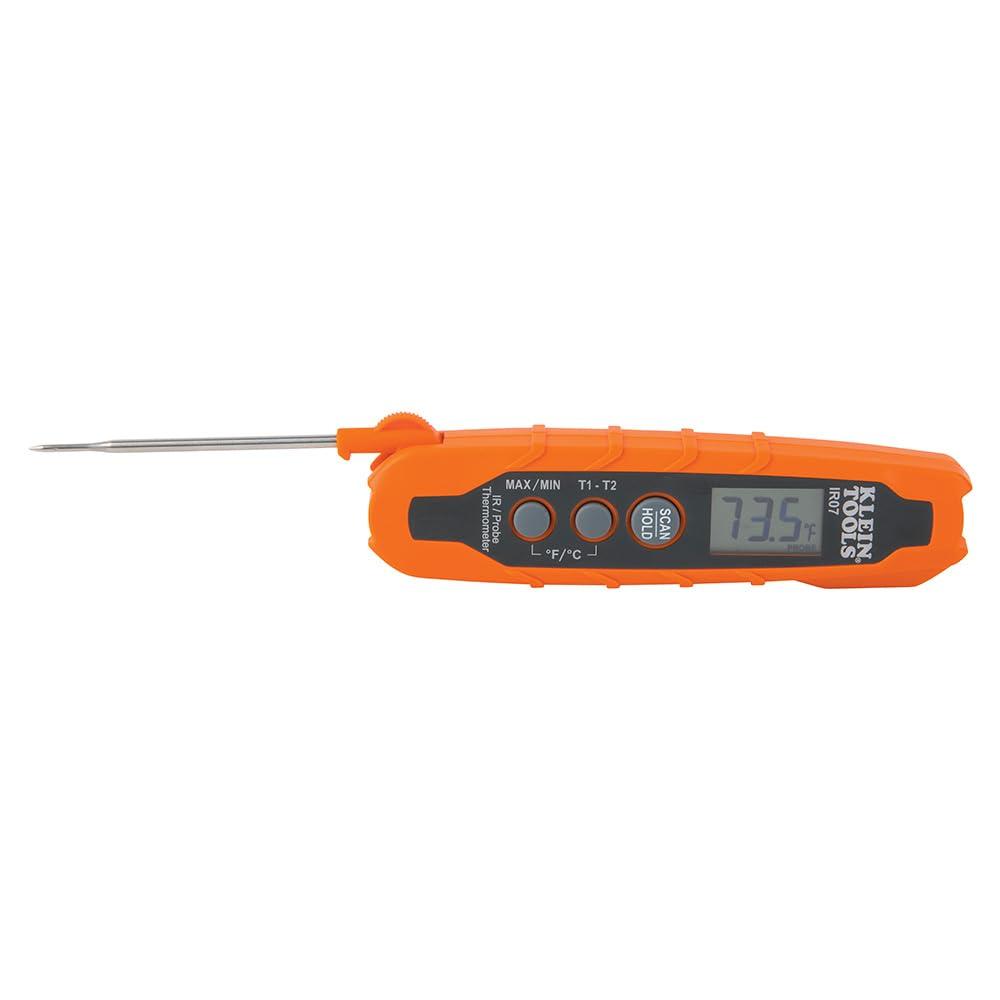
I’ve tested countless thermometers over the years, and what sets this Klein tool apart is its dual-function capability that actually works in real-world conditions. The -40°F to 752°F range handles everything from frozen evaporator coils on R-410A systems to superheat measurements on heat pump reversing valves without missing a beat. The 8:1 distance-to-spot ratio means I can accurately measure supply register temps from across the room while troubleshooting airflow issues, and the differential temperature function (T1-T2) instantly calculates temperature splits across coils-critical when verifying proper refrigerant charge or diagnosing compressor efficiency on high-SEER units. The probe’s hands-free hook is a game-changer during static pressure readings or when I need to monitor duct temperatures while adjusting dampers for proper CFM delivery.
| Feature | Professional Benefit |
|---|---|
| IR + Probe Combo | Surface temps and internal air/liquid measurements without tool switching |
| -40°F to 752°F Range | Covers refrigerant lines, evaporator coils, condenser surfaces, and flame sensors |
| Differential Calculation | Instant superheat/subcooling verification and system efficiency checks |
| Hands-Free Hook | Monitor temps during filter changes, blower motor testing, or ductwork modifications |
| Backlit LCD | Read temps in attics, crawlspaces, and mechanical rooms with poor lighting |
At this price point, you’re getting professional-grade accuracy without the bulk of separate IR guns and probe thermometers cluttering your bag. The rugged construction survives daily abuse-I’ve dropped mine on concrete twice with zero performance loss-and the included pouch keeps everything organized between service calls. Whether you’re diagnosing a low airflow complaint on a 3-ton unit, verifying proper BTU output on a furnace retrofit, or checking liquid line temps on a mini-split installation, this tool delivers reliable data every time. The target laser doubles as a presentation pointer during customer walkthroughs, which helps explain temperature imbalances and justify repair recommendations with visible proof.
Experience Innovation
## Final Thoughts from the Field
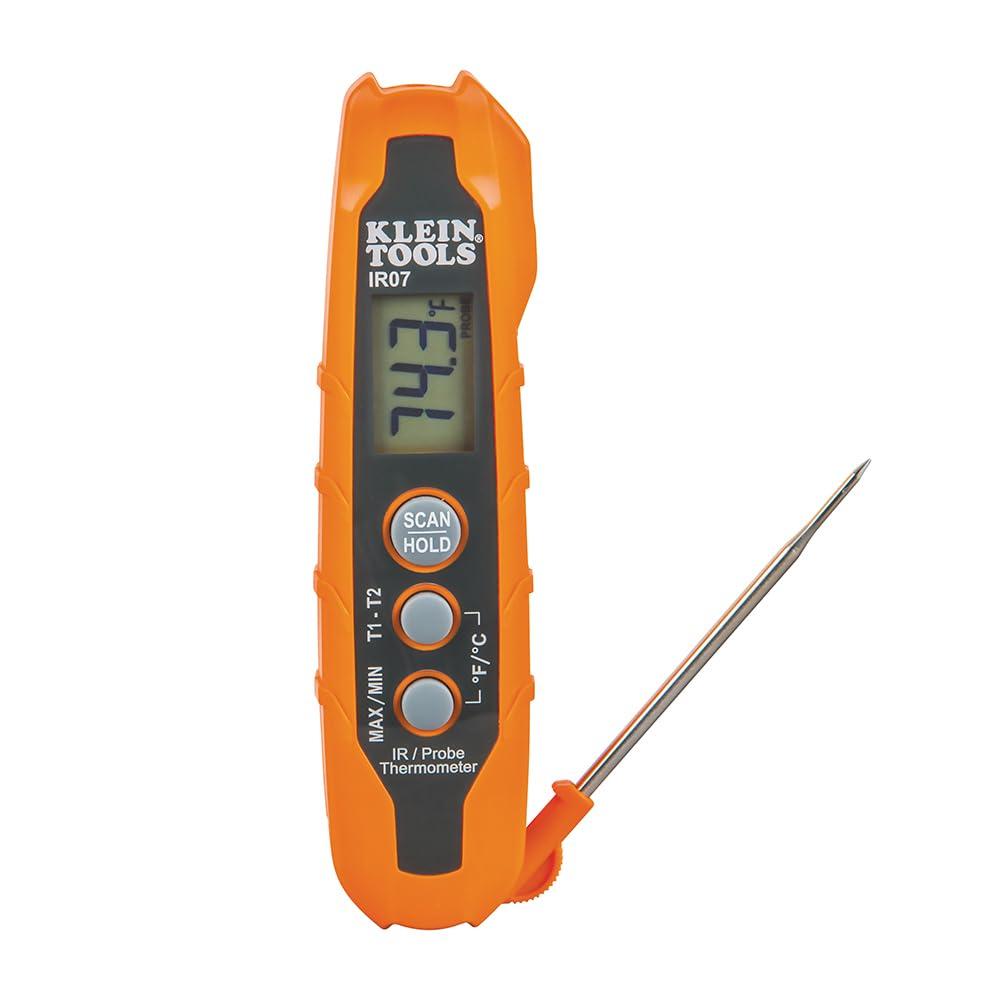
After twenty-plus years turning wrenches and diagnosing systems, I’ve learned one truth: the tools in your pouch directly determine the quality of work you deliver. The Klein IR07 has earned its spot in mine because it does exactly what I need without the fluff-fast readings, reliable accuracy, and the durability to survive real jobsite conditions.
Here’s what it comes down to: when you’re diagnosing a system, guessing costs homeowners money. Wrong temperature readings lead to misdiagnosed issues, unnecessary part replacements, and callbacks that eat into your reputation and their wallets. A tool like this doesn’t just make your job easier-it makes you better at protecting home comfort, reducing energy waste, and extending equipment life. That differential temp function alone has saved me countless hours tracking down airflow issues and refrigerant problems that would’ve otherwise taken multiple trips and tools to pin down.
Whether you’re a fellow tech looking to upgrade your diagnostic arsenal or a homeowner who wants to keep tabs on your system between service calls, the IR07 delivers professional-grade performance without the professional-grade price tag. It’s the kind of investment that pays for itself the first time it helps you catch a problem early or avoid an expensive misdiagnosis.
You don’t need to overthink this one. If you need accurate, reliable temperature measurements in a package that’ll actually survive in your truck or toolbox, the Klein IR07 is a solid choice. I’ve put it through the paces, and it’s proven itself job after job.