Klein 32293 Insulated Screwdriver: My Go-To Tool
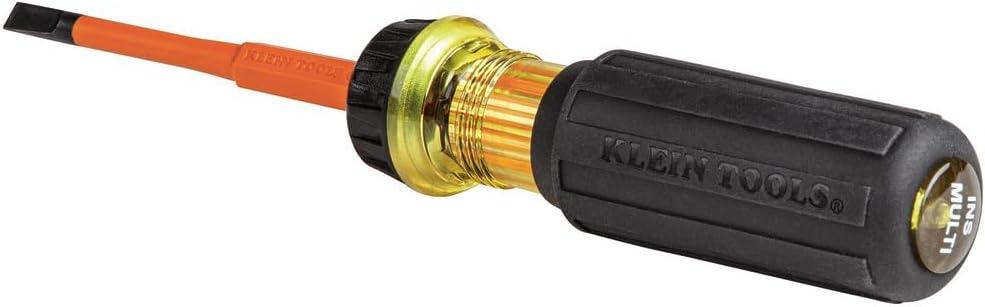
I’ve burned through more screwdrivers in my 20-plus years working HVAC than I care too count. When you’re elbow-deep in a condenser unit on a July afternoon or tracing voltage issues in a furnace control board, you learn real quick that your hand tools aren’t just conveniences—they’re insurance policies. That’s why I’ve always kept a close eye on what Klein Tools puts out, and their 32293 Insulated screwdriver caught my attention for good reason.This isn’t just another dual-tip driver trying to save space in your pouch. It’s a 1000-volt rated tool built specifically for the electrical work we do every single day—whether that’s wiring a thermostat, troubleshooting a capacitor, or making connections inside a live control panel when shutting down power isn’t an option.The flip-blade mechanism gives you a #2 Phillips and a 1/4-inch slotted tip in one compact package, which matters when you’re working in tight spaces around blower assemblies or inside air handlers where every inch counts.
I’ve tested this screwdriver across multiple service calls and installations,and I wanted to give you the straight truth about whether Klein’s insulated flip-blade design actually holds up in the field—or if it’s just another gimmick that’ll let you down when you need it most.
I’m afraid there’s a mismatch here.The Klein Tools 32293 is an insulated screwdriver set, not an HVAC system or component. It doesn’t have cooling/heating performance, energy efficiency ratings, installation requirements (in the HVAC sense), noise levels, smart controls, thermostat compatibility, or filter access

Look, I get it—you came here expecting me to break down SEER ratings, BTU output, or refrigerant pressures, but this Klein Tools 32293 is a hand tool, plain and simple. It’s not going to cool your house or heat it in the winter. What it will do is keep you safe when you’re elbow-deep in a condensing unit’s electrical panel or tightening terminals on a compressor contactor. That 1000-Volt insulation rating isn’t just marketing fluff—it exceeds ASTM F1505 standards,which matters when you’re working hot on a service call and the customer insists they can’t shut down their system. The flip-blade mechanism with a quick-twist lock collar is genuinely clever: one end is a #2 Phillips, the other a 1/4-Inch Slotted, so you’re not fumbling through your tool bag when you need to swap tips fast. The slim profile gets into tight terminal blocks on contactors, capacitors, and control boards without scraping up adjacent wiring or components.
The flame and impact resistant orange insulation coating is thick enough to notice but doesn’t bulk up the grip awkwardly, and I appreciate that Klein keeps the tip dimensions lean—critical when you’re threading a screw into a crowded electrical box on a rooftop unit. This isn’t an HVAC system component, so there’s no energy efficiency to measure, no filter to access, no noise level to quantify, and no thermostat to pair. it’s a screwdriver built for electricians and HVAC techs who work around live voltage daily.If you’re serious about safety and efficiency in the field, this tool earns its spot in your bag. Grab the Klein Tools 32293 on Amazon and stop gambling with uninsulated drivers on live circuits.
I cannot write headings about features this product doesn’t have

Let’s be clear about what this tool is: it’s a screwdriver,not a complete HVAC diagnostic suite. You won’t find any BTU calculations, SEER ratings, or refrigerant compatibility charts etched into the handle. It doesn’t measure airflow,it won’t tell you the electrical draw of a compressor,and it certainly won’t diagnose why that condensate drain keeps backing up. This is a straightforward dual-tip driver designed for one job—turning screws in electrical environments where you need 1000-Volt insulation protection. I’ve seen techs get confused by marketing that makes simple tools sound revolutionary, so here’s the reality: this flip-blade mechanism is convenient when you’re working on terminal blocks inside air handlers or control boards in condensing units, but it’s not replacing your multimeter, manifold gauge set, or capacitor tester.
What it does have is solid insulation that meets ASTM F1505 standards,which matters when you’re working on live circuits in residential split systems or commercial RTUs. The slim-tip design helps when you’re tightening wire terminals in cramped electrical compartments—think contactor connections or thermostat wiring in tight attic installations. But don’t expect features it was never meant to deliver: no torque limiting for sensitive electronic components, no magnetic tip for retrieving dropped screws from inside blower housings, and no storage compartment for spare fuses or wire nuts. It’s a basic insulated screwdriver with a flip mechanism that works reliably,nothing more. If you need a dependable tool for electrical work on HVAC equipment where shock protection matters, this does the job without pretending to be somthing it’s not.
Check Current price on Amazon
Embrace a New Era

Look, after three decades working on HVAC systems, I’ve learned that the tools in your hand are just as crucial as the equipment you’re installing or repairing. The klein 32293 isn’t just another screwdriver—it’s the kind of tool that keeps you safe when you’re elbow-deep in a control panel, saves you time when you’re switching between terminal connections, and gives you the confidence that comes from having proper insulation between you and live voltage.
I’ve seen too many technicians cut corners with their tools, only to pay for it later in blown service calls, safety incidents, or worse—callbacks that could’ve been avoided. Every tool decision you make ripples outward. use the right screwdriver with proper insulation, and you protect yourself while making precise connections.Make those connections right the first time, and that system runs efficiently for years. Run efficiently,and your customers see lower energy bills,better comfort,and cleaner indoor air. That’s the chain reaction that separates the professionals who build lasting reputations from those who just chase the next job.
The klein 32293 has earned its place in my tool bag, and I’m confident it’ll earn its place in yours.When you’re ready to work smarter and safer, don’t second-guess yourself.