
Klein Tools 650 Scratch Awl: A Pro’s Take
I’ve carried a Klein Tools 650 Scratch Awl in my service van for the better part of fifteen years, and if you’d told me back when I started turning wrenches that I’d eventually write about something as simple as a steel awl, I’d have laughed. But here’s the thing: after countless rooftop condenser installations, furnace replacements in crawl spaces you wouldn’t believe, and emergency service calls where the right tool meant the difference between a thirty-minute fix and a three-hour nightmare, I’ve learned that the basics matter just as much as your refrigerant gauges or combustion analyzer.
The Klein 650 isn’t flashy. It doesn’t have Bluetooth connectivity or digital readouts. What it does have is a 3-1/2-inch heat-treated steel shank, a cushion grip that actually stays comfortable when you’re marking sheet metal in 95-degree attic heat, and that distinctive Klein quality that’s kept them in business since before anyone knew what a heat pump was. Whether you’re scribing cut lines on ductwork, starting pilot holes in equipment cabinets, punching through wire insulation, or marking mounting points on a condensate drain pan, this tool does exactly what it’s supposed to do without complaint.
I’ve tested this awl against cheaper alternatives and watched those imports fail when subjected to the real-world abuse of daily HVAC work. So when HVACDirectPlus asked me to put together an honest evaluation of the Klein 650, I didn’t need to special-order one for testing-I just reached into my tool bag and pulled out the one that’s been there through hundreds of installations. Let’s talk about whether this American-made scratch awl deserves a spot in your kit.
Product Overview: My First Impressions of the Klein Tools 650 Scratch Awl
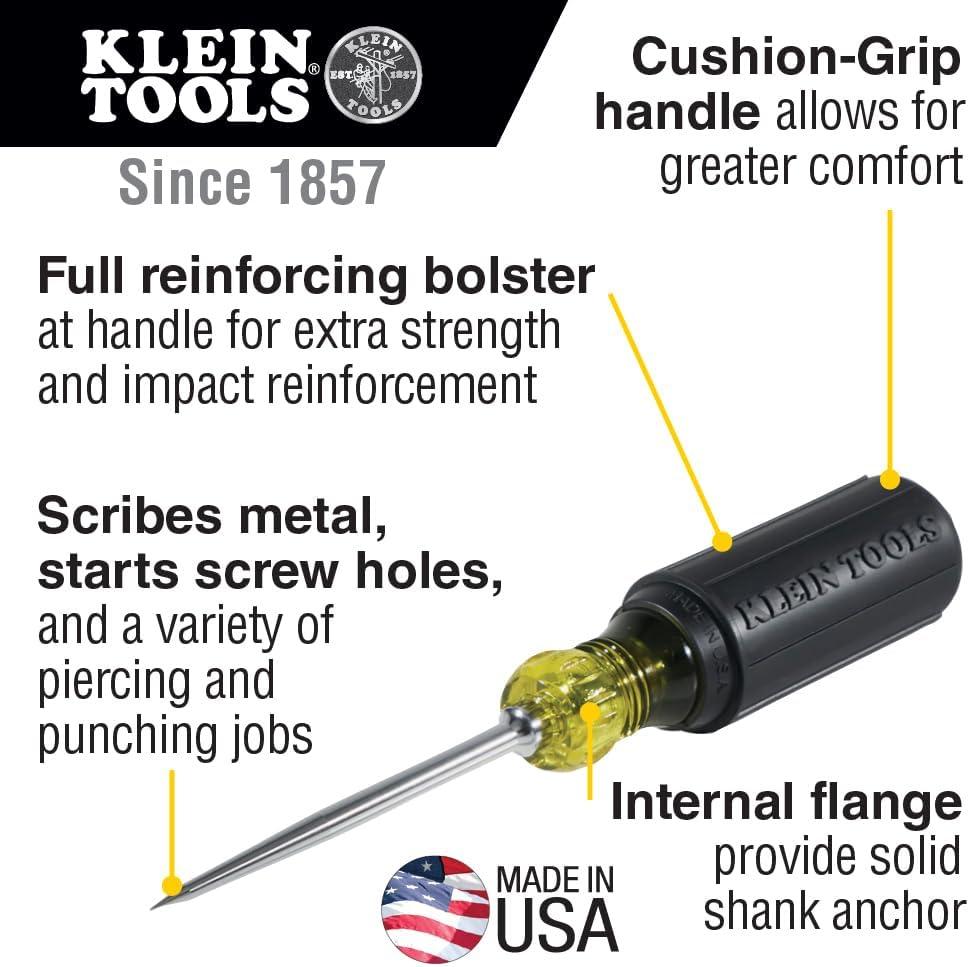
When I first pulled this scratch awl out of the package, the weight distribution immediately told me this wasn’t some big-box throwaway tool. The chrome-plated, heat-treated shank feels rigid and purposeful in hand, and that full reinforcing bolster where the steel meets the handle gives me confidence I can strike this thing with a hammer when marking metal without worrying about the shank pushing through or the handle splitting. I’ve marked countless condenser cabinets, evaporator housings, and ductwork over the years, and the first thing I look for is whether a scribe can handle the abuse of scoring galvanized steel or aluminum without flexing or dulling after a few jobs. The one-piece forged-steel blade with that black rust-resistant finish suggests this tool was designed by people who understand what happens when you leave a hand tool on a rooftop next to a condensing unit in July.
The Cushion-Grip handle isn’t just marketing fluff-it actually provides decent ergonomics when you’re spending half your day marking drill points for mounting brackets, scribing cut lines on sheet metal plenums, or starting pilot holes in electrical junction boxes. Those internal flanges that anchor the shank mean the handle won’t spin or separate even when you’re applying serious torque, which matters when you’re working in tight spaces behind air handlers or inside cramped attic installations where you can’t get perfect leverage. At 3-1/2 inches, the shank length hits a sweet spot: long enough to reach into recessed areas on equipment cabinets or through insulation on linesets, but not so long that it becomes unwieldy when working around live electrical components or refrigerant lines where precision matters.
| Specification | Detail |
|---|---|
| Shank Length | 3-1/2 inches |
| Shank Material | Chrome-plated, heat-treated tempered steel |
| Handle Type | Cushion-Grip with internal flange anchor |
| Construction | One-piece forged blade with full bolster reinforcement |
| Finish | Black rust-resistant coating |
| Manufacturing | Made in USA |
How This Scratch Awl Holds Up on HVAC Job Sites
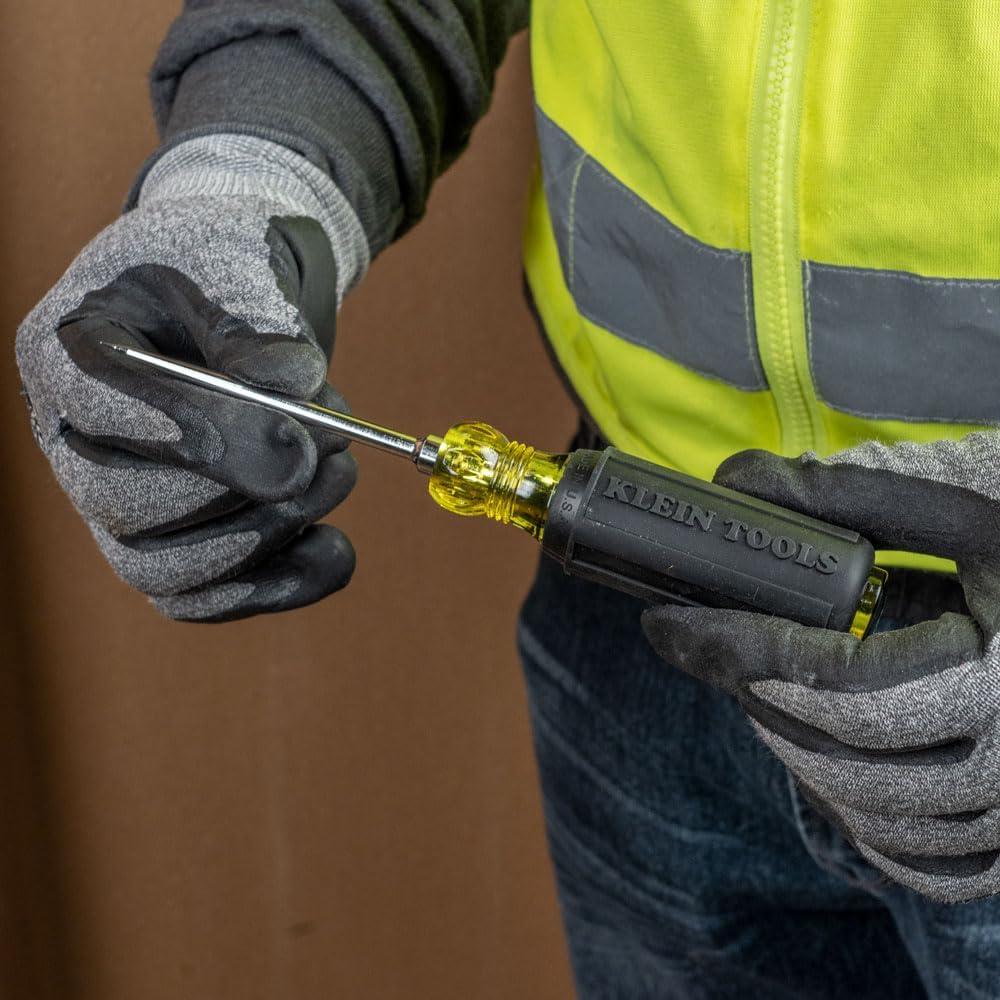
I’ve put this scratch awl through the kind of abuse that comes standard on HVAC job sites, and it’s proven itself repeatedly. Whether I’m marking sheet metal for custom ductwork fabrication, scribing cut lines on condenser cabinets, or starting pilot holes in tight spaces behind air handlers, the heat-treated steel shank hasn’t shown any signs of bending or tip degradation. The chrome-plated finish resists rust even when I’ve left it sitting in condensate or worked through humid attic installations in summer. That full reinforcing bolster at the handle isn’t just marketing-I’ve used the back end as a makeshift punch more times than I can count when installing linesets or securing electrical whip connections, and the internal flanges keep the shank locked solid without any wobble. The one-piece forged construction means there’s no weak point where cheaper tools would fail, which matters when you’re working on a ladder marking refrigerant line penetrations through exterior walls.
The cushion grip makes a real difference during those long retrofit jobs where I’m marking dozens of screw locations for mounting brackets on mini-split installations or laying out plenum modifications. I’ve used it to start holes in everything from 24-gauge galvanized duct material to the heavier steel used in commercial RTU curb adapters, and the well-balanced design reduces hand fatigue compared to the hard-plastic-handled alternatives. It’s become my go-to for precisely marking thermostat wire entry points and creating starter dimples before drilling through furnace cabinets-critical when you’re trying to avoid hitting refrigerant lines or electrical components in those cramped high-efficiency units. For a tool that costs less than a single service call, it’s held up better than awls twice the price, and being made in the USA means I can actually get a replacement if I ever manage to lose it in an attic.
| Specification | Details |
|---|---|
| Shank Length | 3-1/2 inches |
| Shank Material | Chrome-plated, heat-treated tempered steel |
| Construction | One-piece forged with reinforcing bolster |
| Handle Type | Cushion-Grip with internal flanges |
| Primary Uses | Scribing metal, starting screw holes, marking ductwork, piercing tasks |
| Finish | Black rust-resistant coating |
| Manufacturing | Made in USA |
Why I Keep This Tool in My Service Bag
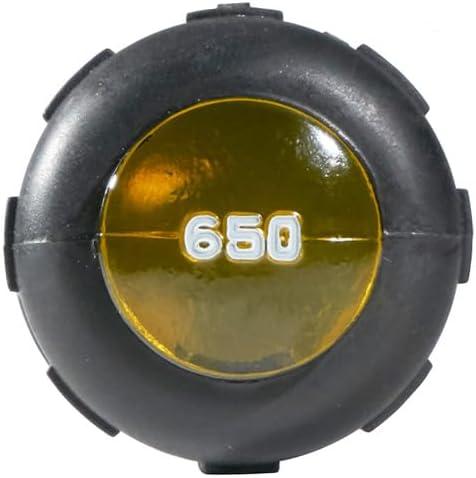
This awl earns its spot in my bag because it handles the grunt work that comes up on nearly every service call. I use it constantly to scribe cut lines on sheet metal ductwork, punch starter holes for self-tapping screws when mounting condensing units or air handlers, and pierce through insulation jackets to access refrigerant line sets without damaging copper. The heat-treated steel shank punches through 24-gauge galvanized steel without bending, which matters when you’re installing returns in tight crawlspaces or modifying plenum boxes on the fly. The full bolster reinforcement at the handle means I can tap it with a wrench handle to break through stubborn access panels or mark precise locations for electrical knockouts on disconnect boxes-something I do weekly when upgrading from R-22 systems to R-410A units that require different line set configurations and electrical specs.
The cushion grip stays comfortable even after marking multiple screw placements on a commercial install, and the internal flanges keep the shank locked solid so there’s no wobble when scribing measurement lines for custom ductwork on variable-speed systems where precise airflow calculations matter for maintaining SEER ratings above 16. I’ve used it to clear clogged condensate drain holes, mark filter rack mounting points, and even probe for hidden fasteners behind rusted panel covers on older furnaces. The chrome plating resists the rust you’d expect from constant exposure to condensate, refrigerant oils, and the humidity around evaporator coils. It’s one of those tools that doesn’t directly relate to BTU output or static pressure readings, but without it, half the mechanical work on installs and repairs would take twice as long.
| Common HVAC Applications | Why This Tool Works |
|---|---|
| Sheet Metal Ductwork Fabrication | Scribes accurate cut lines on galvanized steel without slipping |
| Condensing Unit Mounting | Punches pilot holes for lag bolts and self-tapping screws |
| Refrigerant Line Access | Pierces insulation jackets cleanly without tearing |
| Electrical Box Modifications | Marks knockout locations on disconnect enclosures |
| Condensate Drain Maintenance | Clears debris from drain pan outlets |
What This Means for Your Tool Investment
I’ve spent enough money on cheap tools that lasted one season to know the difference between a throwaway and a keeper. When you’re scribing sheet metal for a custom duct transition or marking refrigerant line sets for precise cuts on a rooftop install in July, the last thing you need is a wobbly awl that bends or a handle that tears up your hand after twenty minutes. This Klein piece solves those problems with heat-treated tempered steel construction and a full reinforcing bolster that won’t flex when you’re punching through 22-gauge galvanized or starting pilot holes in tight electrical panel knockouts. The internal flanges create a solid anchor that prevents the shank from twisting inside the handle-something I’ve seen fail on bargain-bin alternatives right when you need them most. For marking measurement points on condenser pads, scribing cut lines on linesets, or even punching drainage holes in overflow pans, the rigid chrome-plated shank stays true and resists rust in the humid environments we work in daily.
The cushion grip isn’t just marketing fluff; it actually matters when you’re working through multiple service calls and your hands are already fatigued from wrenching on compressor bolts or wrestling with air handlers in cramped attics. Made in the USA with Klein’s six-generation backing means warranty support you can actually use and replacement availability that won’t leave you scrambling mid-job. At this price point, you’re looking at a tool that will outlast most of your cordless batteries and pay for itself the first time it saves you from a trip back to the truck. Here’s what you’re really getting:
| Investment Factor | Value Delivered |
|---|---|
| Durability | Heat-treated steel shank, rust-resistant finish, reinforced bolster for impact resistance |
| Versatility | Scribing metal, starting screw holes, marking linesets, punching drainage paths |
| Comfort | Cushion grip reduces hand fatigue during repetitive marking and scribing tasks |
| Longevity | Professional-grade construction backed by 160+ years of Klein manufacturing standards |
| Support | USA-made with accessible warranty service and replacement part availability |
Add This Tool to Your Kit on Amazon
Experience Innovation

## The Bottom Line
Look, I’ve been in this trade long enough to know that the tools you carry say a lot about the work you deliver. This Klein Tools 650 scratch awl isn’t flashy, and it won’t revolutionize your toolkit-but that’s exactly the point. It’s a workhorse tool that does exactly what it promises, every single time you reach for it.
In HVAC, we talk a lot about reliability. We tell homeowners that choosing the right system means lower energy bills, better air quality, and years of dependable comfort. The same principle applies to our tools. When I’m marking sheet metal for a custom duct run or scribing reference points on a tight install, I need a tool that won’t fail me. Sloppy cuts and misaligned holes don’t just waste time-they compromise system performance and ultimately, the comfort of the people living in that home.
This awl has earned its place in my bag because it’s built with the same standards I hold myself to: American-made quality, thoughtful design, and the durability to handle real-world demands. Klein has been doing this since 1857 for a reason. They understand that professionals need tools that work as hard as they do.
If you’re serious about your craft and you need a scratch awl that won’t let you down when precision matters, this is the one. It’s a small investment that pays dividends every time you use it.