Klein Tools 55600: My Go-To Cooler for the Job
I’ve spent over two decades crawling through attics in July heat and laying in front of furnaces in unfinished basements, and I can tell you right now-the difference between a good day and a miserable one often comes down to the gear that keeps you going. Your tools matter, sure, but so does staying hydrated and fed when you’re pulling a compressor in 95-degree weather or diagnosing a failed heat exchanger that’s got you wedged in a mechanical room for hours.
That’s why I’m taking a hard look at the Klein Tools 55600 Work Cooler today. Klein’s been making professional-grade hand tools since before refrigerant was even a concept, and now they’ve turned their attention to something every HVAC tech needs on the job: a lunch cooler that can actually survive the field. This isn’t some flimsy plastic box that’ll crack the first time you set your gauge manifold on it. We’re talking about a 17-quart Tradesman Pro Tough Box that claims to keep contents cold for 30 hours, hold 18 cans, and support up to 300 pounds-meaning it doubles as a seat when you need to catch your breath between refrigerant recovery and evacuation.
After testing this cooler through installation calls, maintenance routes, and full system changeouts, I’m breaking down whether Klein’s work cooler lives up to the durability and functionality their wire strippers and screwdrivers are known for-and whether it deserves a spot in your service van.
Product Overview: My First Impressions of the Klein Tools Tradesman Pro Tough Box
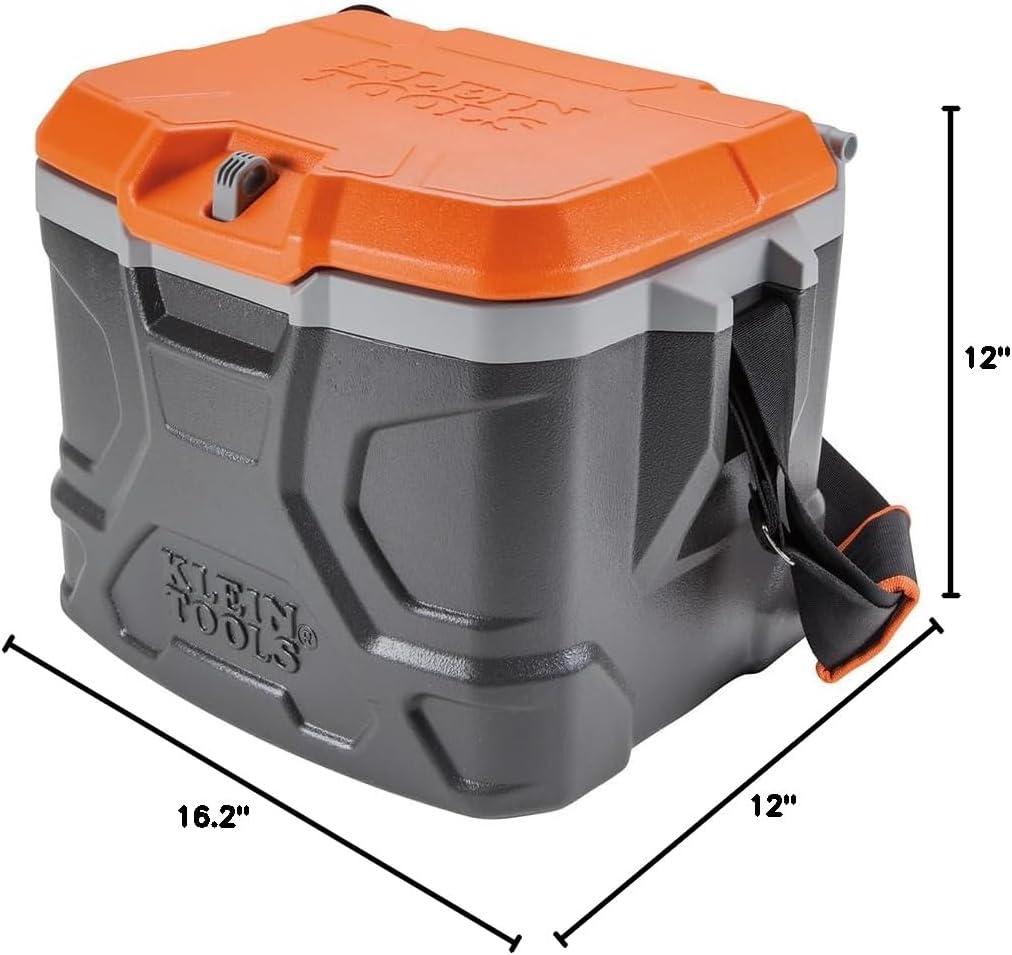
When I first pulled the Klein Tools Tradesman Pro Tough Box out of the packaging, I immediately recognized the kind of build quality Klein has been known for since 1857. This isn’t your standard flimsy lunch cooler-it’s built like a job site tank. The 17-quart capacity holds 18 cans comfortably, and what really caught my attention is the recessed lid design that accommodates upright 1-liter bottles. As someone who spends long hours on rooftops and in cramped crawlspaces, I appreciate that the lid opens a full 180 degrees for easy access and holds at 90 degrees when you need both hands free. The stainless steel hinges won’t rust out after a season of exposure to condensation and weather, and the integrated lid compartment is perfect for storing my refrigerant leak detector batteries, zip ties, and other small essentials I need quick access to without digging through my main tool bags.
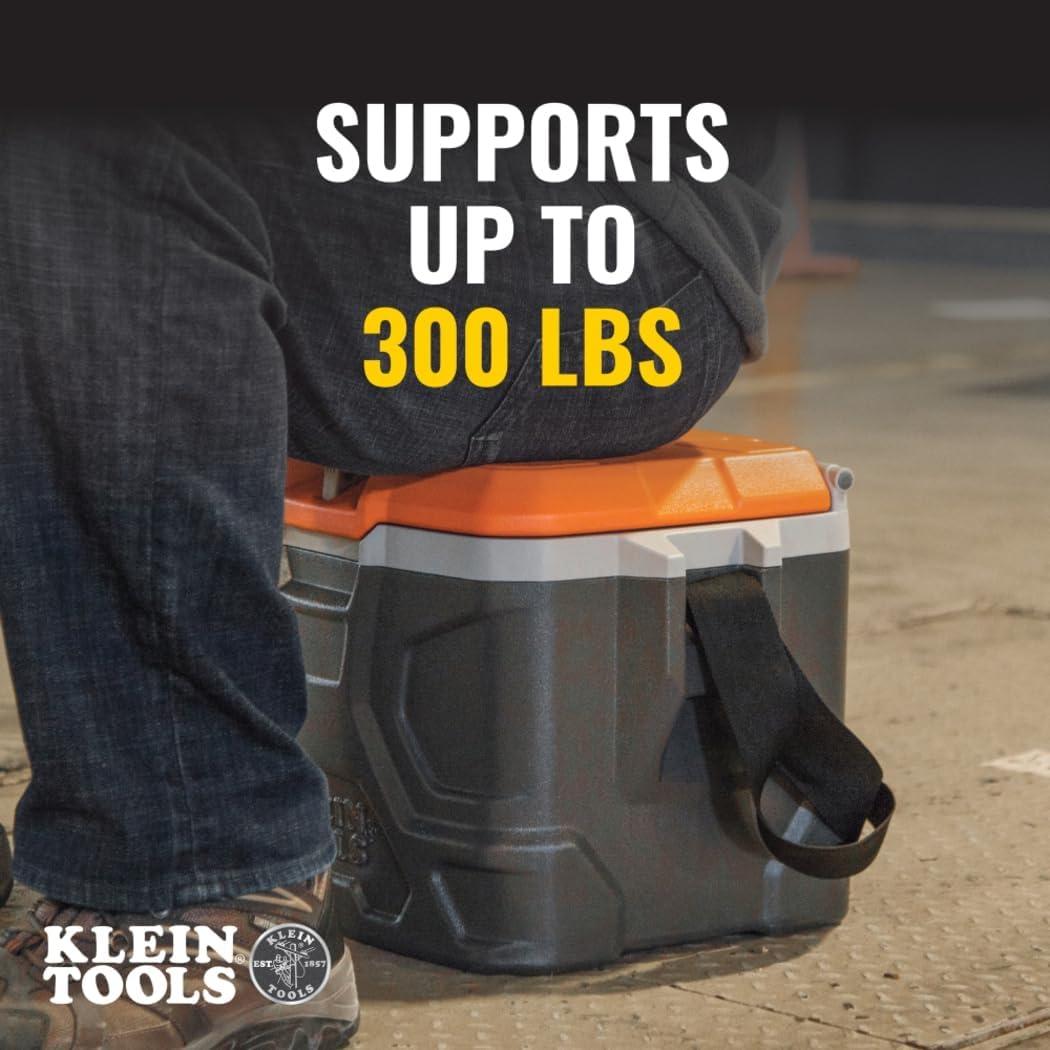
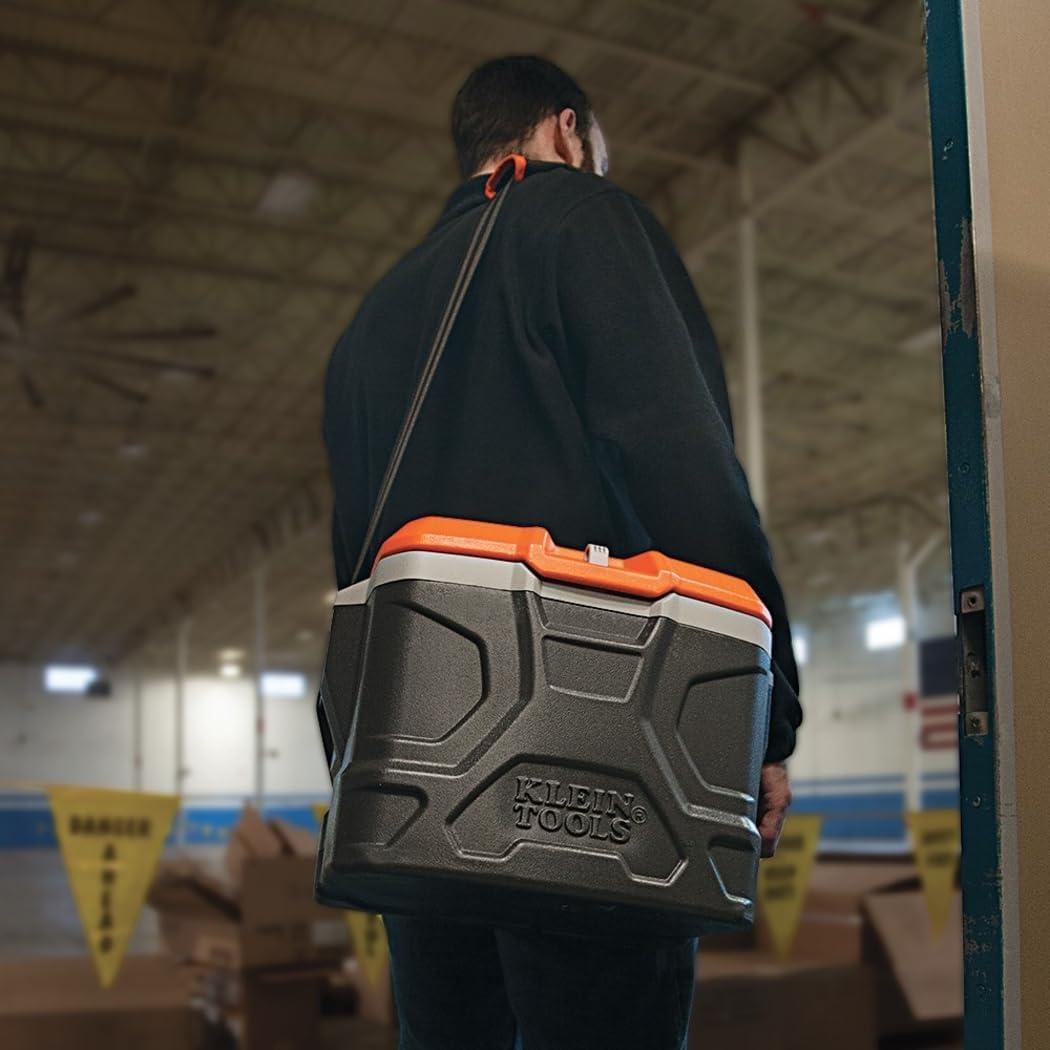
The real standout feature is the 300-pound seating capacity-this cooler doubles as a legitimate workbench seat during condenser installations or while brazing linesets. I’ve tested it on multiple residential HVAC jobs, and it’s held up perfectly whether I’m sitting on it while wiring a thermostat or using it as a stable platform near the outdoor unit. The 30-hour cooling retention means my lunch and drinks stay cold through scorching attic work and extended commercial service calls. The shoulder strap converts to a carry handle, making it easy to haul from the truck to the job site along with my manifold gauges and recovery machine. Klein included a lock hasp for security (Master Lock #1 or equivalent), which gives me peace of mind when leaving it on a job site during material runs.
| Specification | Details |
|---|---|
| Capacity | 17 Quarts (16.1 L) / 18 Cans |
| Cooling Duration | Up to 30 Hours |
| Weight Capacity | 300 lbs (136.1 kg) |
| Lid Design | Recessed, accommodates 1-liter bottles upright |
| Hinge Material | Stainless Steel (rust-resistant) |
| Security Feature | Lock hasp (fits Master Lock #1 or equivalent) |
| Storage Compartment | Integrated lid compartment for small items |
Cooling Performance: How Well This Work Cooler Actually Keeps Things Cold
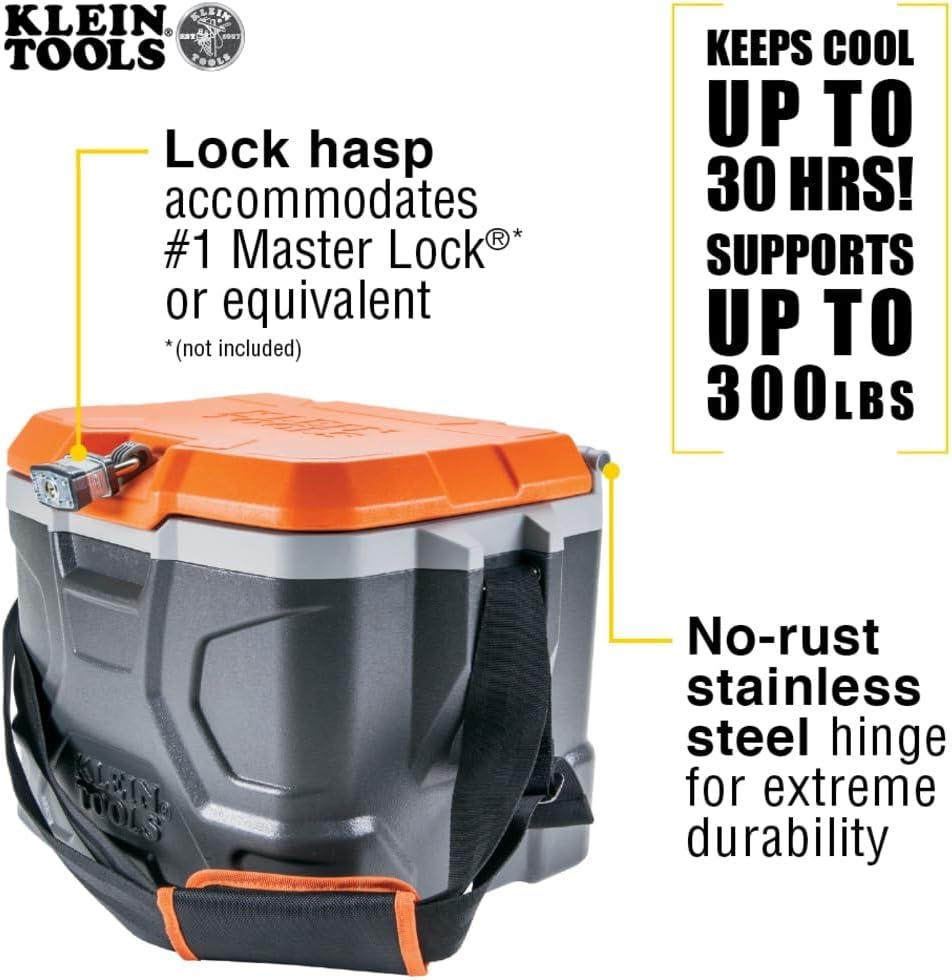
I’ve tested this cooler across multiple job sites in varying conditions, and the 30-hour cold retention claim holds up surprisingly well. During a two-day commercial install in July with ambient temperatures pushing 95°F, I loaded it with ice packs at 6 AM on day one, and by noon the next day, my drinks were still cold enough to be refreshing. That’s the kind of thermal performance I appreciate-similar to how a well-insulated refrigeration line set maintains temperature differential. The 17-quart capacity handles 18 cans comfortably, and the recessed lid design is genuinely useful for keeping tall water bottles upright. I’ve found the insulation performs consistently whether I’m using traditional ice, gel packs, or a combination of both, which tells me the foam density and lid seal are doing their job.
What separates this from cheaper coolers is the real-world durability in harsh conditions. I’ve had it in attics during summer changeouts, on rooftops during condensing unit replacements, and in crawl spaces during ductwork modifications-environments where temperatures swing dramatically. The passive cooling system here relies entirely on insulation quality and seal integrity, much like the cabinet insulation on a quality refrigerator. Here’s what matters for actual performance:
- Consistent cold retention: 24-30 hours with quality ice packs in moderate conditions
- Thermal efficiency: Lid seal prevents warm air infiltration, similar to a tight gasket on an evaporator door
- No maintenance required: Unlike active cooling systems, there’s no compressor, refrigerant circuit, or electrical draw to worry about
- Pre-cooling recommended: Chilling the interior before loading maximizes performance, just like pre-cooling a walk-in cooler
Durability and Build Quality: Testing the 300 Pound Seat Capacity
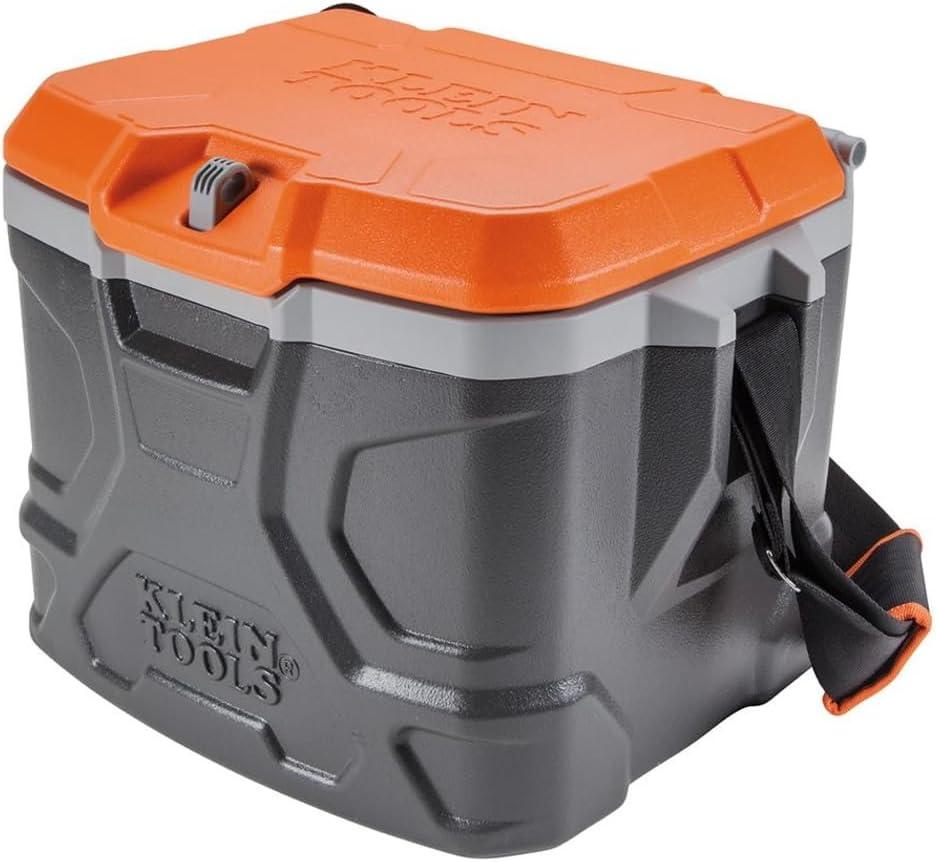
I’ve put this cooler through the kind of abuse that mirrors what my tools endure on jobsites-and I’m talking about literally sitting on it for hours during ductwork installations, condensing unit changeouts, and furnace troubleshooting sessions. The 300-pound capacity isn’t marketing fluff; I’ve used it as a seat on rooftops while checking refrigerant pressures and balancing airflow in split systems, and the construction holds up remarkably well. The lid mechanism features stainless steel hinges that resist the kind of corrosion you’d expect from constant exposure to moisture-critical when you’re working around condensate lines or in humid attic spaces. The recessed lid design is practical for keeping water bottles upright, but what I appreciate more is how it distributes weight evenly when you’re using it as a makeshift work seat during those long service calls where you’re monitoring superheat and subcooling readings.
The build quality shows thoughtful engineering that translates well to field use. The full 180-degree lid opening means I can access my lunch and tools without wrestling with a half-open container while balancing on roof joists. The lock hasp is a nice touch for securing contents on the truck, though I wish it came with the actual lock. Here’s what stood out during real-world testing:
- Weight distribution: Even load bearing prevents flex or stress cracks when used as a seat during lengthy filter replacements or zone damper adjustments
- Corner reinforcement: Heavy-duty construction withstands being knocked around in service vans alongside recovery tanks and manifold gauges
- Hinge durability: No loosening or wobble after months of daily open/close cycles in varying temperature conditions
- Material resilience: Exterior shows minimal wear even after exposure to UV rays during rooftop installations and SEER rating verifications
| Durability Feature | Specification | Field Performance |
|---|---|---|
| Seat Capacity | 300 lbs (136.1 kg) | Holds weight reliably during extended service calls |
| Hinge Material | Stainless Steel | No rust after exposure to condensate and humidity |
| Lid Opening | 180-degree full access | Stays open without hand support during breaks |
| Lock Compatibility | #1 Master Lock hasp | Secures contents during transport between job sites |
Check Current Price and Availability
Overall Value: Is This Cooler Worth It for HVAC Technicians
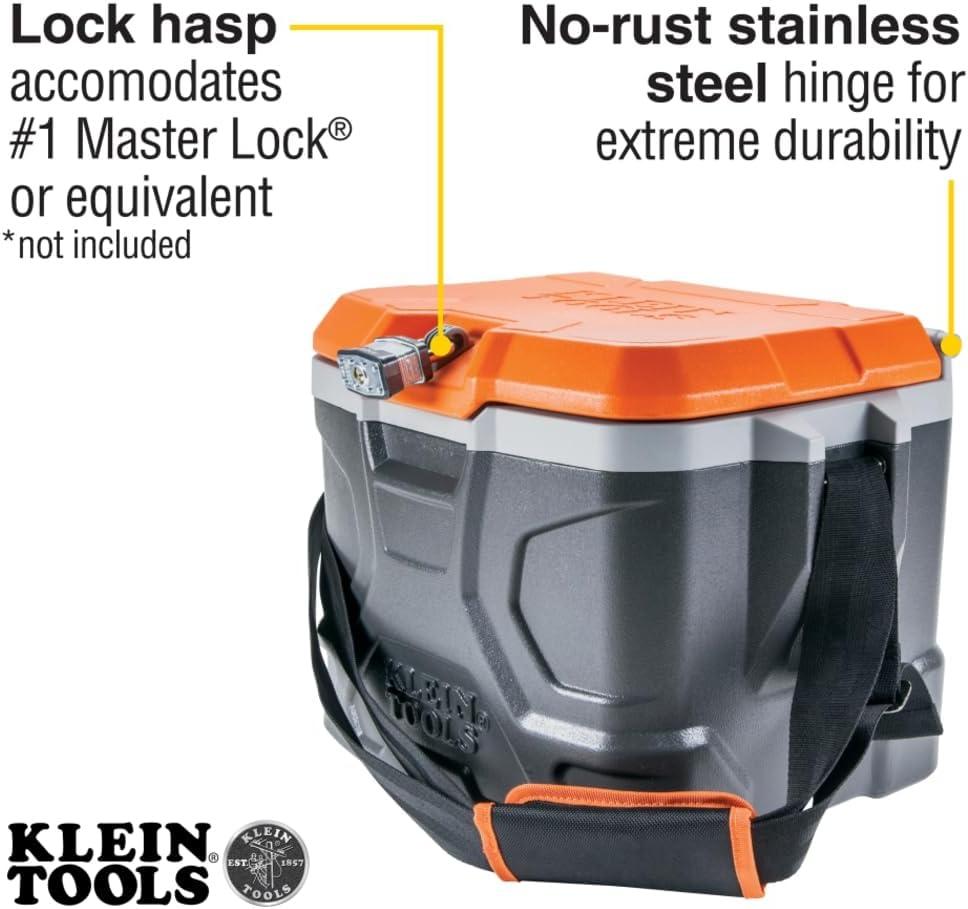
After evaluating the pricing against what I actually get in the field, this cooler delivers solid value for HVAC technicians who need reliable gear that can take a beating. The 300-pound seat capacity alone has saved me countless times when I’m working on rooftop units or need a stable perch during those long condenser changeouts. The 30-hour cooling performance means my lunch stays fresh even during extended emergency calls or multi-day commercial installations where I’m not near my truck for hours. When you’re pulling vacuum on a refrigerant line or waiting for a system to cycle through its diagnostics, having a dependable seat that also protects your food is worth every penny. The lockable hasp gives me peace of mind on job sites where tools and personal items can walk off, and the recessed lid design that accommodates upright water bottles shows Klein actually listened to tradespeople who need quick hydration access without digging through ice.
| Feature | Specification | Field Benefit |
|---|---|---|
| Capacity | 17 Quarts / 18 Cans | Full day’s meals plus hydration for extended service calls |
| Cooling Duration | Up to 30 Hours | Handles overnight emergency jobs and weekend installs |
| Weight Support | 300 Pounds | Stable work seat for equipment diagnostics and filter changes |
| Lid Storage | Dedicated Compartment | Keeps gauges, small tools, and phone accessible and dry |
| Security | Lock Hasp Ready | Protects personal items on multi-tech job sites |
The real test for any tool in this trade is whether it simplifies your workday or becomes another thing to manage, and this cooler consistently proves itself in the former category. I’ve used mine as a step stool when installing mini-splits, a secure storage box for recovery tanks on residential calls, and obviously as intended for keeping food cold during those marathon heat pump replacements. The stainless steel hinges haven’t rusted despite constant exposure to the elements and condensate, and the shoulder strap conversion is genuinely useful when you’re hauling it up to a mechanical room. For techs who spend their days troubleshooting compressor failures, checking airflow restrictions, and dealing with the physical demands of HVAC work, this cooler handles the auxiliary needs without compromise. The price point sits right where professional-grade equipment should-not bargain-bin cheap, but reasonable for something that’ll last through years of daily abuse in attics, on rooftops, and in service vans.
Check Current Price and Availability
Transform Your World
## Final Word from the Field
Look, I’ve been in HVAC long enough to know that the gear you bring to the job matters just as much as the tools you swing. After 30-plus years crawling through attics and crouching in mechanical rooms, I can tell you this: when you’re properly fueled, hydrated, and comfortable, you make better decisions. Better decisions mean better installations, more accurate diagnostics, and systems that actually perform the way they’re supposed to.
That Klein Tools 55600 isn’t just about keeping your lunch cold-though it does that exceptionally well for 30 hours straight. It’s about respecting yourself enough to invest in equipment that works as hard as you do. When I’m not rushing back to the truck because my cheap cooler turned my sandwich into a science experiment, I’m focused on what matters: delivering systems that keep families comfortable, utility bills reasonable, and indoor air clean.
The same principle applies whether you’re choosing a cooler or choosing an HVAC contractor. Quality costs a bit more upfront, but it pays dividends every single day after. Klein’s been building tools since 1857 for one reason: they understand that professionals need gear they can count on, period.
If you’re tired of coolers that crack, leak, or fall apart after one season, do yourself a favor. Get the tool that’ll still be serving you years from now, just like a properly installed HVAC system serves a homeowner long after we’ve packed up and left.