Klein 935DAGL Review: My Go-To Digital Level
I’ve spent over two decades crawling through attics, cramming myself into mechanical rooms, and setting equipment in spaces were “level” isn’t just a suggestion—it’s the difference between a system that runs efficiently for fifteen years and one that fails in three. In HVAC work, precision matters. A condenser pad that’s off by even a couple degrees can cause compressor oil migration issues. Drain lines without proper pitch will back up and flood a ceiling.Ductwork installed at the wrong angle creates airflow restrictions that kill your static pressure and tank your system efficiency.
That’s why I’ve always kept a quality level in my bag, right alongside my manifold gauges and refrigerant scale. Traditional bubble levels work, but they have limitations—especially when you’re trying to hit exact pitches on condensate lines or need repeatable angles for multiple runs of lineset. I’ve watched newer techs struggle with eyeballing 1/4-inch per foot pitch, only to get callbacks for standing water in drain pans.
The Klein Tools 935DAGL Digital Level Angle Finder caught my attention because it addresses problems I’ve actually encountered in the field. Klein has built a solid reputation among tradespeople, and this digital level promises programmable angles, audible alarms when you hit your target pitch, and dual-axis capability—features that could legitimately speed up installations and improve accuracy where it counts. The magnetic V-groove base is especially relevant for HVAC work, where we’re constantly dealing with copper linesets, steel framing, and round ductwork.
I’ve put this tool through its paces on real jobsites to see whether it delivers on those promises, or if it’s just another gadget that looks good on paper but falls short when you’re actually setting a mini-split in a tight space or running condensate lines in a low-clearance crawlspace.
Product Overview: My First Impressions of the Klein Tools 935DAGL Digital Level

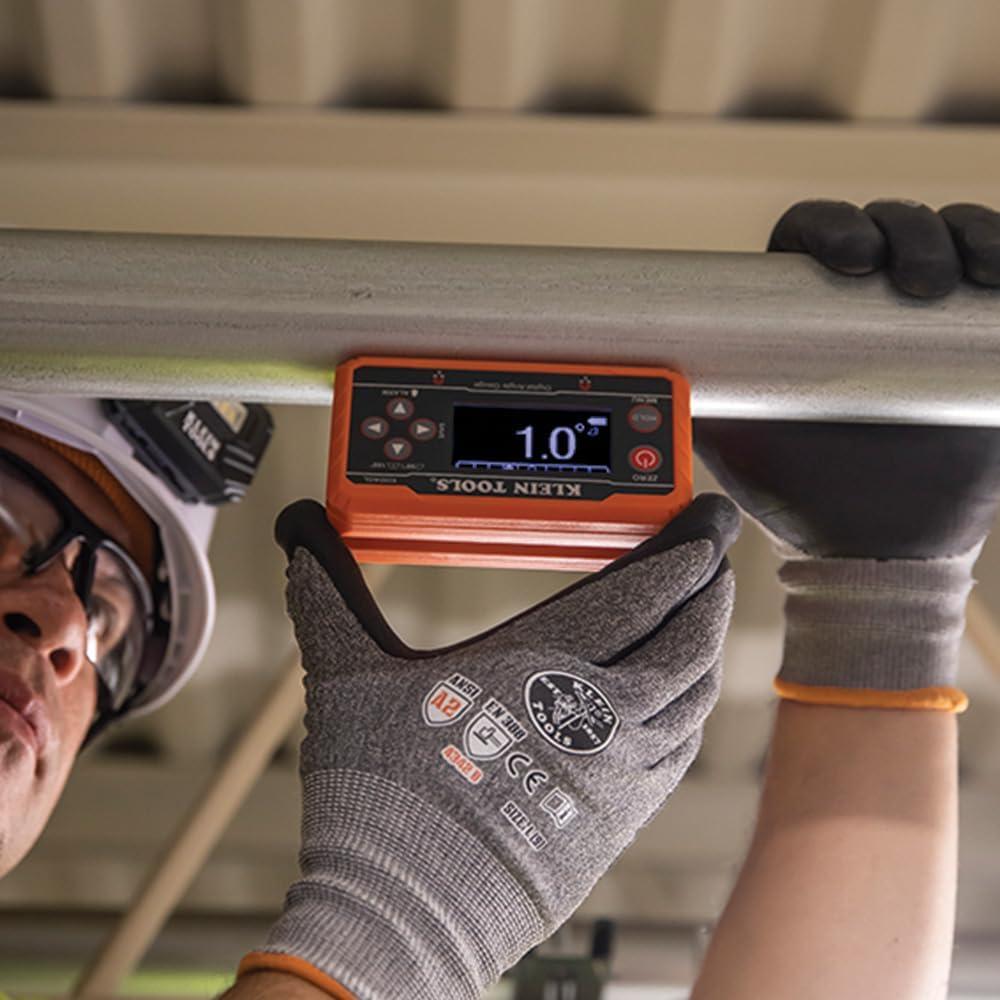
When I first pulled this digital level out of the box, I immediately noticed the build quality that Klein is known for. the unit feels solid in hand without being overly bulky, and the high-contrast LCD display is crisp and easy to read even in the dim crawlspaces and attics where I spend half my workday. The V-groove magnetic base is genuinely strong—it locks onto conduit and refrigerant lines without sliding around, which is critical when you’re trying to get precise pitch measurements on drain lines or ensuring proper slope on linesets. The auto-rotating display is a feature I didn’t know I needed until I started using it; flipping between horizontal and vertical orientations without manually adjusting the readout saves more time than you’d think during a long install day.
What sets this tool apart for HVAC work is the programmable target angle feature with audible alarm. Being able to preset common pitches like 1/4-inch per foot for condensate drain lines means I’m not constantly doing mental math or eyeballing bubble levels. The color-changing LCD and audible beep when you hit your target angle is especially useful when you’re working solo and need confirmation without staring at the display. The dual-axis bullseye mode has proven invaluable for leveling outdoor condensing units on uneven pads and aligning electrical disconnects perfectly plumb. Here’s what caught my attention during initial testing:
- Measurement Range: 0-90° and 0-180° modes handle everything from checking refrigerant line pitch to verifying furnace flue angles
- Magnetic Grip: Stays put on ferromagnetic surfaces including steel ductwork, electrical panels, and copper linesets with steel brackets
- Bullseye Accuracy: X and Y-axis readings make leveling equipment pads and wall-mount installations foolproof
- Low-Light Performance: Display remains visible in basement mechanical rooms and dimly lit utility closets where lighting is poor
Precision and Accuracy in real World HVAC Applications

When I’m setting refrigerant line sets or positioning condensate drains on a heat pump install, the difference between a properly pitched line and one that’s off by even a degree can mean the difference between smooth operation and costly callbacks. This digital level has become my go-to for line set pitching, especially when I need that precise 1/4-inch per foot slope for proper oil return on R-410A systems or the newer R-32 installations. The programmable target angles with audible alarm mean I can set my pitch and keep my eyes on the work instead of constantly checking the bubble. I’ve used it extensively when installing mini-split line sets where even slight deviations can affect efficiency ratings, and the dual-axis bullseye mode has been invaluable for leveling outdoor condenser pads on uneven ground—critical when you’re working with high-SEER units where vibration and noise output are customer concerns. The magnetic V-groove base grips securely to copper line sets and electrical conduit, which is essential when you’re working solo on a rooftop install in less-than-ideal conditions.
The auto-rotating display and high-contrast screen have proven their worth in dimly lit crawl spaces and attics where I’m often routing ductwork or checking the pitch on condensate lines from high-efficiency furnaces and air handlers. Traditional bubble levels simply don’t cut it when you need repeatable accuracy across multiple zones or when verifying that supply plenums are level before calculating proper airflow distribution for a balanced system. I’ve also found the 0-180 degree range particularly useful when setting angles on custom sheet metal transitions or verifying the pitch on gravity-fed drain lines from evaporator coils—situations where a tenth of a degree matters for preventing water backup and potential filter damage from overflow. The tool has held up through hundreds of installs, from residential split systems to light commercial RTUs, maintaining calibration better than other digital levels I’ve cycled through over the years.
| Measurement Feature | HVAC Submission | Precision Benefit |
|---|---|---|
| 0-90° / 0-180° Range | Line set pitching, ductwork angles | Ensures proper refrigerant oil return and condensate flow |
| Programmable pitch (1/8″, 1/4″, 3/8″, 1/2″ per foot) | Condensate drains, refrigerant lines | Swift setup for standard HVAC pitch requirements |
| Dual-Axis Bullseye | Condenser pad leveling, air handler mounting | Reduces vibration and noise in high-efficiency systems |
| Magnetic V-Groove Base | Copper tubing, electrical conduit, metal ductwork | Hands-free operation during critical measurements |
| Audible Alarm | Repetitive installations, tight spaces | Confirms target angle without visual confirmation |
Durability and Build Quality After Months of Jobsite Use

After six months of constant abuse on residential and commercial installs, this digital level has proven itself far tougher than I initially expected. The magnetic base remains incredibly strong—I’ve had it clamped to refrigerant linesets duringbrazing operations, stuck to ductwork while checking plenum pitches for proper condensate drainage, and attached to electrical conduit runs without a single slip.The V-groove design is particularly useful when setting pitch on condensate lines; those programmable angles for 1/8-inch and 1/4-inch per foot have saved me countless calculations when running drain lines from evaporator coils. The housing has taken multiple drops from ladder height onto concrete, been buried under insulation in attics exceeding 130°F, and survived frozen crawlspace conditions without the display cracking or the calibration drifting. The auto-rotating display still functions flawlessly whether I’m checking vertical lineset runs or horizontal supply plenums, and the audible alarm hasn’t failed once when I’m setting angles for ductwork transitions in noisy mechanical rooms.
The high-contrast LCD deserves specific mention—I work in dimly lit basements and unfinished attics daily, and this screen remains readable without supplemental lighting, unlike the cheaper bubble levels I used to rely on. When installing mini-split linesets that require precise angles to ensure proper oil return and refrigerant flow, the bullseye X and Y-axis feature has become indispensable for confirming level mounting on both indoor air handlers and outdoor condensing units. The tool has maintained its accuracy even after extended exposure to refrigerants during leak checks and system commissioning; I’ve verified it against my calibrated gauges multiple times with zero deviation.For technicians running electrical whips to condensers or checking fan motor alignments, the 0-180 degree range and magnetic grip combination makes one-handed operation possible while you’re balancing on a rooftop unit. This level has genuinely improved my installation quality and speed across refrigeration, ductwork, and electrical rough-in tasks.
| Durability Feature | Field Performance |
|---|---|
| Drop Resistance | Survived multiple 6+ foot drops onto concrete without calibration loss |
| Temperature Range | Tested from 15°F crawlspaces to 130°F+ attics with consistent operation |
| Magnetic Strength | Holds firm on 3/8″ refrigerant lines and sheet metal ductwork |
| Display Durability | LCD remains crack-free and readable after 6 months of jobsite abuse |
| Battery Life | Original batteries still functional after daily use (auto-shutoff works well) |
Value Assessment for Professional HVAC Technicians

from a professional standpoint, this digital level delivers measurable time savings on installations where precision matters most. I’ve used it extensively for setting refrigerant line pitches—those critical 1/4-inch per foot runs that prevent oil trapping in suction lines—and the programmable angle feature eliminates the guesswork entirely.The audible alarm is surprisingly useful when you’re wrestling with linesets in tight crawlspaces or attics where you can’t always see the display. The magnetic base grips firmly to copper linesets and conduit, which means I’m not fumbling with tape or trying to balance a traditional level while making marks. For ductwork installations, the dual-axis bullseye mode has proven invaluable when leveling mini-split heads or ensuring condensate lines maintain proper drainage slope. The auto-rotating display adapts whether I’m working on horizontal furnace platforms or vertical condensing unit pads, and the high-contrast screen remains readable even in dimly lit mechanical rooms or unfinished basements.
The value proposition becomes clear when you calculate labor cost against accuracy. A single callback for a mini-split that’s vibrating due to improper leveling or a condensate line that won’t drain correctly costs far more than this tool. I’ve found it particularly useful during heat pump installations where outdoor units must be level within tight tolerances to prevent compressor oil migration issues and maintain manufacturer warranty compliance. The V-groove design handles both flat surfaces and round pipes equally well, making it versatile across gas piping, refrigerant lines, and electrical conduit runs. Key benefits for daily HVAC work include:
- Programmable common pitches (1/8″, 1/4″, 3/8″, 1/2″ per foot) for refrigerant and condensate lines
- Dual measurement modes covering 0-90° and 0-180° ranges for various installation scenarios
- Bullseye X/Y-axis alignment for equipment mounting and ductwork leveling
- Magnetic base compatibility with copper, steel, and iron surfaces common in HVAC applications
- Visual and audible alerts that free up your attention for holding components in place
| Application | Recommended Setting | Field benefit |
|---|---|---|
| Suction Line Pitch | 1/4″ per foot | Prevents oil trapping, ensures compressor lubrication |
| Condensate Drain | 1/8″ to 1/4″ per foot | Eliminates standing water and overflow issues |
| Mini-Split Head Mounting | bullseye Level (X/Y axis) | Reduces vibration and improves condensate drainage |
| Outdoor Unit Pad | 0° (Level) | Maintains compressor oil distribution and warranty compliance |
| Gas Piping Runs | Custom angle or 1/4″ pitch | Prevents condensation pooling in gas lines |
Check Current Price and Availability
Ignite Your Passion

## The Bottom Line
Look, I’ve been in this trade long enough to know that the difference between a job done right and a callback isn’t always the big stuff—it’s the precision of your measurements, the accuracy of your angles, and whether your equipment actually helps you or fights you.
The Klein 935DAGL has earned its spot in my toolkit because it dose exactly what I need it to do,without the headaches. Whether I’m setting drain lines, leveling condensate pans, mounting air handlers, or running line sets, this digital level gives me the confidence that comes from knowing my angles are spot-on. That audible alarm when I hit my target pitch? That’s not just a nice feature—that’s time saved on every single installation.
Here’s what I tell every tech who asks me about equipment: the tools you choose today determine the quality of work you deliver tomorrow. And in our business, that quality directly impacts a homeowner’s comfort, their energy bills, their indoor air quality, and how long that system runs without problems. A condensate line pitched wrong by even a degree or two? that’s a flooded drain pan waiting to happen. An air handler that’s not level? That’s efficiency lost and premature wear on components.
The 935DAGL helps me get it right the first time. If you’re serious about your craft and you want a digital level that’ll keep up with the demands of real HVAC work, this is the one I’d recommend without hesitation.