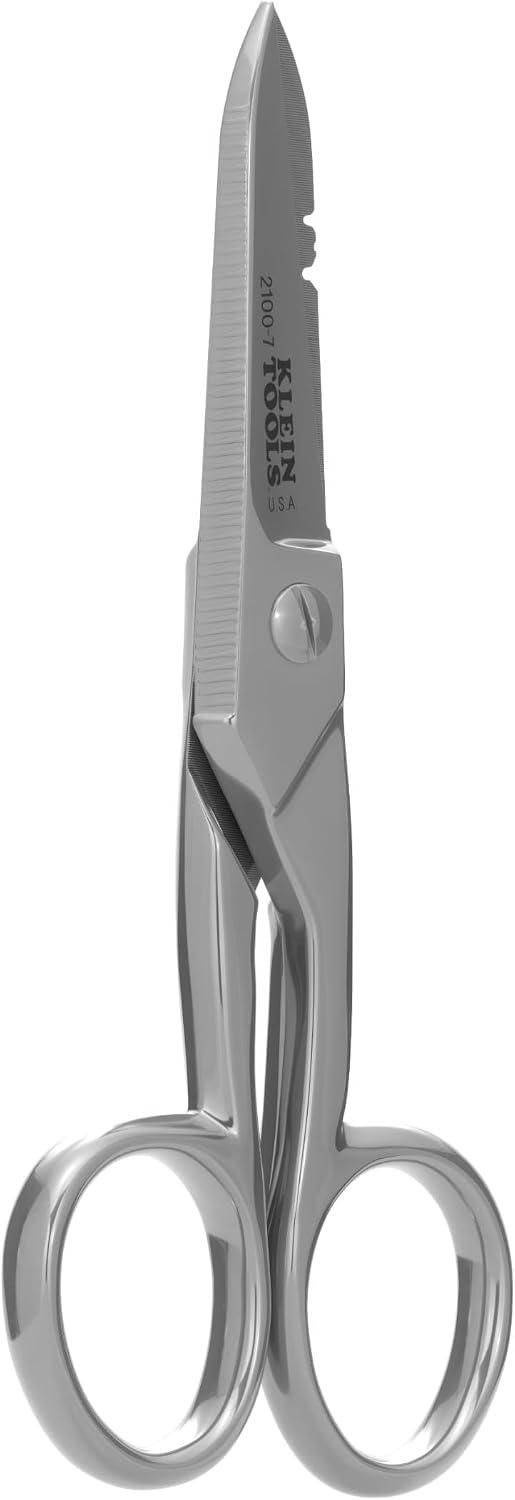
Klein 2100-7 Scissors: My Go-To Wire Tool
I’ve been carrying scissors in my tool bag for over twenty years, and I can tell you right now: most of them are garbage within six months. They get gummed up with wire insulation, the pivot loosens until they’re flopping around like a broken hinge, or the blades dull out so badly you’re practically gnawing through thermostat wire instead of cutting it. That’s why when I got my hands on the Klein Tools 2100-7 Electrician Scissors, I paid attention-because in this trade, you need tools that’ll still be sharp and tight after a hundred service calls in dusty attics and behind greasy air handlers.
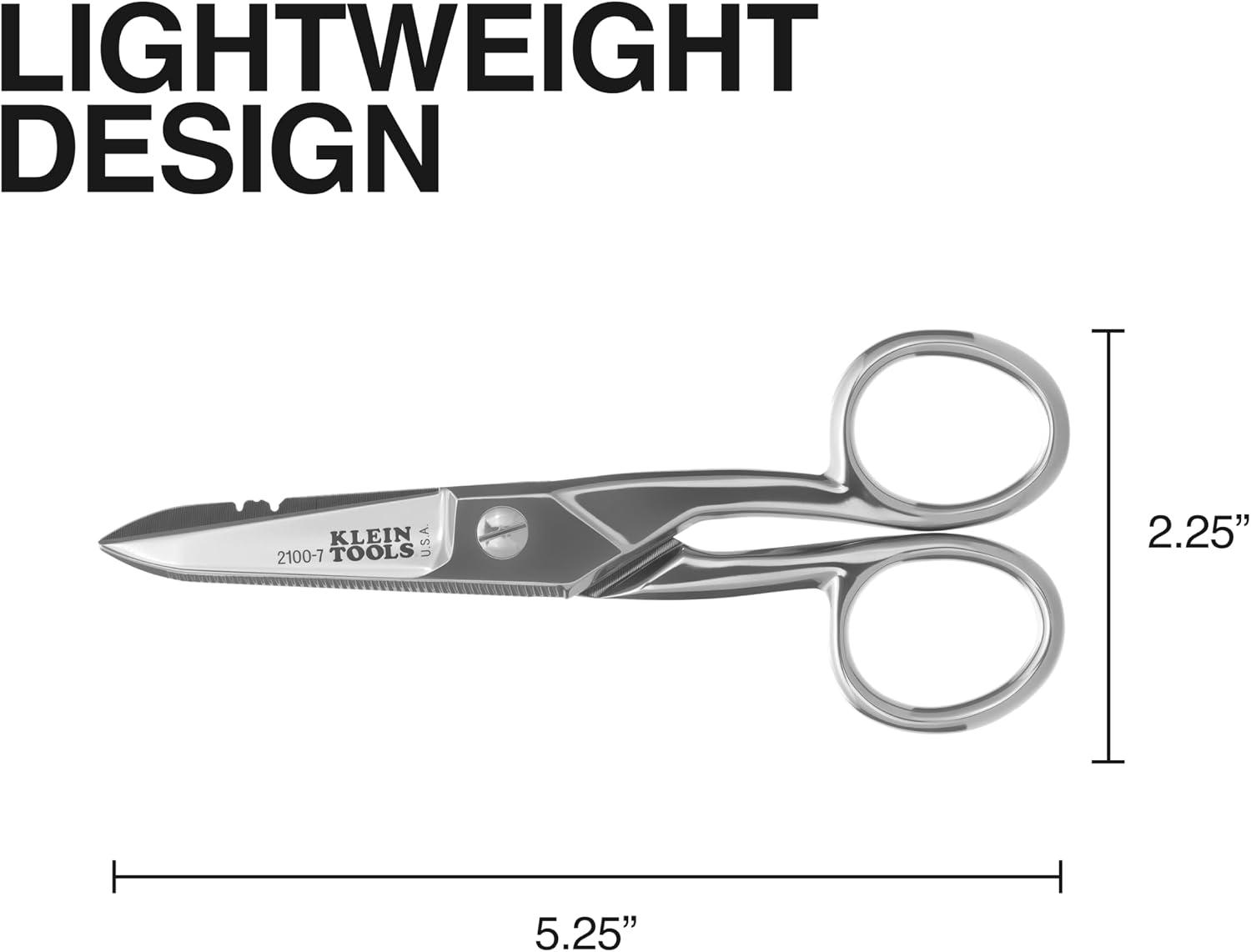
Now, HVAC work isn’t just about swapping compressors and charging refrigerant lines. A solid half of what I do involves low-voltage wiring-thermostats, zone dampers, condensate pump alarms, and all the control circuits that make modern equipment actually function. Whether I’m running 18/5 thermostat cable to a new smart controller or troubleshooting a failed relay on a modulating furnace, I’m constantly stripping, cutting, and prepping wire. That means I need scissors that can handle delicate 22-gauge thermostat wire without mangling it, but also power through the jacket on 14/2 Romex when I’m wiring up a disconnect box. The Klein 2100-7 claims to do exactly that, with stripping notches for 19 and 23 AWG wire and a serrated lower blade for clean cuts.
In this review, I’m walking you through whether these 5.25-inch scissors actually hold up to daily field use, or if they’re just another over-hyped tool destined for the bottom of your bag.
Klein Tools 2100-7 Electrician Scissors: A Compact Cutting Solution for HVAC Work
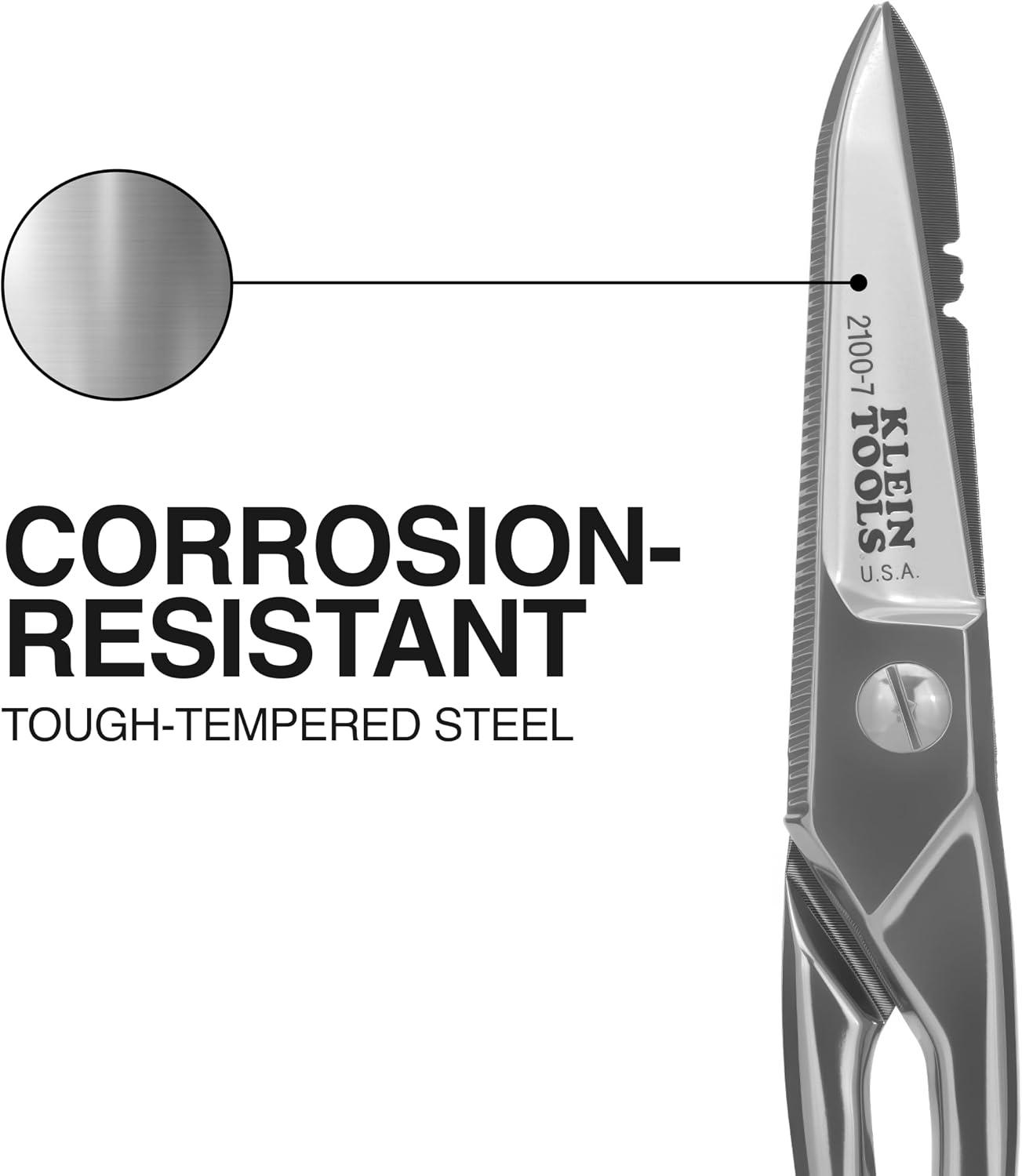
When you’re elbow-deep in a furnace panel or running low-voltage wiring for a new thermostat, having the right cutting tool within arm’s reach makes all the difference. I’ve carried these 5.25-inch scissors on my belt for years, and they’ve proven themselves indispensable for precision work on 24VAC control wiring, thermostat cables, and zip ties that secure refrigerant line insulation. The stripping notches for 19 and 23 AWG wire are perfectly positioned for quick prep work on control board connections and condensate pump float switches without needing to grab a separate stripper. The serrated lower blade grips wire insulation firmly, preventing that frustrating slip you get with cheaper scissors when you’re cutting multi-conductor stat wire in tight spaces behind air handlers. The nickel-plated finish has held up remarkably well against the moisture and temperature extremes I encounter daily, from sweaty attics to damp crawlspaces where condensate lines run.
What separates these from typical electrician scissors is the tempered steel construction that maintains a sharp edge even after cutting through countless wire bundle straps, foam pipe insulation, and the occasional stubborn equipment label. I appreciate that Klein manufactured these in the USA with materials that don’t flex or bind when you’re making repetitive cuts during a retrofit job. They’re compact enough to fit in a shirt pocket yet substantial enough for heavy-duty tasks like trimming flex duct collars and cutting through the protective wrapping on new equipment. The balance and precision are ideal for the detail work that comes with modern HVAC systems-trimming back wire insulation on ECM motor connections, preparing control wiring for zone dampers, or cleanly cutting sensor leads without fraying. After 160+ years of toolmaking, Klein clearly understands what technicians need in the field, and these scissors deliver that reliability every single service call.
| Specification | Detail |
|---|---|
| Overall Length | 5.25 inches |
| Wire Stripping Capacity | 19 AWG and 23 AWG |
| Blade Type | Serrated lower blade for non-slip cutting |
| Finish | Nickel-plated for corrosion resistance |
| Construction | Tempered steel, Made in USA |
| Primary Applications | Control wiring, thermostat cables, insulation trimming, zip ties |
Get Klein Tools 2100-7 Scissors on Amazon
How These Scissors Handle Daily Wire and Material Cutting Tasks
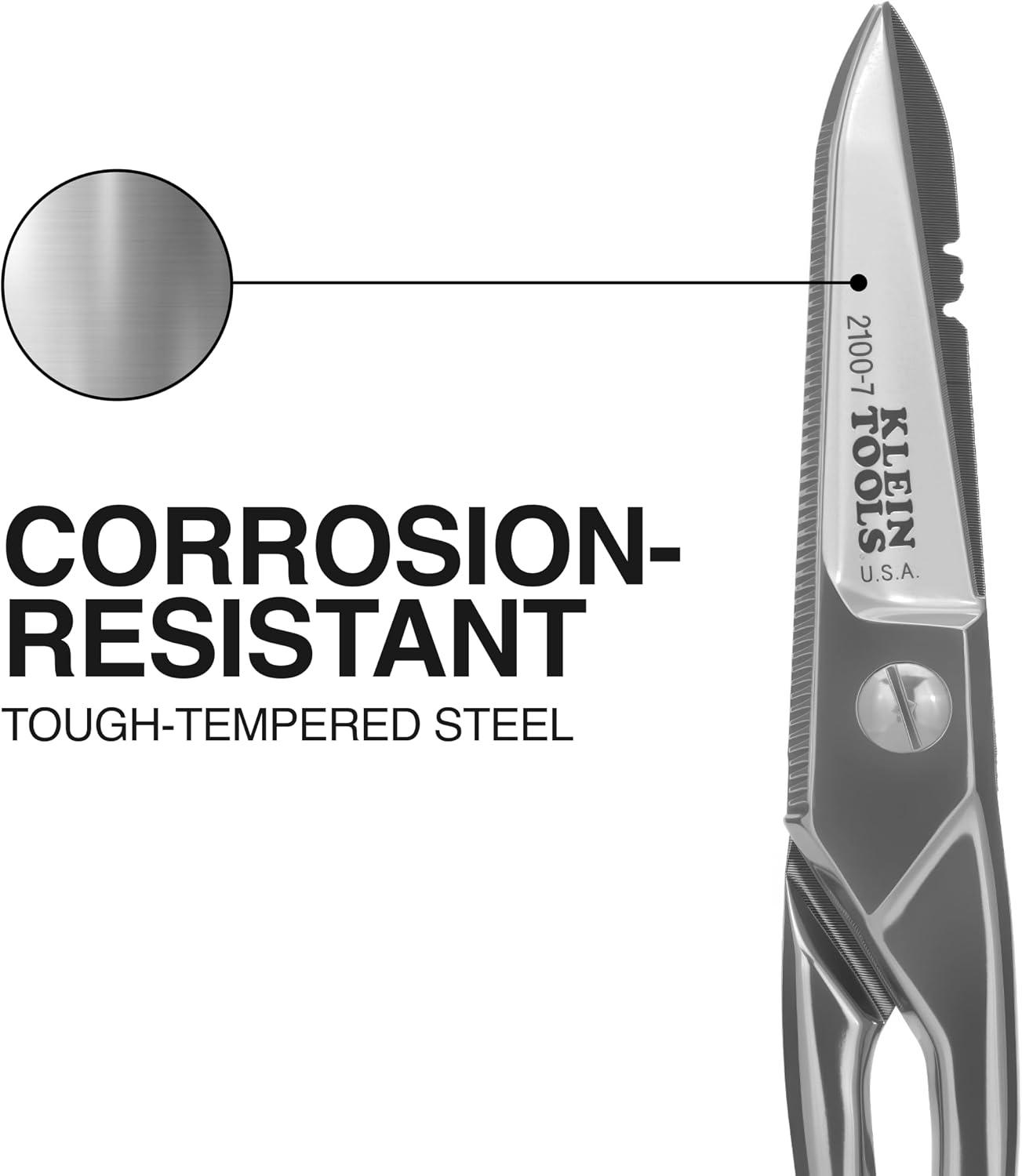
In the field, I’m constantly dealing with low-voltage wiring for thermostats, control boards, and communication lines between condensers and air handlers. These scissors handle the 18-22 gauge wire found in typical HVAC control circuits without hesitation. The stripping notches for 19 and 23 AWG are perfectly positioned for quick work on thermostat wire and communication cables that connect to variable-speed systems and smart controls. The serrated lower blade grips insulation cleanly, which matters when you’re standing on a ladder connecting a 24-volt transformer or troubleshooting a failed capacitor connection on a 3-ton condensing unit. I’ve used these on everything from standard zip cord to armored cable jackets, and the nickel-plated finish resists corrosion even after exposure to refrigerant oils and the humid environments around evaporator coils.
Daily tasks like trimming wire nuts, cutting foam insulation tape, and snipping nylon zip ties are where these scissors earn their keep. The tempered steel construction holds an edge through repeated cuts on rubber grommet material and HVAC-rated cable jacketing. Unlike flimsy alternatives that struggle with thicker gauge wire or multi-conductor cable, these maintain cutting precision whether I’m splicing into a 208/230V compressor circuit or running low-voltage wire for a zoning damper system. The compact 5.25-inch size fits easily in a tool pouch without the bulk of full-size snips, yet delivers enough leverage for cutting tasks that don’t require dedicated cable cutters. For technicians who spend their day working inside air handlers, at outdoor units, or routing control wiring through tight spaces, having a reliable pair that handles both precision wire stripping and general cutting without switching tools improves efficiency on every service call.
Why I Keep These in My Tool Bag Despite Owning Larger Shears
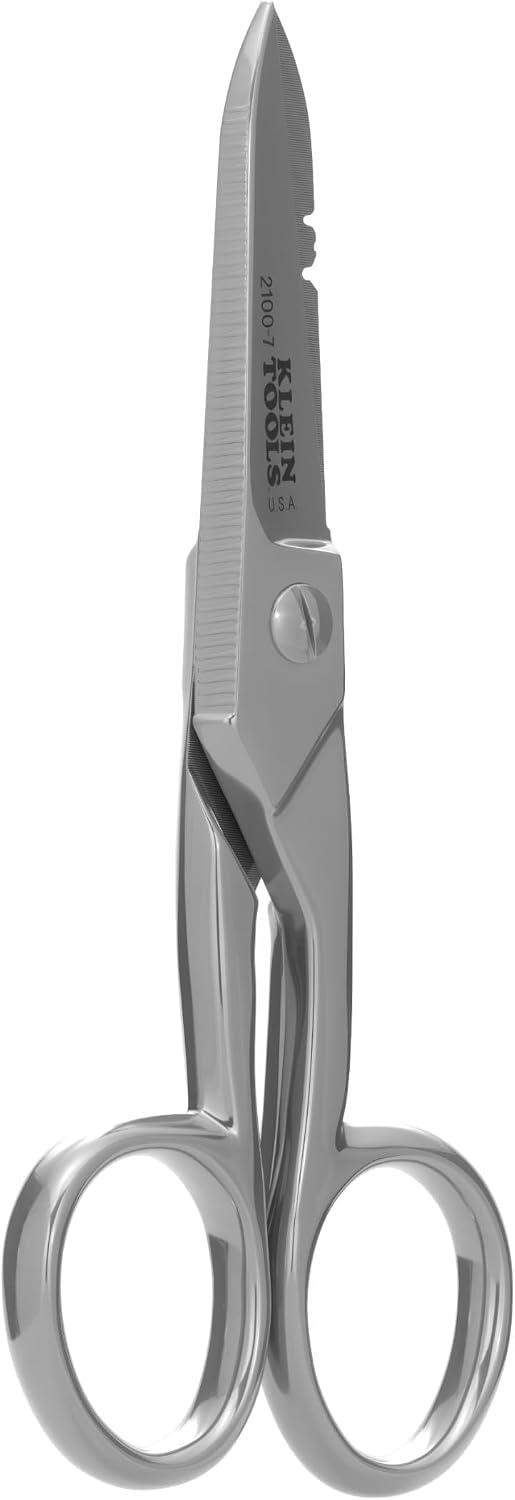
I’ve got heavy-duty tin snips and aviation shears that handle ductwork all day, but these compact scissors have earned a permanent spot in my pocket. When I’m running thermostat wire to a new high-efficiency 18 SEER heat pump or patching low-voltage connections on a 24VAC control circuit, pulling out bulky shears is overkill. The stripping notches for 19 and 23 AWG wire are precisely what I need for most residential control work-whether I’m wiring up a smart thermostat, connecting zone dampers, or troubleshooting communication wiring between an outdoor condenser and air handler. The serrated lower blade grips without slipping, which matters when you’re working in tight spaces behind air handlers or inside cramped electrical panels where precision cuts prevent shorts and callbacks.
The nickel-plated finish has held up through countless service calls in humid attics and damp crawlspaces where I’ve installed everything from 12,000 BTU mini-splits to 5-ton central air systems. These aren’t trying to replace my metal shears-they complement them. When I’m doing final connections on a 410A refrigerant line set and need to trim wire ties, cut electrical tape cleanly, or strip control wiring without damaging the conductor, these are what I reach for. They’re lightweight enough that I forget they’re clipped to my pouch, yet tough enough that I haven’t had to replace mine in three years of daily field use. The Made in USA construction shows in the pivot tension-it hasn’t loosened despite being opened and closed hundreds of times during filter changes, capacitor replacements, and control board installations.
What These Scissors Are Really Worth for HVAC Technicians
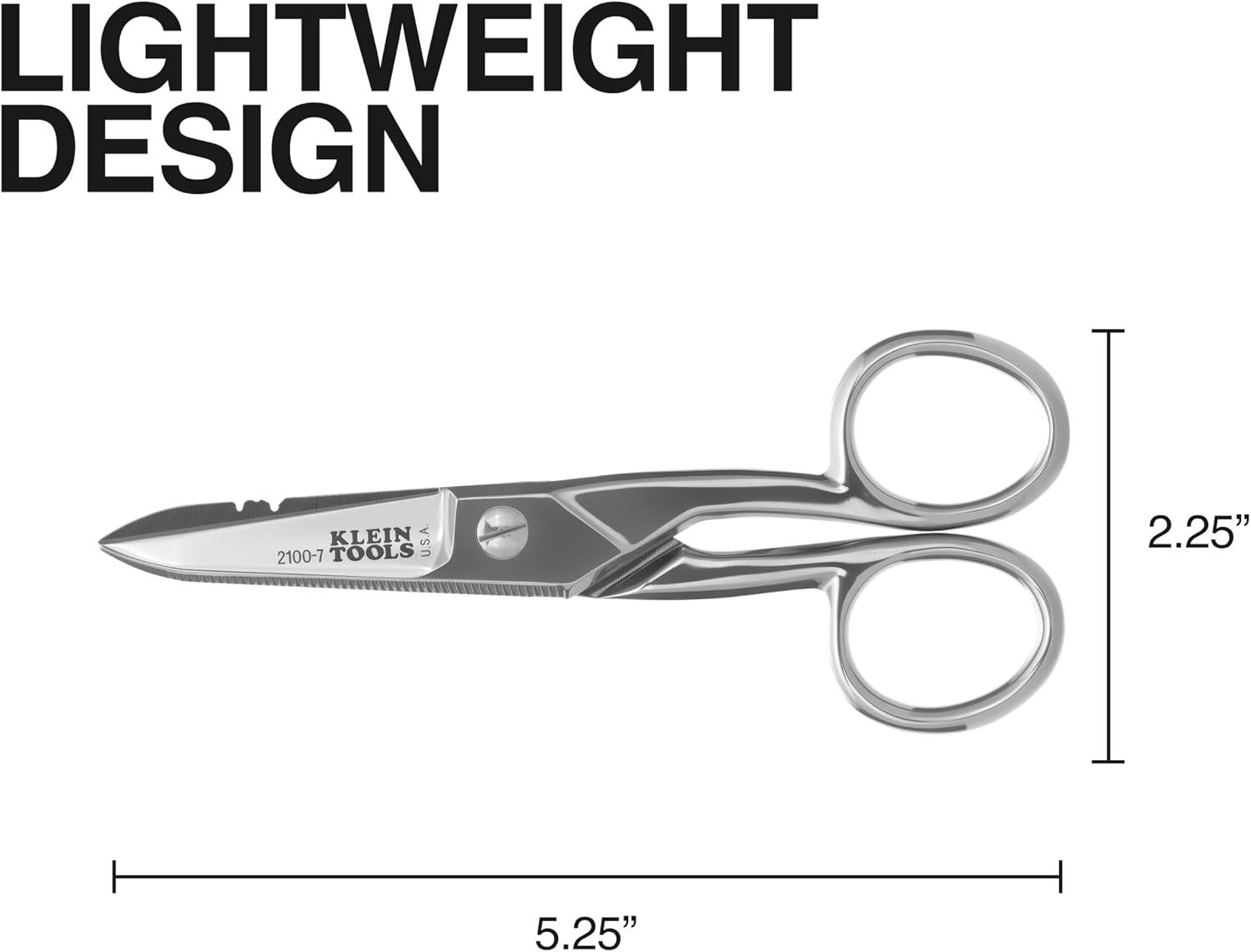
After decades of working on everything from 3-ton residential splits to 10-ton commercial rooftops, I can tell you that having a reliable pair of scissors in your pouch is non-negotiable. These Klein Tools electrician scissors have earned their spot in my bag because they handle the constant wire work we face on every call-whether I’m stripping thermostat wire on a new 16 SEER install or trimming communication cables on a VRF system. The stripping notches for 19 and 23 AWG wire are perfectly positioned for control wiring, which means I’m not fumbling with separate strippers when I’m connecting a low-voltage thermostat or wiring up a condensate pump float switch. The serrated lower blade grips and cuts cleanly through braided shielding and multi-conductor cable without slipping, which is exactly what you need when you’re working in tight spaces behind air handlers or inside cramped electrical disconnects.
What really justifies the investment is the nickel-plated, tempered steel construction that stands up to the harsh conditions we work in daily-refrigerant mist, humidity in attics, and the occasional drop onto concrete pads. I’ve had cheaper scissors rust out or lose their edge after a few months of summer service calls, but these maintain their cutting precision even after cutting through zip ties, Armaflex insulation, and the occasional stubborn wire nut. The Made in USA build quality translates to consistent performance whether I’m doing quick maintenance on a filter change or spending hours on a complete system replacement where I’m running new line sets and control wiring. For HVAC techs who wire multiple units weekly-from simple 24V control circuits to more complex multi-stage systems with communicating thermostats-these scissors deliver the durability and precision that actually save time on the job.
| Feature | HVAC Application Value |
|---|---|
| Wire Stripping Notches (19 & 23 AWG) | Perfect for thermostat wire, control circuits, and sensor connections |
| Serrated Lower Blade | Prevents slipping when cutting shielded cable and multi-conductor wire |
| Nickel-Plated Finish | Resists corrosion from refrigerant exposure and high-humidity environments |
| 5.25-Inch Length | Compact enough for tool pouches, powerful enough for heavy-duty cutting |
| Made in USA | Consistent quality control and long-term durability in daily field use |
Get These Klein Scissors for Your Tool Bag Today
Transform Your World
## The Bottom Line
After three decades in the HVAC trade, I’ve learned that the tools in your pouch are just as important as the knowledge in your head. These Klein 2100-7 scissors have earned their permanent spot in my kit because they do exactly what I need them to do, every single time. Whether I’m stripping thermostat wire, cutting through cable jacket, or trimming zip ties on a fresh install, they’re there when I need them.
Here’s what I tell every apprentice who works with me: the quality of your work is directly tied to the quality of your tools. When you’re wiring a new thermostat or running control lines for a zoned system, clean cuts and proper strips aren’t just about looking professional-they’re about creating reliable connections that keep systems running efficiently for years. Poor connections lead to system faults, callbacks, uncomfortable homeowners, and wasted energy. A $20 pair of scissors that prevents even one service call has already paid for itself ten times over.
The Klein 2100-7 isn’t flashy, and it won’t revolutionize how you work. But it will be there, dependable and sharp, job after job, year after year. That’s the kind of tool investment that makes sense-the kind that helps you deliver the comfort and reliability your customers are counting on.
If you’re tired of wrestling with cheap scissors that can’t handle daily abuse, or if you’re just starting out and want to build your kit the right way from day one, you won’t regret adding these to your arsenal. I haven’t.