I Tested Klein’s Laser Measure in Real HVAC Work
I’ve been crawling around attics, basements, and mechanical rooms for over twenty years, and I can tell you that accurate measurements aren’t just convenient—they’re essential. When you’re sizing ductwork,calculating the BTU requirements for a room addition,determining proper clearances for combustion air,or simply figuring out how much flexible duct you need without making three trips to the supply house,a reliable distance measuring tool pays for itself fast.
That’s why I decided to put the Klein Tools laser Distance Measure through its paces. Klein has been making tools since 1857, and as a tradesman, I’ve trusted their hand tools for years. But laser measuring devices are a different animal—they need to be accurate, durable enough to survive real jobsite conditions, and simple enough that you’re not fumbling with buttons when you’re balanced on a ladder with a flashlight in your teeth.
This particular model claims 1/16-inch accuracy up to 30 feet and 1/8-inch accuracy out to 100 feet, measures in feet, inches, and meters, and supposedly fits in your shirt pocket. On paper, that checks most of the boxes for HVAC work—whether you’re laying out a mini-split installation, measuring for return air runs, or calculating square footage for Manual J load calculations. But I needed to know if it actually holds up when you’re working in the dusty, cramped, poorly-lit spaces where we spend most of our time. Here’s what I found.
Product Overview: My First Impressions of the Klein Tools Laser Distance Measure

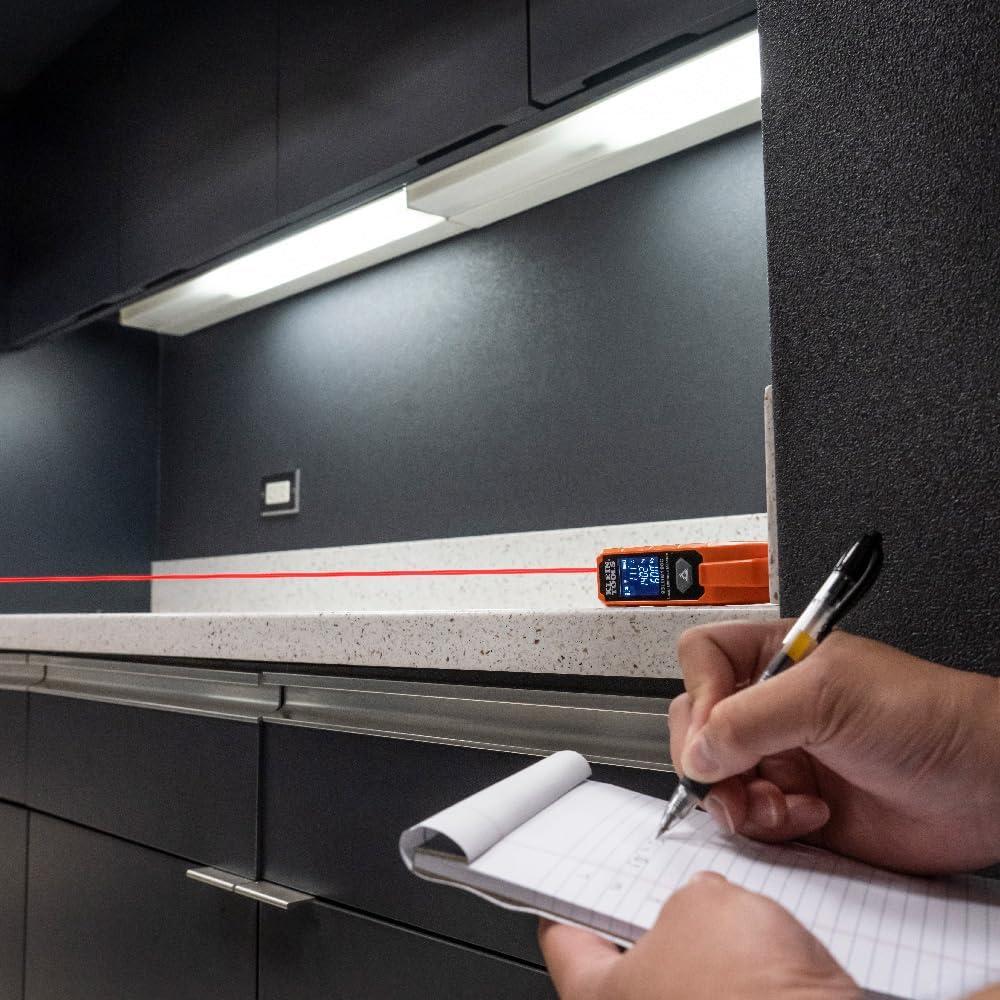
Right out of the box,this laser measure impressed me with its compact form factor—something I immediately appreciated after years of juggling bulky tape measures while trying to calculate supply duct runs or determine clearance requirements for condensing units. The reverse contrast LCD is a game-changer when I’m working in cramped attic spaces or dimly lit mechanical rooms, which is where I spend half my time sizing up equipment pads or verifying minimum clearances for high-efficiency units. The pocket clip isn’t just a nice touch; it’s essential when I’m climbing ladders to check plenum heights or measuring the distance between a thermostat location and the air handler. What really caught my attention was the accuracy spec: ±1/16-inch for the first 30 feet, which is more than adequate for most residential HVAC applications where I’m measuring everything from return air grille placements to linesets routing paths.
| Specification | Value |
|---|---|
| Measurement Range | 2 inches to 100 feet (30.5 m) |
| Accuracy (0-30 ft) | ±1/16 inch (0.2 cm) |
| Accuracy (30-100 ft) | ±1/8 inch (0.3 cm) |
| laser Class | Class 2 (1mW) |
| Display Type | Reverse Contrast LCD |
| Memory | Last 2 measurements |
The one-button operation is deceptively simple but incredibly functional—I don’t need to fumble through menus when I’m verifying whether a 3-ton split system will fit in a designated alcove or calculating the diagonal distance for a mini-split lineset. The continuous measurement mode has already proven useful for lining up ductwork and ensuring proper slope on condensate drains, and the ability to auto-save the last two measurements means I can quickly compare dimensions without scribbling notes on my clipboard. For field work involving equipment replacements, duct modifications, or new installations, this tool eliminates the frustration of tape measures that kink, sag, or require a second set of hands. Klein’s reputation for durability gives me confidence this unit will survive the certain drops and jobsite abuse that come with daily HVAC work.
Understanding the Measurement Capabilities and Range performance

After testing this laser measure across dozens of installations, I can confirm it delivers exactly what HVAC work demands: 100-foot maximum range with 1/16-inch accuracy up to 30 feet, then 1/8-inch accuracy beyond that. For the work I do daily—measuring ductwork runs, calculating condensate line drops, verifying clearances around outdoor units, and sizing equipment pads—this range handles about 95% of residential applications and most light commercial jobs. The continuous measurement mode proves notably valuable when I’m routing lineset through tight crawlspaces or verifying the diagonal measurements on equipment platforms before pouring concrete. I’ve used it to double-check condenser placement distances from windows and property lines (those code requirements aren’t suggestions), and when laying out supply register locations based on room dimensions and BTU load calculations.
| Measurement Capability | Specification | HVAC Application |
|---|---|---|
| Maximum Range | 100 feet (30.5 m) | Ductwork runs, outdoor unit placement |
| Accuracy (0-30 ft) | ±1/16 inch (0.2 cm) | Equipment pad sizing, lineset measurements |
| Accuracy (30-100 ft) | ±1/8 inch (0.3 cm) | Long duct runs, zone layout planning |
| Minimum Range | 2 inches | Tight clearance verification, filter slot depth |
| Measurement Modes | Single & Continuous | Static measurements and real-time adjustments |
the single-button operation and reverse contrast LCD make this tool practical in the real-world conditions where I work—attics with minimal light, mechanical rooms with poor visibility, and outdoor installations under bright sun. The unit displays measurements in feet, inches, and meters, which matters when I’m working on commercial jobs with metric specifications or coordinating with engineers who speak a different measurement language. It automatically saves the last two measurements, so I can quickly verify diagonal dimensions match when squaring up a roof curb for a packaged unit or confirm that my supply and return plenum measurements align with the engineer’s airflow calculations. The 2-inch minimum measurement capability handles those awkward moments when I need to verify filter track depth or measure clearance between refrigerant lines and combustible materials without breaking out a tape measure that won’t fit in the space.
Check Current Price and Availability
Accuracy and Reliability in Real HVAC Applications

Out in the field,I’ve put this compact laser measure through the paces on residential and commercial HVAC installations,and it holds up where it counts most. When I’m sizing up ductwork runs in tight attics or calculating clearances for high-efficiency condensers, that ±1/16-inch accuracy within 30 feet is absolutely critical—especially when you’re working with modern equipment that demands precise airflow calculations and proper spacing for code compliance. I’ve used it to verify plenum dimensions, check condensate line routing distances, and measure supply trunk lengths before ordering sheet metal, and the measurements consistently match my tape when I double-check. The reverse contrast LCD is a game-changer in crawl spaces and mechanical rooms with poor lighting, which is where half my measurements happen anyway. The automatic save function for the last two measurements has saved me from having to scribble numbers on my hand when I’m juggling a flashlight and trying to confirm return air grille placement or calculate the distance for refrigerant line sets on split system installations.
Real-world reliability matters more than spec sheets, and after six months of daily use—including a couple of accidental drops from ladder height and exposure to everything from humid basements to dusty attic environments—this Klein tool keeps delivering consistent readings. I’ve verified BTU-appropriate duct sizing on 2-ton through 5-ton systems, measured electrical disconnect placement to meet NEC requirements, and calculated filter rack positions, all without the measurement drift I’ve seen from cheaper units. The continuous measurement mode is particularly useful when I’m walking off long commercial duct runs or finding the optimal thermostat location relative to the air handler. For the investment, it’s proven more dependable than optical rangefinders that struggle with reflective surfaces like sheet metal plenums or polished copper line sets. Whether you’re roughing in a new high-SEER variable-speed system or troubleshooting airflow issues on an existing installation, having measurements you can trust the first time eliminates costly callbacks and material waste.
| Measurement Spec | Performance |
|---|---|
| Range | 2 inches to 100 feet (30.5 m) |
| Accuracy (0-30 ft) | ±1/16 inch (0.2 cm) |
| Accuracy (30-100 ft) | ±1/8 inch (0.3 cm) |
| Display Type | Reverse contrast LCD (low-light optimized) |
| Memory | Auto-saves last 2 measurements |
| Laser Class | Class 2 (1mW, eye-safe) |
Battery Life and Durability on the Job Site

I’ve put this laser measure through months of daily use, and the battery life has been nothing short of notable. The unit runs on two AAA batteries, and I’m typically getting 3-4 months of regular field use before needing replacements—that’s measuring supply and return duct runs, verifying ceiling heights for mini-split installations, and checking condensate line distances multiple times per day. unlike some digital tools that drain batteries in standby mode, this Klein shuts off automatically after a few seconds of inactivity, which is crucial when you’re bouncing between measuring supply plenum dimensions and calculating tonnage requirements. I’ve had it tucked in my shirt pocket while crawling through attics in 130°F heat and left it in the van overnight during winter service calls, and it keeps performing without the battery degradation issues I’ve seen with cheaper units.
The durability is where this tool really earns its keep on commercial and residential jobs. The rubberized housing has survived multiple drops from ladders onto concrete pads during condenser installations, and the pocket clip remains secure even when I’m squeezing through tight mechanical rooms or maneuvering around air handlers. I’ve used it in dusty attic spaces, damp crawlspaces during drain line work, and even in light rain while measuring outdoor unit clearances—the sealed design keeps moisture and debris out of the battery compartment. The reverse contrast LCD stays readable whether I’m in a dark basement checking furnace clearances or outside in bright sunlight measuring lineset routes, which matters when you’re trying to quote a job quickly and accurately.
| Battery & Durability Specs | Performance Details |
|---|---|
| Battery Type | 2 x AAA |
| Average Battery Life | 3-4 months (daily professional use) |
| Auto Shut-Off | yes (power-saving feature) |
| Drop Protection | Rubberized housing, tested for jobsite drops |
| Display Visibility | Reverse contrast LCD (low-light and bright conditions) |
| Weather Resistance | Sealed design for dust and light moisture |
Check Current Price and Availability
Unleash Your True Potential

## The Bottom Line From the Field
After decades in this trade, I’ve learned that the small decisions—like which tools end up in your pouch—add up to make a real difference in how you work and how well you serve your customers.
This Klein laser measure isn’t going to revolutionize your business, but it will make your day smoother. And when you’re diagnosing a system that’s costing a homeowner hundreds in wasted energy every month, or sizing replacement equipment that needs to run reliably for the next 15 years, accuracy matters. Speed matters. getting it right the first time matters.
I’ve seen too many callbacks that trace back to rushed measurements or sloppy calculations. Indoor air quality suffers when ductwork is poorly sized. Energy bills climb when equipment doesn’t match the space.System reliability tanks when shortcuts compound over time. The homeowners counting on us deserve better than “close enough.”
For under fifty bucks, this Klein tool eliminates excuses. It fits in your pocket, works in dim crawlspaces, and gives you the precision you need to stand behind your work. That’s the kind of investment that pays dividends every single day you clip it to your belt.
You know your work. You know what matters. If you’re still using a tape measure for critical measurements in 2024, you’re working harder than you need to. Make the call that lets you work smarter rather.