I Tested Klein’s 935CSEL: My Honest Take on This Square
I’ve spent nearly three decades crawling through attics, squeezing into crawl spaces, and precision-mounting equipment where even a quarter-degree off can mean a condensate line that won’t drain properly or a unit that vibrates itself loose in six months. Over those years, I’ve learned that the difference between a job that lasts and one that generates callbacks often comes down to the quality of your layout work—and the tools you trust to get it right the first time.
The Klein Tools 935CSEL Combination Square Ruler caught my attention as it’s designed specifically for trades like ours, where electrical work intersects with mechanical installation daily. Whether I’m setting the perfect angle for a lineset penetration, laying out electrical whip connections to a condenser, squaring up a thermostat wire chase, or marking cutting lines on ductwork that needs to fit in impossibly tight spaces, I need a tool that’s accurate, fast, and doesn’t quit when things get messy.
Klein Tools has been around since 1857, and there’s a reason their name shows up in every serious tradesman’s bag. This particular square combines a precision-machined aluminum body with a stainless steel ruler, rare-earth magnetic quick-adjust, integrated bubble level, and—here’s what makes it notably useful for HVAC work—a conduit layout template etched right into the ruler. It’s marketed toward electricians and carpenters,but after examining its features against the daily demands of HVAC installation and service work,I wanted to see if this tool earns its place alongside my gauge set and refrigerant scale,or if it’s just another piece of hardware that promises more than it delivers.
Klein Tools 935CSEL Overview: My First Impressions as an HVAC Professional

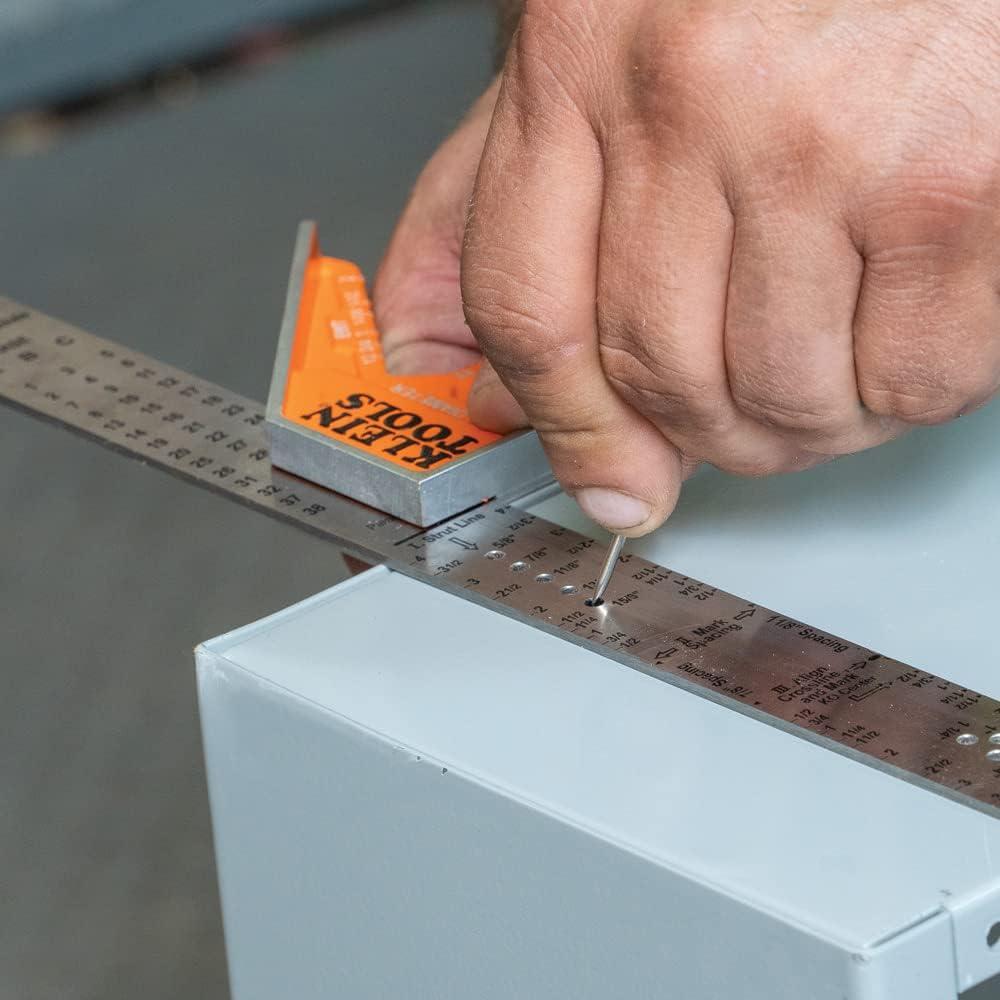
When I first pulled this combination square out of the package, I instantly noticed the precision-machined aluminum body and the weight distribution—it’s hefty enough to feel professional-grade without being cumbersome when you’re working in tight mechanical rooms or suspended above ceiling tiles during a ductless mini-split install. The 12-inch stainless steel ruler with deeply etched markings caught my attention right away, becuase I’ve burned through cheaper squares where the measurements rub off after a few months of real jobsite abuse. The integrated conduit layout template is primarily geared toward electricians, but I’ve found it surprisingly useful when I need to mark knockout centers on electrical disconnect boxes for rooftop units or when running linesets through wall penetrations that share space with EMT conduit. The rare-earth magnets are legitimately strong—they hold the ruler firmly to ductwork, furnace cabinets, or steel beams while I’m marking cuts, which is a game-changer when you don’t have a third hand available.
| Feature | Specification |
|---|---|
| Body Material | Lightweight aluminum with precision 45° and 90° edges |
| Ruler Length | 12 inches, stainless steel, rustproof |
| Measurement Increments | 1/8″ and 1/16″ (double-sided) |
| Level Vial | High-visibility bubble vial with reinforced housing |
| Magnetic System | Rare-earth magnets for quick adjustments |
| Integrated Tools | Stainless steel scriber, conduit layout template |
The high-visibility bubble vial is another standout feature—when you’re leveling a condensate drain line or checking the pitch on a split system’s lineset, that large vial window makes it easy to get an accurate read even in dimly lit attics or crawlspaces. I appreciated the integrated stainless steel scriber tucked into the body; it’s perfect for marking sheet metal ductwork or scoring reference lines on evaporator coil cabinets without hunting for a separate tool. The double-sided ruler offers 1/8-inch and 1/16-inch increments, which covers most of the precision work I encounter—whether I’m measuring supply plenum dimensions, verifying clearances around gas furnaces per manufacturer specs, or laying out custom duct fittings. Klein’s reputation for durability is well-deserved here, and while this square is marketed toward electricians and carpenters, it’s proven itself indispensable in my HVAC toolkit for everything from rough framing checks during new construction installs to fine-tuning bracket placements on wall-mounted air handlers.
Why This Combination Square Has Become Essential in My Tool Belt

After thirty years of running linesets, mounting condensers, and squaring up ductwork in attics where a quarter-inch off means your plenum won’t seal right, I’ve learned that precision isn’t optional in HVAC work. This square has become my go-to for everything from laying out mounting brackets on concrete pads to checking whether a furnace cabinet is plumb before I fire up a 100,000 BTU gas unit. The precision-machined 90 and 45-degree edges give me confidence when I’m setting angles for custom ductwork transitions, and the powerful rare-earth magnets mean the ruler stays exactly where I put it on sheet metal plenums or electrical panels while I’m marking cutouts for zone dampers. That integrated conduit layout template has saved me countless minutes when running disconnect whips to outdoor units—no more fumbling with separate templates when I need to find knockout centers on a 60-amp electrical box for a 5-ton heat pump installation.
what really sets this tool apart is the double-sided ruler design: one side has standard measurements in 1/8-inch and 1/16-inch increments for general layout work, while the reverse features an electrical panel schedule and conduit template that’s genuinely useful when you’re installing mini-split linesets or running control wiring. the deeply etched markings on the rustproof stainless steel haven’t faded despite constant exposure to refrigerant oils, duct sealant, and the kind of abuse tools take when you’re crawling through fiberglass insulation to install return air grilles. The high-visibility bubble vial is large enough to read in dim attic spaces, and I’ve used it to level everything from thermostats to condensate drain lines where proper pitch is critical. The integrated stainless steel scriber marks sheet metal, copper linesets, and even PVC drain pipe with pinpoint accuracy—essential when you’re laying out a custom plenum for a zoned system.
| Feature | Specification | HVAC Application |
|---|---|---|
| Ruler Length | 12 inches | Ideal for duct transitions, register cutouts, and panel layouts |
| Body material | Lightweight aluminum | Won’t add bulk to tool belt during attic or rooftop work |
| Angle accuracy | Precision-machined 90° & 45° | Critical for square plenum assembly and ductwork fabrication |
| Magnet Type | Rare-earth magnets | Holds firmly to metal panels, furnace cabinets, and sheet metal |
| Level Vial | High-visibility bubble with reinforced housing | Ensures proper condensate drain pitch and equipment leveling |
| Measurement Increments | 1/8″ and 1/16″ | Precision needed for refrigerant lineset clearances and tight fits |
Precision and Durability That Actually Holds Up on Job Sites

I’ve dragged this square through some of the roughest work environments imaginable—from attic crawlspaces where I’m threading linesets around rafters to cramped mechanical rooms where I’m leveling condenser pads on uneven concrete. The precision-machined 90 and 45-degree edges have remained dead-accurate even after countless drops onto metal ductwork and concrete slabs.That lightweight aluminum body takes a beating without denting like cheaper alternatives, and the rustproof stainless steel ruler with deeply etched markings hasn’t faded despite constant exposure to refrigerant oils, condensate, and whatever else gets splashed on it during installs.The powerful rare-earth magnets are no gimmick—they lock that ruler onto electrical panels, furnace cabinets, and steel framing with enough grip that I can mark cuts one-handed while holding a flashlight in the other. The integrated bubble level with its reinforced housing and high-visibility vial has saved me more than once when setting mini-split heads or ensuring drain lines have proper pitch.
| Feature | Specification | Field Benefit |
|---|---|---|
| Body Material | lightweight Aluminum | Won’t rust in humid mechanical rooms or attics |
| Ruler Material | Stainless Steel, 12-inch | Resists corrosion from refrigerant contact |
| Measurement Increments | 1/8″ and 1/16″ | Precise enough for ductwork fabrication and lineset bends |
| Angle Accuracy | Machined 90° and 45° | critical for condensate drain slopes and vent terminations |
| Magnetic Hold | Rare-Earth Magnets | Hands-free marking on panels, furnaces, air handlers |
| Integrated Tools | Bubble Level, Scriber, Conduit Template | Reduces tool bag clutter on service calls |
What sets this square apart from the hardware store junk is how the deeply etched markings refuse to wear off—I’ve had mine for two seasons of heavy commercial and residential work, and the graduations are still crisp. the integrated stainless steel scriber is surprisingly useful for marking cut lines on sheet metal plenums and duct collars without hunting for a separate tool, and it stays sharp. The double-sided ruler design means I get standard measurements on one side and the conduit layout template on the other,which honestly gets more use than I expected when roughing in disconnect boxes or marking knockout centers on electrical panels during equipment changeouts. The magnetic quick-adjust system lets me slide that ruler to exact positions without it slipping—critical when you’re marking refrigerant line penetrations through exterior walls and need repeatable accuracy. This isn’t just another measuring tool; it’s become one of those pieces that lives in my primary tool bag because it handles multiple tasks reliably enough that I reach for it daily.
Check Current Price and Availability
How the Magnetic Base and Bubble Level Save Me Time Every Day

The rare-earth magnets built into this combination square have become one of my most-used features on service calls. When I’m installing a condensing unit pad or leveling a furnace platform, I can slap this tool onto the metal cabinet and it holds firm while I check both horizontal and vertical planes. The magnetic base means I don’t need a third hand when I’m wrestling a 60-pound blower assembly into position or aligning bracket holes on a wall-mounted air handler. I’ve used it dozens of times when marking condenser mounting brackets where even a slight tilt can cause refrigerant migration issues and compressor damage over time.The magnets are strong enough that the ruler stays put even when I’m working on a vibrating surface during a live system diagnostic.
The high-visibility bubble level saves me from pulling out a separate torpedo level for quick checks, which matters more than you’d think during a busy install day. When I’m setting disconnect boxes, verifying that outdoor units are level for proper oil return, or ensuring ductwork transitions maintain proper pitch for condensate drainage, I can grab this square and get an instant reading. Here’s what makes this tool indispensable for daily HVAC work:
- One-handed operation: The magnetic hold lets me check level while positioning equipment with my other hand
- Quick cabinet checks: Perfect for verifying air handler installations where even a 2-degree tilt can cause drain pan overflow
- Ductwork alignment: Ensures proper pitch on horizontal runs to prevent condensate backup
- Electrical box placement: The bubble vial confirms my disconnect and thermostat boxes are straight before I anchor them permanently
I’ve eliminated at least five tool swaps per job by having both magnetic attachment and leveling capability in one compact package. When you’re on your fourth install of the day and the sun’s beating down on a rooftop unit replacement, that efficiency adds up to getting home earlier.
Check Current Price on Amazon
Embrace a New Era

## The Bottom Line
Look, I’ve been in HVAC long enough to know that the tools in your bag say everything about the quality of work you’re going to deliver. The Klein 935CSEL isn’t just another square—it’s a precision instrument that helps you get measurements right the first time, every time.
and here’s what that really means for the homeowner: when I’m installing ductwork, mounting equipment, or laying out electrical connections for HVAC systems, accuracy isn’t negotiable. A square that’s off by even a fraction means panels that don’t seal properly, airflow that’s compromised, and energy dollars literally floating out of poorly fitted connections. That directly impacts your comfort, your utility bills, and how long your system’s going to last before it needs replacing.I’ve used this square on condensate drain installations, thermostat mounting, electrical panel work—all the places where “close enough” becomes expensive down the road.The magnetic hold and quick-adjust feature mean I’m not fumbling around while balanced on a ladder in someone’s attic. The integrated conduit template has saved me time I can spend double-checking refrigerant lines and ensuring proper airflow—the things that actually keep homes cozy.
After 160-plus years, Klein knows what professionals need as they’ve been listening to guys like me who depend on these tools daily. The 935CSEL delivers on that legacy.
If you’re serious about precision work—whether you’re a pro or a dedicated DIYer who wants professional results—this square belongs in your kit. It’s an investment in doing things right, and doing things right is how you protect home comfort, indoor air quality, and system longevity.