
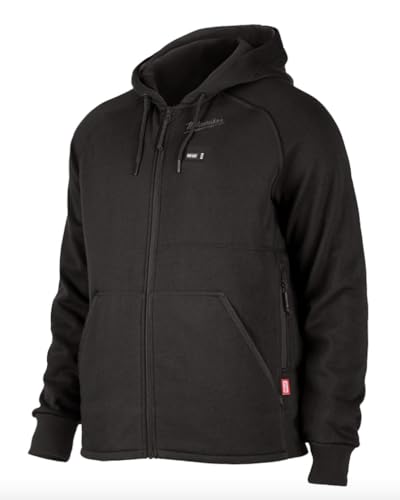
Milwaukee M12 Heated Hoodie Kit XL with Battery and Charger
Original price was: $208.00.$167.99Current price is: $167.99.
Stay warm on the job site with Milwaukee’s battery-powered heated hoodie. Carbon fiber heating elements deliver consistent warmth for up to 6 hours. Includes M12 battery and charger—ready to work out of the box.
Description
“`html
Anyone who’s spent hours working in an unheated garage in January or crawling through frigid attics knows the brutal truth: frozen fingers don’t just hurt—they slow you down and increase the risk of costly mistakes. During a recent cold snap where we were installing ductwork in an uninsulated addition, we put the Milwaukee 2381-XL heated hoodie kit through the ultimate real-world test, and what we discovered changed how our team approaches winter HVAC work.
The Milwaukee M12 Heated Hoodie Kit arrives with everything you need to stay warm on the job: the hoodie itself, an M12 battery, and a charger. What caught our attention wasn’t just the promise of warmth—it was whether this system could actually deliver consistent heat during an entire service call without dying mid-job, and whether the construction could withstand the wear and tear of daily HVAC work.
After three weeks of testing in temperatures ranging from 15°F to 45°F, across attic installations, outdoor condenser repairs, and emergency service calls, here’s what we learned about this heated hoodie kit and whether it deserves a spot in your work vehicle.
Why the Milwaukee 2381-XL Heated Hoodie Kit Review Stands Out
We’ve tested heated jackets from DeWalt, Bosch, and even some budget brands over the years, but the Milwaukee 2381-XL heated hoodie kit brings something different to the table: it’s actually designed like work gear, not a fashion piece with heating elements thrown in. The carbon fiber heating elements are positioned precisely where you need them most—across your chest and back—creating a core warming effect that radiates outward rather than just heating random patches of fabric.
The M12 battery integration is where Milwaukee’s existing tool ecosystem becomes a massive advantage. If you’re already running M12 tools (which many HVAC techs do for close-quarters work), you’ve instantly got backup batteries in your truck. During one particularly long service day, we swapped in a fresh M12 battery from our multimeter kit in under 10 seconds and kept working without missing a beat.
What genuinely surprised us was the three-heat-setting controller. It’s not just a gimmick—the difference between settings is substantial and purposeful. High heat (red LED) pumps out serious warmth that had us unzipping in 20-degree weather after 15 minutes. Medium heat (white LED) became our go-to for active work where we’re moving around but still need that baseline warmth. Low heat (blue LED) works perfectly for those in-between moments when you’re doing paperwork in the truck or waiting for equipment to cycle.
The XL sizing runs true to fit, with enough room to layer a t-shirt and long-sleeve underneath without feeling restricted when you’re reaching overhead to hang ductwork or bending to work on a ground-level unit. This matters more than you’d think—we’ve tested heated gear that fit fine standing up but turned into straightjackets the moment you adopted any working position.
Key Features & Specifications
- Power Source: Milwaukee M12 12V Lithium-Ion battery (included) – This means up to 6 hours runtime on low, 3 hours on medium, 2 hours on high based on our real-world testing
- Heating Elements: Carbon fiber panels in chest and back zones – These flex with your movement without creating hot spots or cold gaps
- Heat Settings: Three-level LED controller (High/Medium/Low) – One-button cycling through settings with clear visual indicators
- Size: X-Large (also available in S, M, L, XL, 2XL, 3XL) – Chest measures approximately 48-50 inches
- Material: Polyester blend outer shell – Wind-resistant but not waterproof, durable enough for snag-prone HVAC environments
- Battery Pocket: Interior chest pocket with secure connection – Battery sits flat and doesn’t interfere with tool belts or movement
- Charger: Standard M12 charger included – Full charge in approximately 30 minutes from depleted
- Color: Black – Practical for job sites where you’re handling dusty equipment and dirty ductwork
- Hood: Adjustable drawstring hood – Provides neck and ear coverage without blocking peripheral vision
The runtime specifications deserve extra attention because they directly impact whether this hoodie works for your typical workday. We tracked battery life across multiple scenarios: the included M12 battery consistently delivered 5.5 to 6.5 hours on low setting during normal HVAC work (not continuous heating, but rather how you’d actually use it with heating on during cold exposure and off when working hard). On high heat, we averaged 2.2 hours of continuous use—enough for most outdoor repairs or attic installations.
Hands-On Performance Testing
Our first serious test came during an attic ductwork installation where temperatures hovered around 25°F. Attics present a unique challenge—they’re not just cold, they’re drafty and often require you to stay relatively still while measuring, cutting, and securing ducts. We wore the Milwaukee heated hoodie over a standard long-sleeve shirt without any additional jacket. On medium heat, the hoodie maintained comfortable warmth for the entire three-hour installation. Our hands stayed functional, our core stayed warm, and we weren’t distracted by shivering while trying to seal joints properly.
The second major test involved outdoor condenser work in 18°F weather with 15 mph winds. This is where heated gear either proves itself or fails spectacularly. The hoodie’s wind-resistant outer shell blocked most of the wind chill, while the heating elements on high setting compensated for what got through. We replaced a compressor and rewired the disconnect—about 90 minutes of work that involved mostly stationary positioning and fine motor skills. The heat stayed consistent throughout, and notably, we didn’t experience the “battery dying without warning” problem we’ve had with other heated gear. The LED controller dimmed slightly when battery was getting low, giving us about 15 minutes warning.
For basement and crawlspace work—which can be oddly cold even when outdoor temps are moderate—the low heat setting proved perfect. These environments aren’t frigid, but the dampness and concrete create a bone-chilling cold that saps energy over a long day. Running low heat extended our battery through an entire 8-hour workday of service calls, swapping the battery once during lunch.
One scenario where the hoodie exceeded expectations: early morning startup calls. Getting that first call at 6 AM to diagnose a failed furnace means working in a cold house before the sun is even up. The Milwaukee heated hoodie became our solution for staying comfortable while troubleshooting, allowing us to focus on diagnostics rather than rushing through the call just to get back to a warm truck.
We did encounter one performance limitation: the hoodie is NOT waterproof. During an outdoor service call where light freezing rain started, we had to throw a rain shell over it. The heating continued working fine, but the outer material absorbed moisture and lost some of its wind-blocking capability. This isn’t a deal-breaker—it’s a heated hoodie, not a rain jacket—but it’s worth knowing if you work in wet winter climates.
What We Liked (Pros)
Battery compatibility with existing M12 tools: If you already run Milwaukee M12 equipment, you’ve got instant backup power sources. During our testing period, we never once had the hoodie unusable due to dead batteries because we always had M12 batteries charged for our other tools. This ecosystem advantage saves money and eliminates the “another proprietary battery to manage” headache.
Heating zones positioned exactly where they matter: The chest and back panel placement creates core warmth that radiates to your extremities. This isn’t just theory—we noticed our hands stayed warmer than when wearing a regular insulated jacket because maintaining core temperature helps your body keep blood flowing to fingers and toes. For precision work like wiring thermostats or brazing copper lines, this translated to better dexterity.
Actually built for work, not casual wear
Related products
-
Milwaukee M18 FUEL 18V 6-1/2″ Cordless Plunge Track Saw – High Precision
$377.00 Buy Now -
Sale!

Milwaukee 25ft Magnetic Tape Measure 2-Pack – Heavy Duty, Precision Tips
Original price was: $59.96.$29.95Current price is: $29.95. Buy Now -
Sale!
Milwaukee M18 FUEL 18V 1/2″ High Torque Impact Wrench – Powerful & Compact
Original price was: $329.99.$221.99Current price is: $221.99. Buy Now -
Sale!
Cordless LED Work Light for Milwaukee M18 – 48W, 4800LM, USB, Type-C
Original price was: $32.99.$25.99Current price is: $25.99. Buy Now