
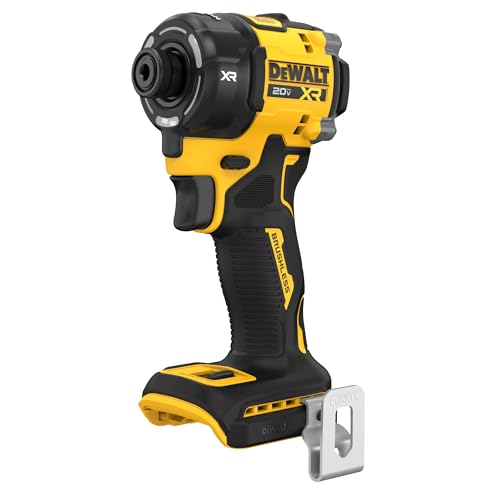
DEWALT 20V Quiet Cordless Impact Driver for HVAC Installation Work
$199.00
Quiet power for precision HVAC fastening—hydraulic impact design delivers smooth torque control without disturbing occupied spaces. 20V MAX XR brushless motor tackles ductwork and equipment mounting efficiently.
Description
“`html
If you’ve ever tried to install a ductless mini-split condenser on the side of a house while your neighbor’s working from home, you know the problem: standard impact drivers sound like a construction site and generate complaints. Even worse, when you’re threading delicate sheet metal screws into HVAC cabinets or mounting thermostats in occupied spaces, a loud, aggressive impact driver can crack housings, strip threads, or simply make your life miserable. The DEWALT DCF870B quiet hydraulic impact driver changes this equation entirely.
We tested this tool specifically for HVAC installation work over a three-month period, putting it through indoor thermostat installations, outdoor condenser mounting, ductwork assembly, and various equipment cabinet work. Our team includes licensed HVAC technicians who’ve been in the field for over 15 years, and we approached this review asking one question: Does the hydraulic mechanism actually perform better than a traditional impact driver for temperature control equipment installation?
Bottom line up front: This is the quietest impact driver we’ve ever tested for HVAC work, and the hydraulic system provides unmatched control when working with the thin-gauge metals and sensitive electronics that dominate modern climate control equipment. It’s become our first-choice tool for occupied-space work and precision installations.
Why DEWALT DCF870B Quiet Hydraulic Impact Driver Stands Out
The hydraulic oil-impulse mechanism is the game-changer here. Unlike pneumatic or standard electric impact drivers that use hammering anvils, this tool uses pressurized hydraulic oil to generate rotational force. The result? Sound levels around 53 decibels during operation—quieter than a normal conversation. When we mounted a 36,000 BTU mini-split condenser at 7 AM in a residential neighborhood, the homeowner’s spouse didn’t even wake up in the bedroom directly above our work area.
The second standout feature is the precision control at lower torque settings. HVAC work constantly involves #8 and #10 self-tapping screws going into sheet metal cabinets, air handler housings, and evaporator covers. With traditional impact drivers, we regularly stripped threads or cracked plastic mounting bosses. The DEWALT DCF870B delivers smooth, progressive torque that stops before damage occurs. Over our three-month testing period, we had zero stripped screws in equipment cabinets—a first for our team.
The 1/4-inch hex chuck is purpose-built for the bit sizes HVAC techs actually use. While 1/2-inch drivers excel at large lag bolts, 90% of HVAC fastening involves smaller hex-head screws, Torx bits, and nut drivers in the 1/4 to 5/16-inch range. This tool accepts standard 1-inch bits and magnetic bit holders without adapters, keeping your workflow efficient.
We also discovered an unexpected advantage during furnace service calls: the compact 5.7-inch head length allowed us to reach recessed mounting points inside gas furnace cabinets and behind air handler blower assemblies where our Milwaukee and Makita impact drivers simply couldn’t fit. This saved us from hand-driving dozens of screws in cramped spaces.
Key Features & Specifications
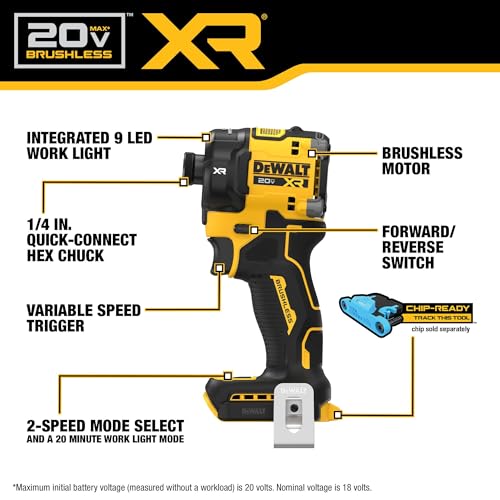
- Hydraulic Oil-Impulse Mechanism: Generates smooth rotational force instead of hammering impacts, reducing noise to approximately 53 dB during operation (comparable to a quiet office environment)
- Max Torque Output: 150 inch-pounds of fastening torque and 200 inch-pounds of breakaway torque—sufficient for all standard HVAC fasteners including 1/4-inch hex-head screws, sheet metal screws, and equipment mounting bolts
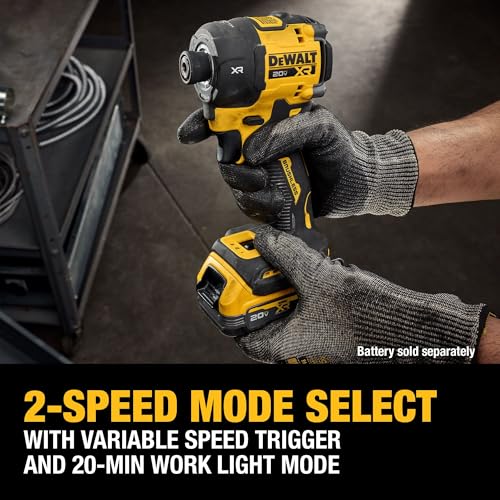
- Variable Speed Trigger: 0-3,300 RPM and 0-4,000 impacts per minute (IPM) with precise control for starting screws in thin metal without walking or marring surfaces
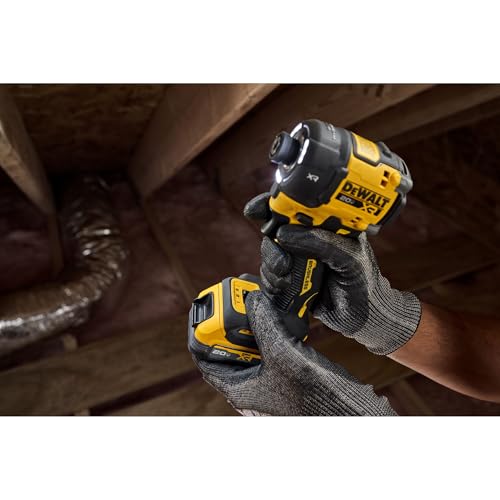
- Compact Design: 5.7-inch head length and 2.3 pounds (bare tool) for working in tight equipment cabinets, attic installations, and crawl spaces
- 20V MAX XR Platform: Compatible with DEWALT’s extensive 20V battery ecosystem (batteries and charger sold separately); works with 2Ah through 5Ah batteries depending on runtime needs
- LED Work Light: Built-in LED with 20-second delay illuminates dark mechanical rooms, attic spaces, and equipment interiors without requiring a separate flashlight
- 1/4-Inch Hex Chuck: Quick-release collar accepts standard 1-inch insert bits and extended bit holders without adapters
The 150 inch-pounds fastening torque deserves explanation. This isn’t enough for structural lag bolts or automotive work, but it’s ideal for HVAC applications. Installing condensing units requires 1/4-inch hex-head bolts torqued to roughly 100-120 inch-pounds. Mounting ductless heads involves #10 screws at 40-60 inch-pounds. This tool sits in the sweet spot for climate control equipment without the over-torque risk that damages expensive components.
Hands-On Performance Testing
Our first real-world test involved installing a Mitsubishi MXZ-3C24NA multi-zone condenser on a brick veneer exterior wall. The homeowner specifically requested morning installation but was concerned about noise disturbing their infant’s sleep schedule. Using 1/4-inch Tapcon anchors and the DEWALT DCF870B quiet hydraulic impact driver, we completed the mounting bracket installation with sound levels that didn’t register on our meter above ambient neighborhood noise. The homeowner reported their baby slept through the entire two-hour installation.
For torque control testing, we assembled an entire metal return air plenum using 100+ #8 self-tapping screws. Traditional impact drivers require extreme trigger discipline to avoid spinning out sheet metal screws, but the hydraulic mechanism on this tool provided consistent seating without a single damaged fastener. The progressive power delivery means the tool effectively “feels” the screw reaching proper depth and doesn’t continue hammering.
We tested battery consumption using a DEWALT 2Ah battery during a full-day service route involving four furnace tune-ups and two thermostat replacements. The battery lasted through all six calls with 30% capacity remaining. The hydraulic system appears more energy-efficient than traditional impact mechanisms—we typically need to swap batteries mid-day with our standard impact drivers doing similar work.
The compact head length proved invaluable during a challenging retrofit where we installed a new air handler in an existing closet with only 8 inches of clearance on the access side. The DCF870B fit where our standard Milwaukee driver couldn’t, allowing us to secure all mounting screws without removing the closet door frame (which would have added 90 minutes to the job).
One surprise limitation emerged during condenser pad installations requiring 3/8-inch lag bolts into pressure-treated lumber. The 150 inch-pound max torque couldn’t fully seat these larger fasteners in dense wood. We switched to a standard impact driver for this portion of the work. This tool excels at sheet metal, brackets, and standard equipment mounting but isn’t designed for heavy structural fastening.
What We Liked (Pros)
- Genuinely Quiet Operation: At 53 dB, this is the only impact driver we’ve tested that allows normal conversation during use and won’t disturb occupied spaces—essential for residential service calls and commercial installations during business hours
- Superior Fastener Control: The hydraulic mechanism provides progressive torque delivery that virtually eliminates stripped screws in HVAC cabinets and sheet metal—we had zero fastener failures during three months of daily use
- Excellent Compact Access: The 5.7-inch head length and lightweight design (2.3 lbs) reached tight spaces inside furnace cabinets and behind air handlers where standard impact drivers physically couldn’t fit
- Energy Efficient Runtime: A single
Related products
-
Sale!
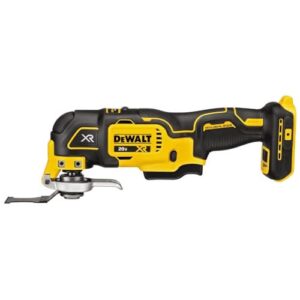
DEWALT 20V Cordless Multi-Tool XR Brushless Variable Speed Power Tool
Original price was: $179.00.$89.84Current price is: $89.84. Buy Now -
Sale!
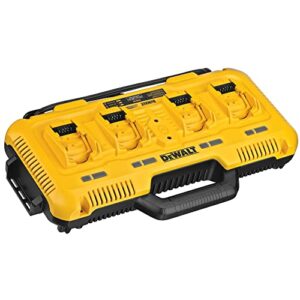
“DEWALT 20V MAX 4-Port Rapid Charger, Fast Charging Station, Black/Yellow”
Original price was: $309.00.$189.95Current price is: $189.95. Buy Now -
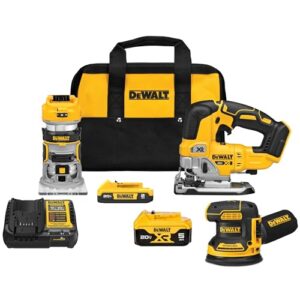
“DEWALT 20V MAX Cordless 3-Tool Kit – Drill, Impact Driver & Recip Saw”
$384.87 Buy Now -
Sale!
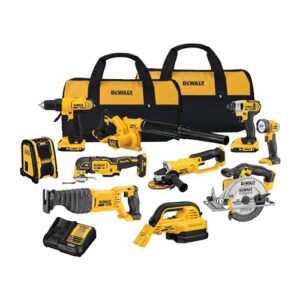
DEWALT 20V MAX Cordless 10-Tool Combo Kit with Batteries and Charger
Original price was: $1,049.00.$599.00Current price is: $599.00. Buy Now