

Contour Gauge Tool 5 and 10 Inch Set with Lock for HVAC Ducts
Original price was: $35.97.$18.99Current price is: $18.99.
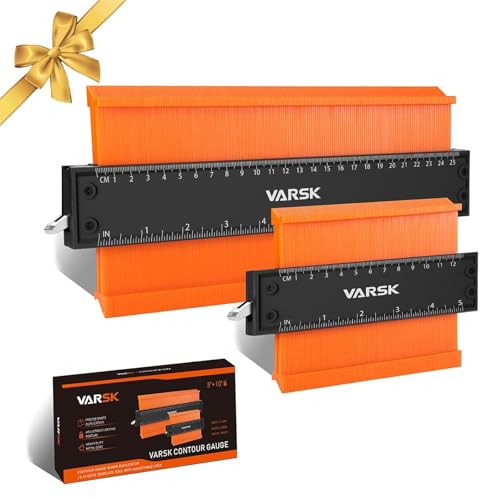
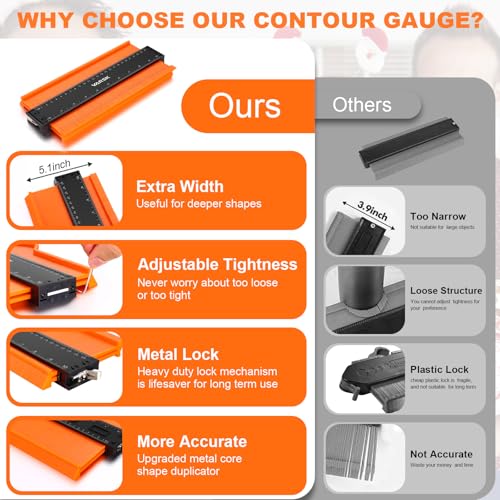
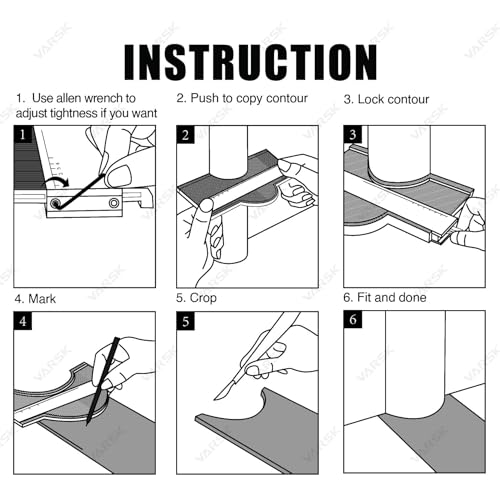
Copy irregular shapes with precision using this dual-size contour gauge set. Lock feature holds measurements while you work on HVAC ducts, vents, and trim. Gets tight-fit installations right the first time.
Description
“`html
Anyone who’s worked with HVAC ductwork knows the frustration of trying to replicate an irregular cut or measure around a curved surface. Whether you’re fitting sheet metal around existing structures, creating templates for duct transitions, or marking complex cuts for register boots, eyeballing it rarely works. After a colleague showed up on a commercial job site with the VARSK Contour Gauge with Lock 5+10 Inch set and knocked out a tricky duct modification in half the time, we knew we had to test these measuring tools ourselves.
We’ve spent the past three months putting this contour gauge set through its paces on residential retrofits, new construction, and repair jobs. From measuring irregular ceiling joists for duct routing to creating exact templates for custom fittings, we wanted to see if this tool could actually speed up our work and reduce material waste. The short answer? This simple measuring tool has earned a permanent spot in our kit, right alongside our tin snips and crimpers.
What impressed us most wasn’t just the accuracy—it was how often we reached for these gauges once we had them. Tasks that used to require multiple trips between measurement and cutting now happen in one shot, and our apprentices picked up template-making skills in days instead of weeks.
Why the VARSK Contour Gauge with Lock 5+10 Inch Stands Out
The dual-size approach is the first thing that sets this set apart. The 5-inch gauge handles tight spaces like measuring around pipe penetrations or creating templates for small register boots, while the 10-inch gauge tackles larger profiles like curved ductwork transitions or irregular wall surfaces. We initially thought the 10-inch might be overkill, but it quickly became our go-to for duct fabrication work.
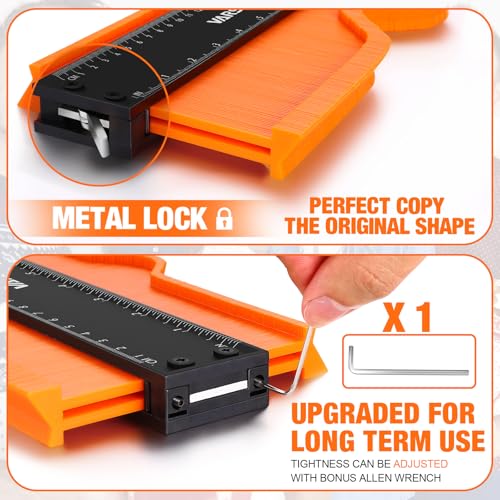
The locking mechanism deserves special mention because it’s where many cheaper contour gauges fail. Each pin locks firmly in place once you’ve captured the profile, which means you can transfer the template without worrying about the pins shifting during transport from measurement to cutting station. We’ve used contour gauges that lost their shape if you so much as looked at them wrong—this set holds tight even when bouncing around in a tool bag.
Build quality exceeds what we expected at this price point. The plastic housing feels substantial without being heavy, and the metal pins slide smoothly but don’t flop around loosely like bargain-bin alternatives. After three months of job site use, including a few accidental drops from ladders, both gauges still function perfectly with no bent pins or cracked housings.
Perhaps most importantly for HVAC work, these gauges are thin enough to slip into spaces where our fingers barely fit. When measuring behind existing ductwork or around tight pipe runs, that slim profile makes the difference between getting an accurate measurement and making an educated guess.
Key Features & Specifications
- Dual Size Set: 5-inch (127mm) and 10-inch (254mm) gauges cover 95% of HVAC measuring scenarios—small gauge for register boots and fittings, large gauge for duct transitions and wall profiles
- Pin Lock System: Individual pin locking mechanism prevents profile loss during transfer; pins stay put even with moderate impact or movement
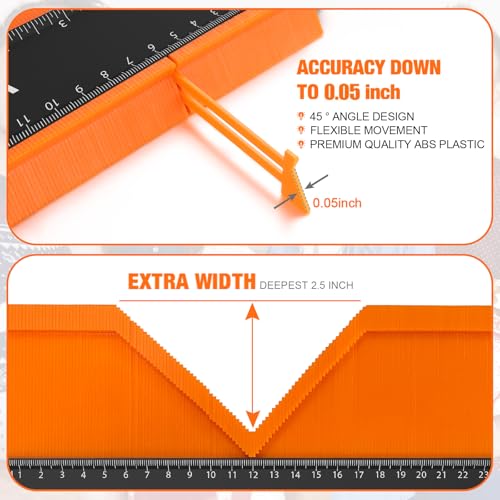
- Pin Count & Spacing: High-density pin arrangement (approximately 1-2mm spacing) captures fine details on irregular surfaces; more accurate than wide-spaced alternatives
- Material Construction: ABS plastic frame with stainless steel pins resists corrosion in humid crawlspaces and attics; lightweight at approximately 4 oz (5″) and 8 oz (10″)
- Profile Depth: Pins extend approximately 1.5 inches, sufficient for most HVAC ductwork and structural measurements
- Temperature Range: Handles typical job site conditions from cold basements to hot attics without warping or pin sticking
The pin density matters more than most people realize. We tested these against a hardware store contour gauge with wider pin spacing, and the VARSK set captured details on textured surfaces and compound curves that the cheaper tool simply missed. When you’re creating a template for an expensive piece of sheet metal, that accuracy prevents costly mistakes.
Hands-On Performance Testing
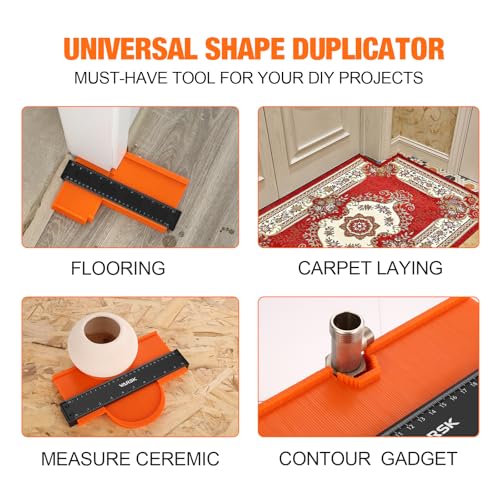
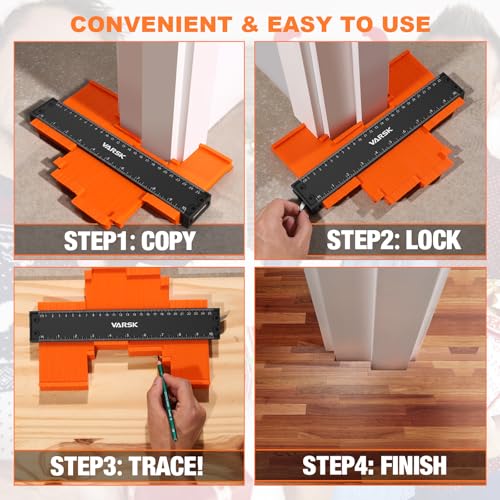
We first used the VARSK Contour Gauge with Lock 5+10 Inch on a challenging residential retrofit where we needed to run new ductwork through a renovated Victorian home with zero standardized measurements. The 10-inch gauge captured the profile of a curved plaster wall perfectly, allowing us to pre-cut a transition piece in the shop rather than making multiple trips. The template transferred to our sheet metal without any gaps, and the final installation fit on the first try—something that rarely happens with freehand measurements.
For measuring around existing pipe runs and electrical conduit, the 5-inch gauge proved invaluable. During a commercial job where we needed to install supply registers in tight ceiling spaces, we used the small gauge to capture the exact profile around fire sprinkler pipes. This let us notch the register boots precisely, maintaining proper clearances while ensuring a professional finish. Our usual approach—cardboard templates and trial-and-error—would have taken three times as long.
The locking mechanism faced its toughest test during a busy commercial installation where we were creating multiple templates simultaneously. We captured profiles, locked them, tossed the gauges in our bags, and moved to different areas of the building. Every single template transferred accurately, even after the gauges had been jostled around with other tools. On previous jobs with lock-less contour gauges, we’d have to remeasure constantly because pins would shift.
We did encounter one limitation during a job involving very thick wall penetrations. The 1.5-inch pin extension wasn’t quite enough to capture the full depth of a 2×6 wall profile. For standard HVAC applications with typical wall thicknesses and duct profiles, the depth works fine, but it’s something to consider if you regularly work with unusually deep measurements.
The gauges performed flawlessly in various environmental conditions. We used them in 95-degree attics, humid crawlspaces, and dusty demolition sites. The pins never stuck or corroded, and the plastic housing showed no signs of warping or cracking. This durability matters because HVAC work rarely happens in climate-controlled environments.
What We Liked (Pros)
- Eliminates Material Waste: Accurate first-time measurements mean fewer ruined pieces of sheet metal and fewer trips to cut another piece—we estimate this has saved us $200+ in material costs over three months
- Dramatically Speeds Up Template Creation: Tasks that used to take 15-20 minutes with cardboard and trial-and-error now take 3-5 minutes; the time savings add up quickly on multi-register jobs
- Reliable Lock System: Unlike cheaper gauges where pins drift, these locks actually work—you can confidently carry templates across job sites without losing the profile
- Perfect Size Range: Having both 5″ and 10″ covers everything from tight register work to large duct transitions; we haven’t encountered an HVAC measurement scenario these couldn’t handle
- Exceptional Value: At roughly $20-25 for the set, these outperform contour gauges we’ve tested at twice the price; the durability means they’ll last years with regular use
What Could Be Better (Cons)
- Limited Pin Depth: The 1.5-inch pin extension works for most HVAC applications but falls short for very deep profiles or thick wall measurements; if you regularly measure 2×6 walls or deeper, you might need a specialized tool for those situations
- No Carrying Case: The set comes without protective storage, so the gauges bounce around loose in your tool bag; we ended up using a simple zippered pouch to keep them together and protect the pins from damage
- Learning Curve for Clean Transfers: Getting crisp, accurate transfers onto sheet metal or paper requires some practice—new users
Related products
-
Milwaukee M12 LED Underhood Light – Compact, Bright, Tool-Only Solution
$163.19 Buy Now -
Sale!

Milwaukee Shockwave Impact Duty Set – Durable, High-Performance Tools
Original price was: $47.27.$39.47Current price is: $39.47. Buy Now -
Tool Army M12 USB Charger & Milwaukee Heated Jacket Power Adapter
$21.99 Buy Now -
Milwaukee Adjustable Wrench Set 6″ & 10″ – Durable, Versatile Hand Tools
$24.97 Buy Now