Klein 21010-6-SEN: My Go-To Wire Snip for HVAC
I’ve been turning wrenches and pulling wire in residential and light commercial HVAC for over twenty years, and I can tell you right now: the little tools matter just as much as the big ones. You can have the finest Trane or Carrier system spec’d out with perfect Manual J calculations and a stellar SEER rating, but if you can’t reliably strip thermostat wire or trim control cables in tight spaces, you’re going to waste time, damage conductors, and create callbacks that’ll eat into your reputation and your wallet.
That’s why I’m taking a hard look at the Klein Tools 21010-6-SEN Free-Fall Snip. Klein’s been around since before anyone was thinking about refrigerant transitions or efficiency ratings, and their name still carries weight on jobsites for good reason. This particular snip caught my attention because it’s designed specifically for the 19 AWG and 23 AWG wire we handle constantly-whether it’s running new thermostat cable to a high-efficiency heat pump, wiring up a communicating control board, or troubleshooting low-voltage circuits on a zoned mini-split system.
In this review, I’m going to break down whether this USA-made tool delivers the durability, precision, and field performance that working HVAC techs actually need, or if it’s just another pair of snips that’ll end up rattling around the bottom of your bag.
My First Impressions of the Klein Tools Free-Fall Snip
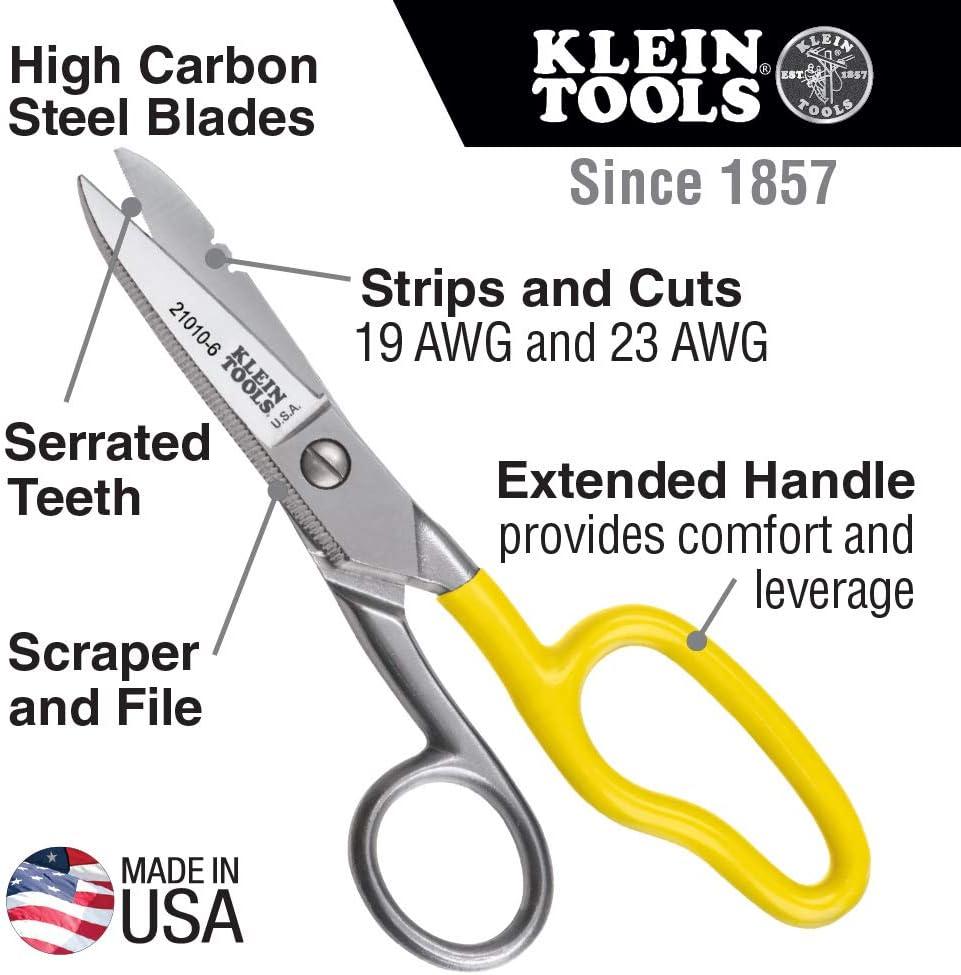
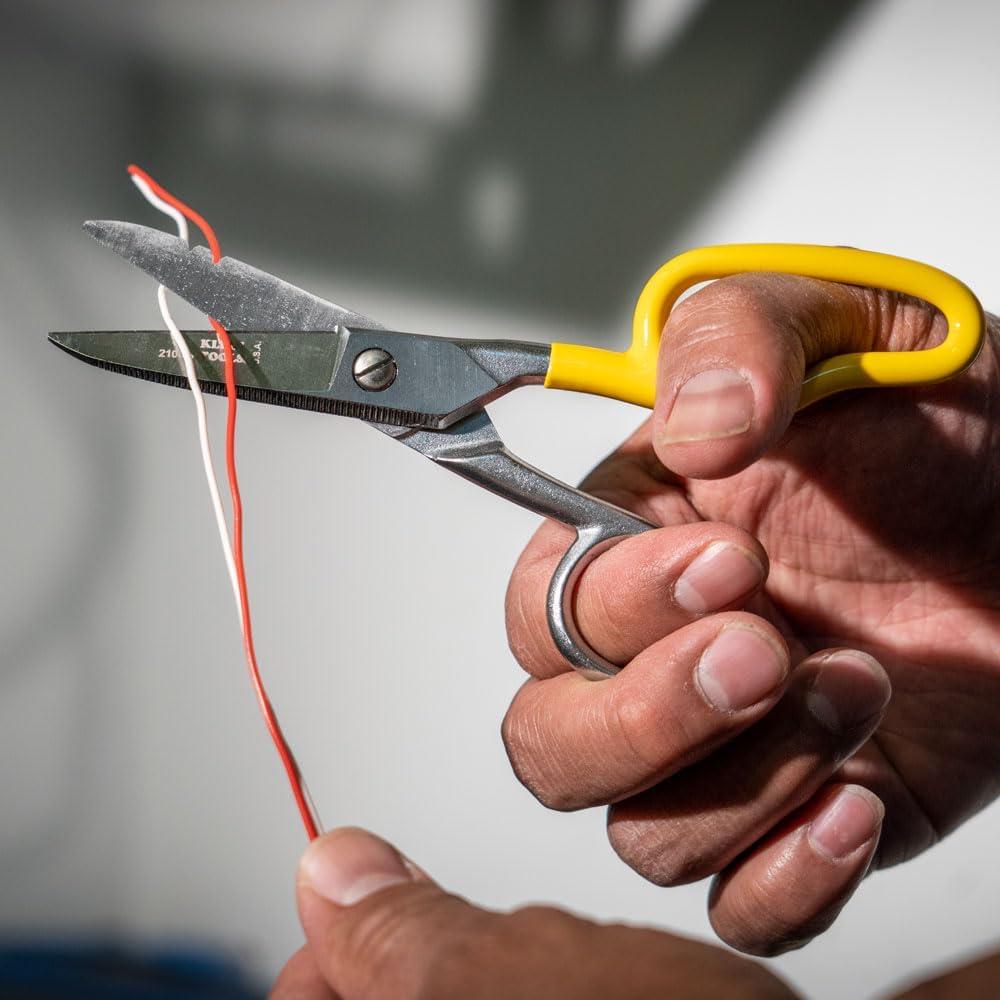
When I first got my hands on this tool, I immediately noticed the free-fall mechanism that sets it apart from standard snips. The blades don’t lock tight when closed, which means they stay loose and ready to go-perfect for when you’re hanging in an attic working on thermostat wire runs or cutting through control wire on a 24-volt circuit for a mini-split installation. The extended handles provide genuine leverage, and I could tell right away that the high carbon steel blades (rated at 58 HRC) weren’t going to dull after a few cuts through 18/2 or 18/5 thermostat wire. The serrated teeth grip the wire without slipping, which is critical when you’re trying to make clean cuts on communication cables between the condenser and air handler without nicking the conductors inside.
Out of the box, the build quality screams Made in USA, and it’s obvious this isn’t some imported throwaway tool. I tested it on both 19 AWG and 23 AWG wire-common gauges for low-voltage control circuits in residential HVAC systems-and the stripping function worked cleanly without fraying the copper strands. The scraper and file edges are bonuses for cleaning up burrs on copper linesets or scraping gasket material off flanges during compressor replacements. For technicians who spend half their day routing and terminating control wiring for variable-speed systems, zoning dampers, or smart thermostats, this tool eliminates the need to carry separate strippers and snips.
| Feature | Specification |
|---|---|
| Wire Cutting Capacity | 19 AWG and 23 AWG |
| Wire Stripping Capacity | 19 AWG and 23 AWG |
| Blade Material | High Carbon Steel (58 HRC) |
| Blade Type | Serrated (Non-Slip) |
| Handle Design | Extended for Leverage |
| Additional Features | Scraper, File, Free-Fall Mechanism |
| Country of Origin | Made in USA |
How the Multi-Function Design Performs in Daily HVAC Work
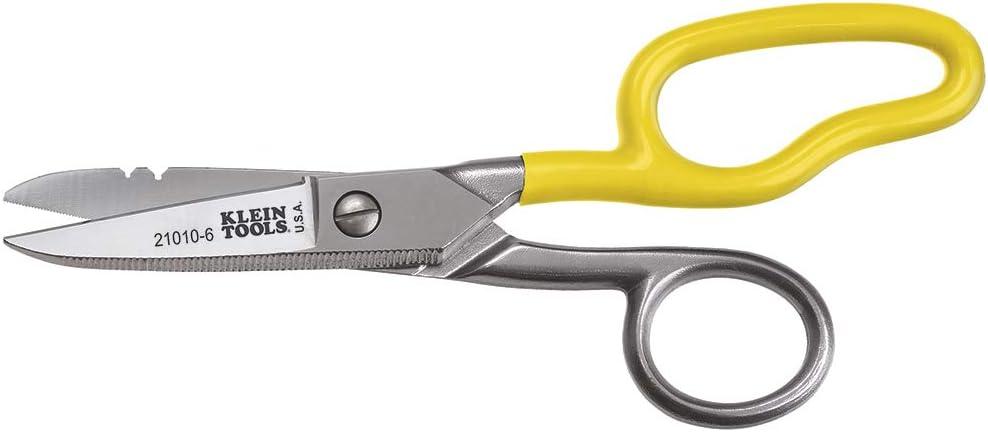
Out in the field, I’ve found this multi-function tool earns its keep during thermostat wiring jobs, control board replacements, and any situation where I’m dealing with low-voltage communication wire on ductless mini-splits, smart thermostats, or zoning systems. The high carbon steel blades at 58 HRC hardness cut through 19 AWG and 23 AWG wire cleanly without fraying the conductors-critical when you’re landing wires on sensitive circuit boards controlling variable-speed compressors or communicating systems that manage refrigerant flow in multi-zone setups. The serrated teeth grip the wire firmly, preventing slippage when you’re working in tight spots like behind wall-mounted air handlers or inside crowded electrical compartments on condensing units. The free-fall action means the tool doesn’t bind up, which speeds up repetitive cuts when running new control wiring for high-efficiency heat pumps or connecting outdoor temperature sensors.
Beyond cutting, the integrated wire stripper handles both gauges without nicking the copper-essential for maintaining proper electrical continuity on 24V control circuits that command everything from reversing valves to electronic expansion valves. The scraper and file functions handle burr removal on freshly cut copper linesets and clean up rough edges on sheet metal duct collars, though I primarily rely on this tool for electrical work rather than heavy-duty ductwork. The extended handles provide genuine cutting leverage without requiring excessive hand pressure, reducing fatigue during service calls where I’m replacing multiple zone damper actuators or rewiring entire control panels. For HVAC techs who work on residential and light commercial equipment-whether installing 12,000 BTU ductless heads or troubleshooting communication failures on two-stage furnaces-this tool consolidates several functions into one pocket-friendly package.
| Feature | Specification | HVAC Application |
|---|---|---|
| Wire Cutting Capacity | 19 AWG and 23 AWG | Thermostat wiring, control boards, zone dampers |
| Wire Stripping Capacity | 19 AWG and 23 AWG | Low-voltage control circuits, communication wiring |
| Blade Material | High carbon steel (58 HRC) | Durability for daily field use |
| Cutting Action | Serrated teeth, free-fall design | Non-slip cutting in tight equipment spaces |
| Additional Functions | Scraper, file | Burr removal, sheet metal prep |
Check Current Price and Availability
Why This Tool Belongs in Every Technician’s Pouch
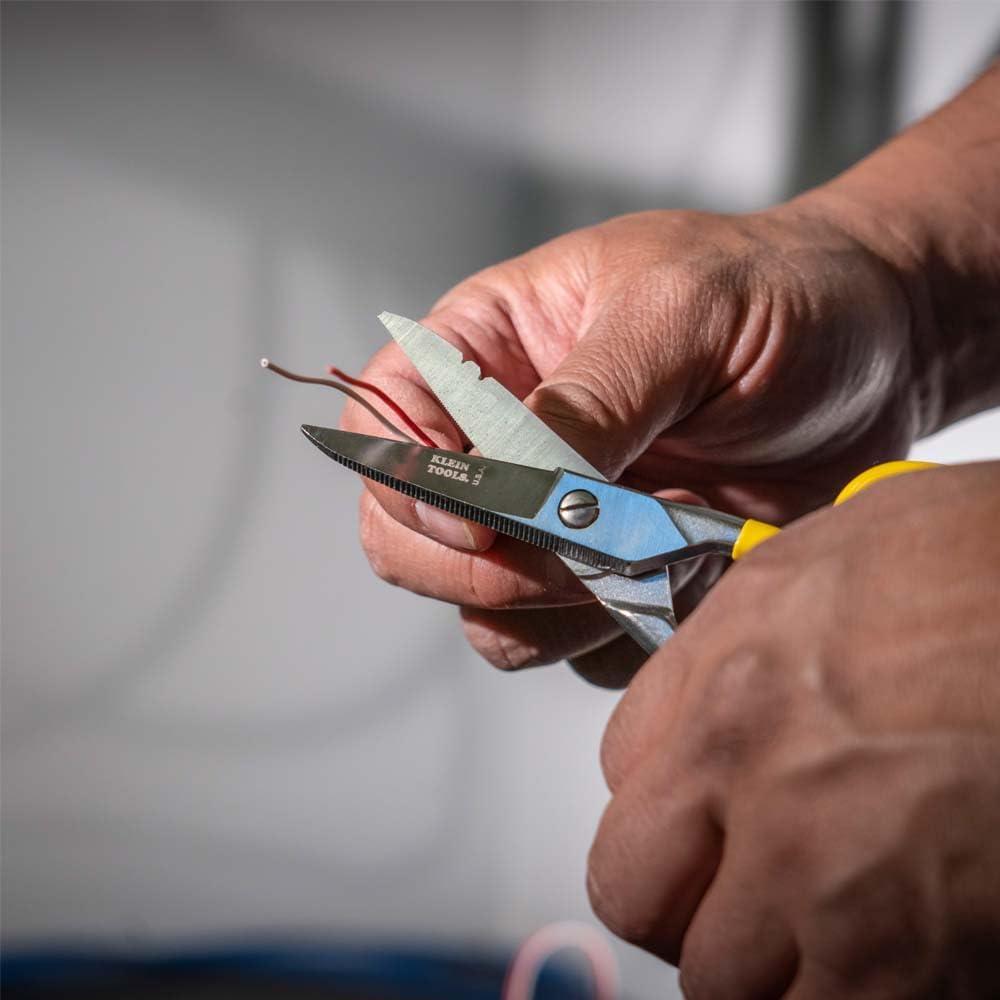
After decades of working on everything from residential 2-ton split systems to commercial 15-ton rooftop units, I’ve learned that the tools that earn a permanent spot in my pouch are the ones that solve multiple problems without adding bulk. This snip does exactly that. When I’m running low-voltage thermostat wire for a new high-efficiency variable-speed system or troubleshooting communication lines between a condenser and air handler, the ability to cleanly cut and strip 19 AWG and 23 AWG wire with one tool saves me from fumbling through my bag. The high carbon steel blades at 58 HRC hardness stay sharp even after months of daily use, and the serrated teeth provide non-slip cutting action that’s essential when you’re working in tight spaces behind a furnace or inside a cramped electrical panel. The extended handle gives me the leverage I need without requiring a death grip, which matters when you’re making dozens of cuts during a full system install.
What sets this apart from generic snips is the free-fall feature that creates a looser blade action-it sounds minor until you’re working one-handed while balancing on a ladder or holding a flashlight in your teeth. The built-in scraper and file functions handle everything from cleaning oxidation off copper line sets to deburring edges on sheet metal ductwork, tasks that come up constantly when you’re installing mini-splits or fabricating custom transitions for airflow optimization. Being Made in USA by Klein Tools means I’m not worried about cheap metal failing mid-job, which has happened with offshore alternatives. Whether I’m wiring a 24V control circuit on a 96% AFUE modulating furnace or running communication cables for a zoned ductless system, this tool has proven itself reliable across thousands of service calls.
| Feature | Specification |
|---|---|
| Wire Cutting Capacity | 19 AWG and 23 AWG electrical communication wire |
| Wire Stripping Capacity | 19 AWG and 23 AWG |
| Blade Material | High carbon steel (58 HRC hardness) |
| Blade Features | Serrated teeth for non-slip cutting action |
| Additional Functions | Scraper, file, cordage/cable cutting |
| Handle Design | Extended for comfort and leverage |
| Manufacturing | Made in USA |
What I Wish Klein Had Done Differently
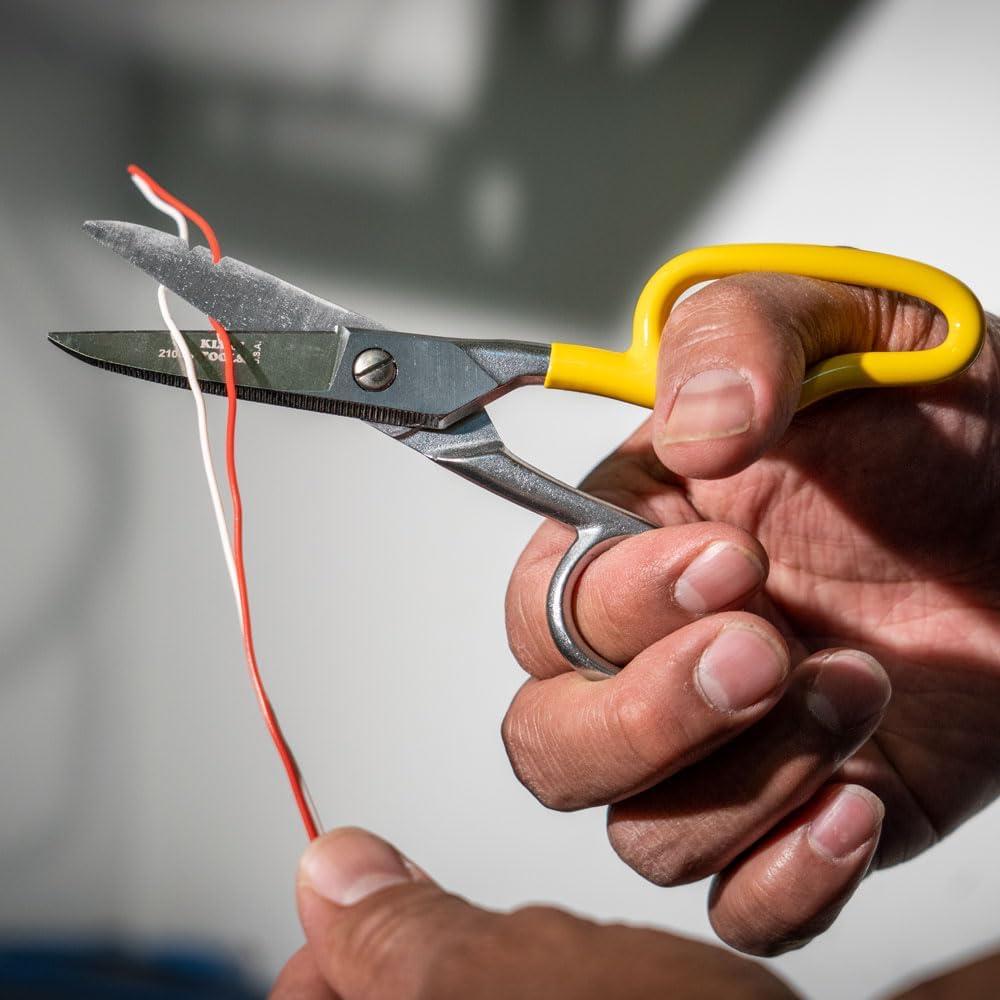
While these snips handle 19 AWG and 23 AWG wire well, I really wish Klein had expanded the gauge range to include 18 AWG and thicker wire that I encounter constantly when wiring thermostats, running 24V control circuits, and connecting communication cables between condensers and air handlers. Most modern multi-zone systems and communicating HVAC equipment use 18/8 or 18/5 thermostat wire, and having to switch tools mid-install slows me down. The serrated blades work great on communication wire, but they struggle with the jacketed multi-conductor cable I use for connecting outdoor units on high-efficiency systems pulling 30-40 amps at 240V. A reinforced cutting notch near the pivot point would have made a huge difference when dealing with the heavier gauge wire found in disconnect boxes and condenser whip assemblies.
The free-fall feature feels too loose for precision work, especially when I’m stripping thermostat wire in tight spaces behind wall-mounted air handlers or inside cramped attic installations where I need exact control. I’ve found myself over-stripping 23 AWG communication wire more than once because the blades don’t provide enough resistance feedback. Klein could have added an adjustable tension screw so technicians could tighten the action when doing detailed work on low-voltage control boards or 24V transformer connections, then loosen it for repetitive cutting tasks. Additionally, while the scraper and file features are nice touches, a built-in wire stripper gauge reference printed on the handle would have been invaluable for quickly identifying wire sizes without reaching for a separate tool-critical when you’re troubleshooting a failed condenser fan motor in 95-degree heat and need to verify if someone used the correct gauge wire for a 3-ton, 36,000 BTU unit.
Embrace a New Era
## The Bottom Line
After twenty-plus years in the field, I’ve learned that the tools in your pouch are just as important as the systems you’re installing. The Klein 21010-6-SEN has earned its place in my toolkit because it does exactly what it promises – no more, no less. It cuts clean, strips reliable, and holds up to the daily grind that comes with this trade.
Here’s what most people don’t realize: every connection you make, every wire you strip, every control circuit you wire – it all affects how that system performs. A bad strip job creates resistance. Resistance creates heat. Heat creates failures. And failures mean callbacks, unhappy customers, and systems that can’t maintain comfort or efficiency. The right snip helps you make the right connection the first time.
I’ve seen plenty of HVAC pros grab whatever cheap cutters are on sale, then wonder why their low-voltage work gives them problems down the road. This Klein tool isn’t fancy, but it’s purpose-built for our work. The free-fall action, the serrated grip, the USA-made durability – these aren’t luxuries. They’re necessities when you’re working in tight spaces, dealing with control wiring that can make or break a system’s operation.
Your customers are counting on you to deliver reliable comfort, lower energy bills, and systems that last. That starts with the connections you make today. Don’t shortcut your results by shortcutting your tools. If you’re serious about your craft and the quality of your installations, you already know what to do.